Liao Dongqi, Li Enze, Li Jianjun, Zeng Peiyuan, Feng Rongfang, Xu Meiying, Sun Guoping
South China University of Technology, Guangzhou, China.
Guangdong Provincial Key Laboratory of Microbial Culture Collection and Application, Guangdong Institute of Microbiology, Guangzhou, China.
PLoS One. 2018 Jan 2;13(1):e0189927. doi: 10.1371/journal.pone.0189927. eCollection 2018.
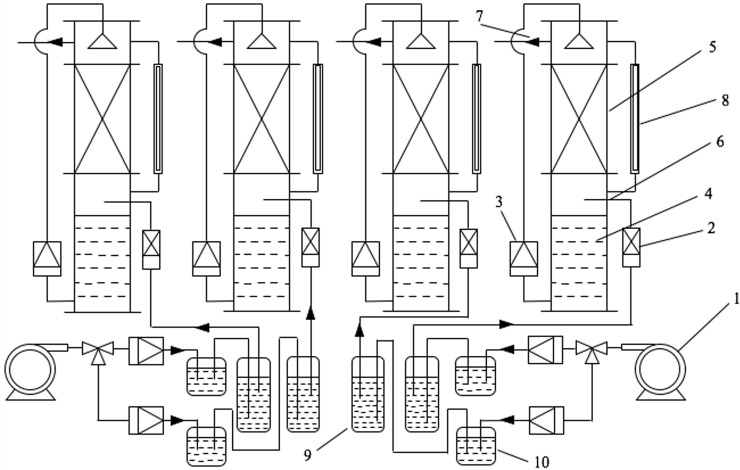
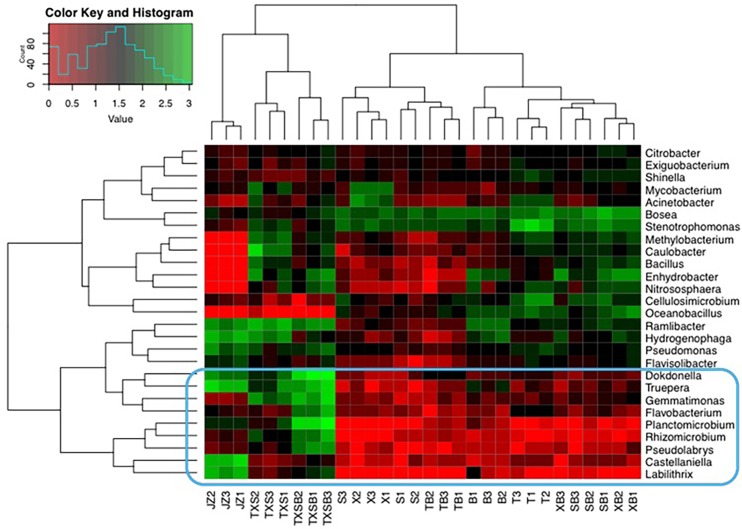
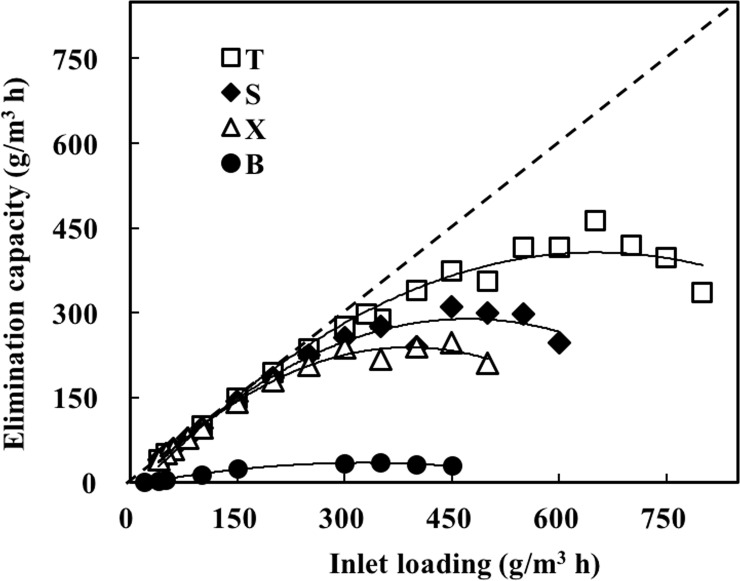
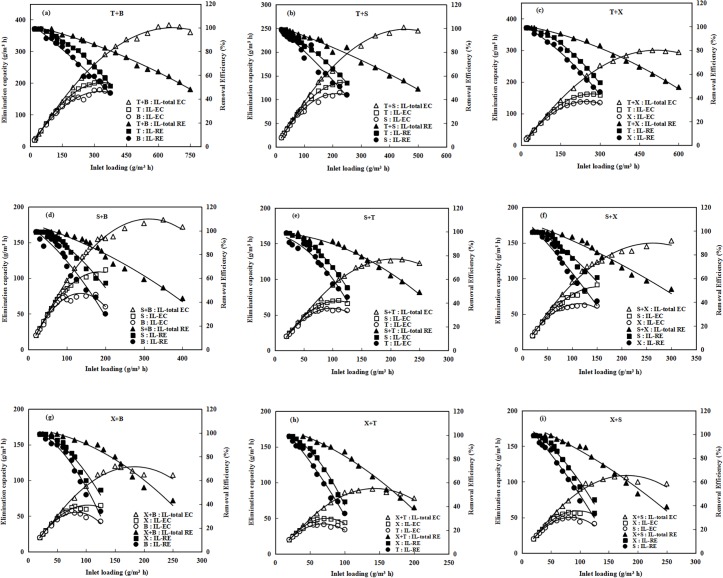
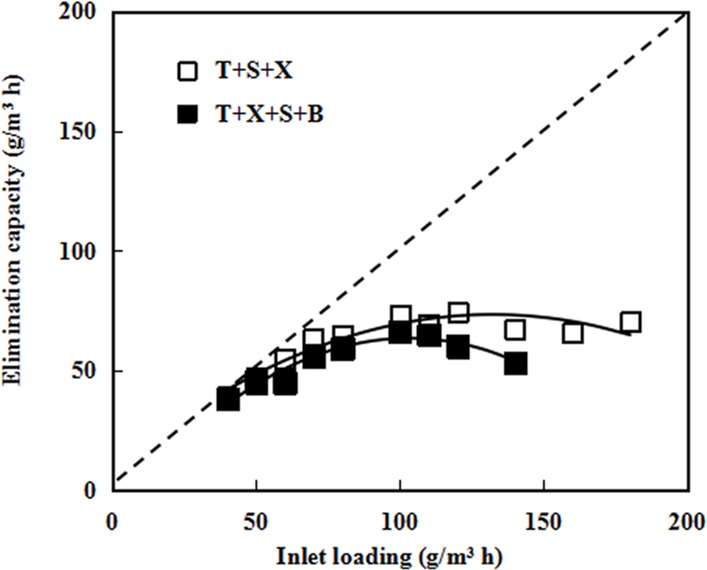
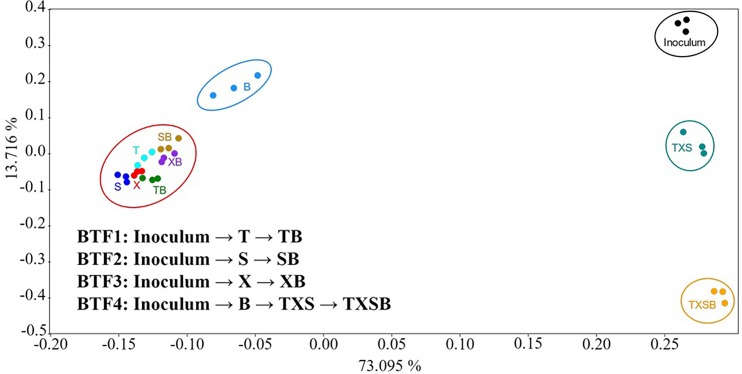
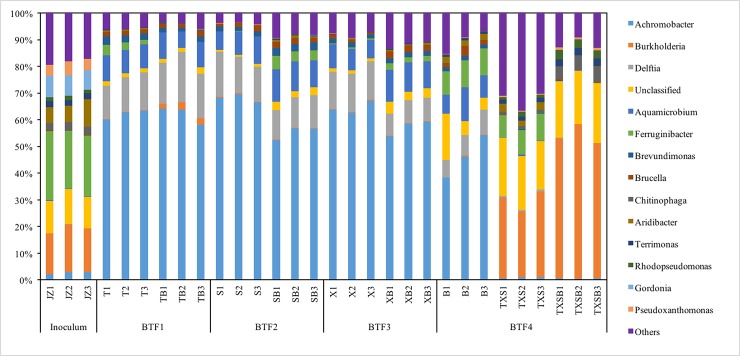
Biotrickling filters (BTFs) are becoming very potential means to purify waste gases containing multiple VOC components, but the removal of the waste gases by BTF has been a major challenge due to the extremely complicated interactions among the components. Four biotrickling filters packed with polyurethane foam were employed to identify the interactions among four aromatic compounds (benzene, toluene, xylene and styrene). The elimination capacities obtained at 90% of removal efficiency for individual toluene, styrene and xylene were 297.02, 225.27 and 180.75 g/m3h, respectively. No obvious removal for benzene was observed at the inlet loading rates ranging from 20 to 450 g/m3h. The total elimination capacities for binary gases significantly decreased in all biotrickling filters. However, the removal of benzene was enhanced in the presence of other gases. The removal capacities of ternary and quaternary gases were further largely lowered. High-throughput sequencing results revealed that microbial communities changed greatly with the composition of gases, from which we found that: all samples were dominated either by the genus Achromobacter or the Burkholderia. Different gaseous combination enriched or inhibited some microbial species. Group I includes samples of BTFs treating single and binary gases and was dominated by the genus Achromobacter, with little Burkholderia inside. Group II includes the rest of the samples taken from BTFs domesticated with ternary and quaternary gases, and was dominated by the genus Burkholderia, with little Achromobacter detected. These genera were highly associated with the biodegradation of benzene series in BTFs.
生物滴滤器(BTF)正成为净化含有多种挥发性有机化合物(VOC)成分废气的极具潜力的手段,但由于各成分之间极其复杂的相互作用,利用BTF去除废气一直是一项重大挑战。使用四个填充聚氨酯泡沫的生物滴滤器来确定四种芳香族化合物(苯、甲苯、二甲苯和苯乙烯)之间的相互作用。对于单独的甲苯、苯乙烯和二甲苯,去除效率达到90%时获得的去除能力分别为297.02、225.27和180.75 g/m³·h。在20至450 g/m³·h的进口负荷率范围内,未观察到苯有明显去除。在所有生物滴滤器中,二元气体的总去除能力显著下降。然而,在其他气体存在的情况下,苯的去除得到了增强。三元和四元气体的去除能力进一步大幅降低。高通量测序结果表明,微生物群落随气体组成变化很大,从中我们发现:所有样本均以无色杆菌属或伯克霍尔德菌属为主。不同的气体组合富集或抑制了一些微生物物种。第一组包括处理单一和二元气体的生物滴滤器样本,以无色杆菌属为主,内部几乎没有伯克霍尔德菌。第二组包括从用三元和四元气体驯化的生物滴滤器中采集的其余样本,以伯克霍尔德菌属为主,检测到的无色杆菌很少。这些属与生物滴滤器中苯系物的生物降解高度相关。