Ji Xiaoqian, Chen Siyu, Guo Yanwu, Li Wende, Qi Xiaolong, Yang Han, Xiao Sa, Fang Guang, Hu Jinfang, Wen Chuangyu, Liu Huanliang, Han Zhen, Deng Guangxu, Yang Qingbin, Yang Xiangling, Xu Yuting, Peng Zhihong, Li Fengping, Cai Nvlue, Li Guoxin, Huang Ren
School of Basic Courses, Guangdong Pharmaceutical University, Guangzhou, 510006 China.
Guangdong Laboratory Animals Monitoring Institute, Guangdong Key Laboratory Animal Lab, 11 Fengxin Road, Science City, Guangzhou, 510663 China.
Cancer Cell Int. 2017 Dec 20;17:122. doi: 10.1186/s12935-017-0497-4. eCollection 2017.
Patient-derived xenografts (PDX) have a biologically stable in tumor architecture, drug responsiveness, mutational status and global gene-expression patterns. Numerous PDX models have been established to date, however their thorough characterization regarding the tumor formation and rates of tumor growth in the established models remains a challenging task. Our study aimed to provide more detailed information for establishing the PDX models successfully and effectively.
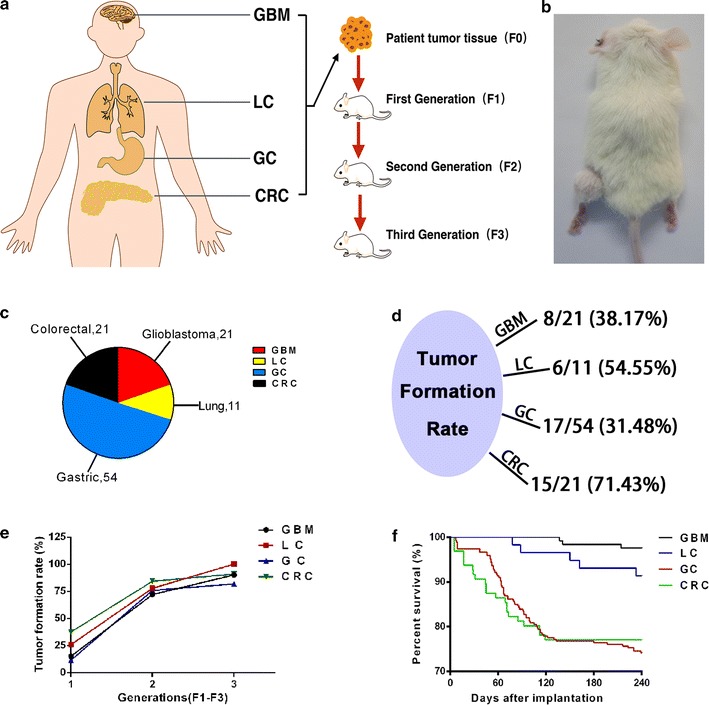
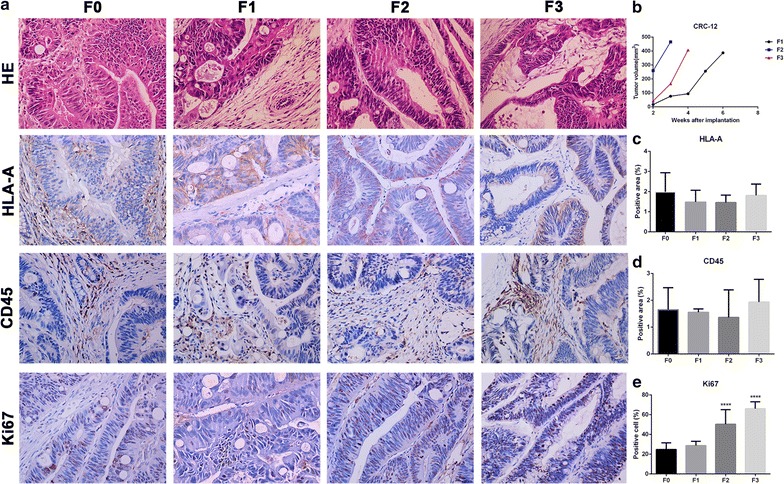
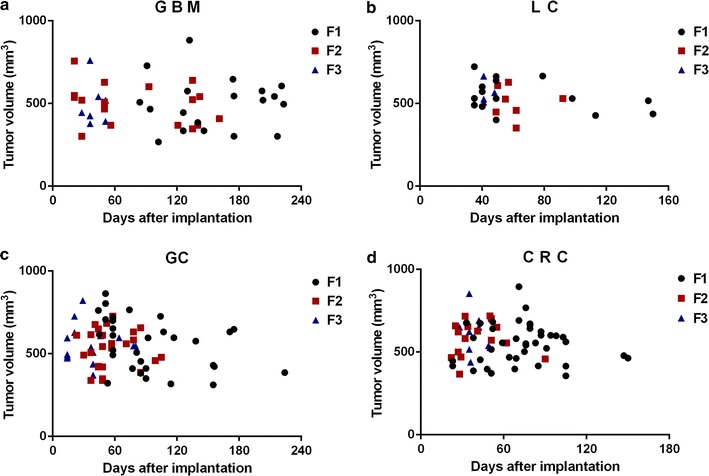
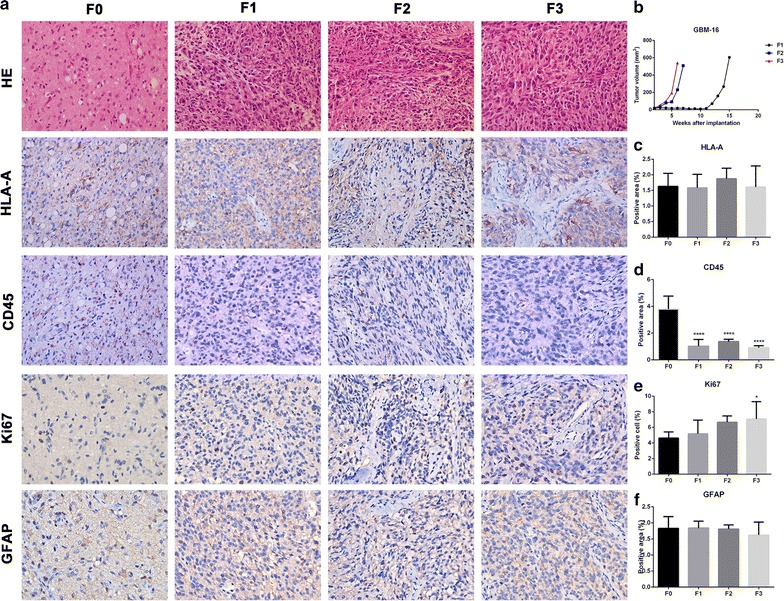
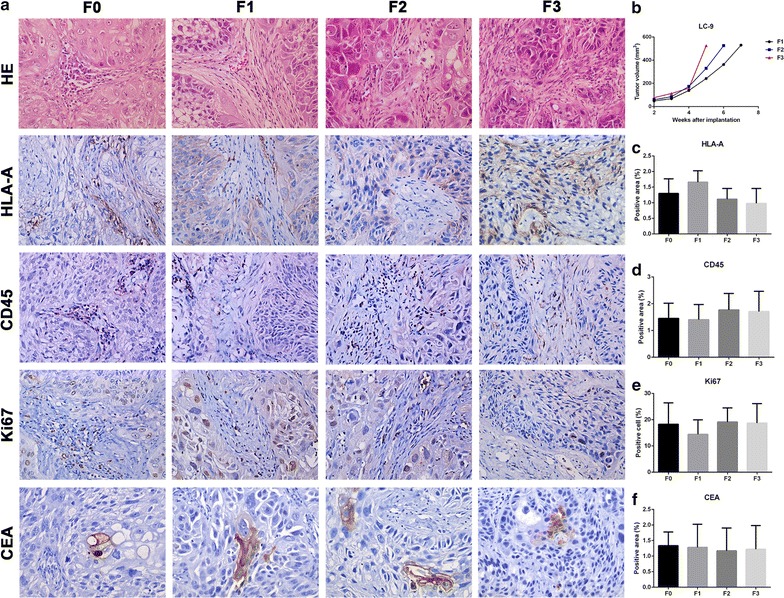
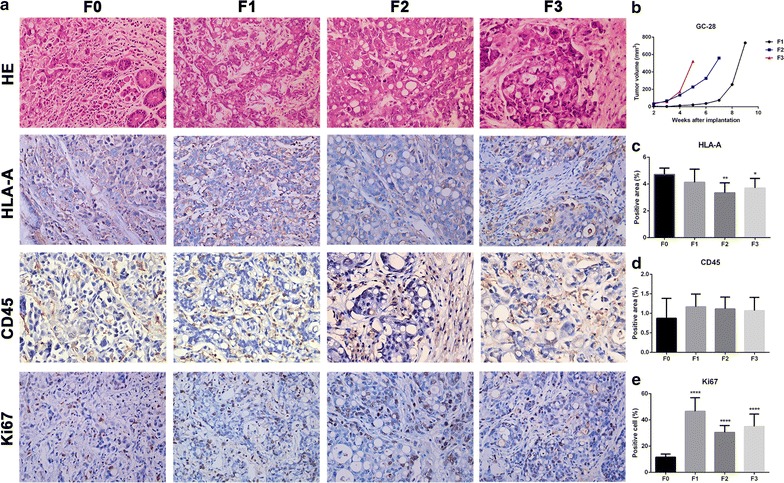
We transplanted four different types of solid tumors from 108 Chinese patients, including 21 glioblastoma (GBM), 11 lung cancers (LC), 54 gastric cancers (GC) and 21 colorectal cancers (CRC), and took tumor tissues passaged for three successive generations. Here we report the rate of tumor formation, tumor-forming times, tumor growth curves and mortality of mice in PDX model. We also report H&E staining and immunohistochemistry for HLA-A, CD45, Ki67, GFAP, and CEA protein expression between patient cancer tissues and PDX models.
Tumor formation rate increased significantly in subsequent tumor generations. Also, the survival rates of GC and CRC were remarkably higher than GBM and LC. As for the time required for the formation of tumors, which reflects the tumor growth rate, indicated that tumor growth rate always increased as the generation number increased. The tumor growth curves also illustrate this law. Similarly, the survival rate of PDX mice gradually improved with the increased generation number in GC and CRC. And generally, there was more proliferation (Ki67+) in the PDX models than in the patient tumors, which was in accordance with the results of tumor growth rate. The histological findings confirm similar histological architecture and degrees of differentiation between patient cancer tissues and PDX models with statistical analysis by GraphPad Prism 5.0.
We established four different types of PDX models successfully, and our results add to the current understanding of the establishment of PDX models and may contribute to the extension of application of different types of PDX models.
患者来源的异种移植瘤(PDX)在肿瘤结构、药物反应性、突变状态和整体基因表达模式方面具有生物学稳定性。迄今为止,已经建立了许多PDX模型,然而,对于已建立模型中肿瘤形成和肿瘤生长速率的全面表征仍然是一项具有挑战性的任务。我们的研究旨在为成功且有效地建立PDX模型提供更详细的信息。
我们将来自108例中国患者的四种不同类型实体瘤进行移植,包括21例胶质母细胞瘤(GBM)、11例肺癌(LC)、54例胃癌(GC)和21例结直肠癌(CRC),并取连续传代三代的肿瘤组织。在此,我们报告PDX模型中肿瘤形成率、肿瘤形成时间、肿瘤生长曲线和小鼠死亡率。我们还报告了患者癌组织与PDX模型之间H&E染色以及HLA-A、CD45、Ki67、GFAP和CEA蛋白表达的免疫组织化学情况。
在后续肿瘤传代中,肿瘤形成率显著增加。此外,GC和CRC的存活率明显高于GBM和LC。至于反映肿瘤生长速率的肿瘤形成所需时间,表明肿瘤生长速率总是随着代数增加而增加。肿瘤生长曲线也说明了这一规律。同样,GC和CRC中PDX小鼠的存活率随着代数增加而逐渐提高。一般来说,PDX模型中的增殖(Ki67+)比患者肿瘤中更多,这与肿瘤生长速率的结果一致。组织学结果通过GraphPad Prism 5.0进行统计分析,证实患者癌组织与PDX模型之间具有相似的组织结构和分化程度。
我们成功建立了四种不同类型的PDX模型,我们的结果增进了当前对PDX模型建立的理解,并可能有助于扩展不同类型PDX模型的应用。