Ghilotti Francesca, Pesonen Ann-Sofie, Raposo Sara E, Winell Henric, Nyrén Olof, Trolle Lagerros Ylva, Plymoth Amelie
Department of Medicine, Clinical Epidemiology Unit, Karolinska Institutet, Stockholm, Sweden.
Department of Statistics and Quantitative Methods, University of Milano-Bicocca, Milan, Italy.
PLoS One. 2018 Jan 4;13(1):e0190270. doi: 10.1371/journal.pone.0190270. eCollection 2018.
Previous studies found higher levels of physical activity to be protective against infections and that short and long sleep negatively affects the immune response. However, these relationships remain debatable. We aimed to investigate if physical activity and sleep habits affect incidence of upper respiratory tract infections (URTI) in a prospective cohort study.
A total of 2,038 adults aged 25-64 years served as a random sample of the gainfully employed population of an industrial town in Sweden. Physical activity and sleep habits were estimated through self-reported questionnaires. Physical activity was expressed as metabolic energy turnover hours per day. Sleep was assessed as number of hours slept per night and its perceived quality. URTI outcome was prospectively self-reported during a 9-month follow-up period. Associations of physical activity and sleep with URTI were estimated using hurdle regression models adjusted for potential confounders.
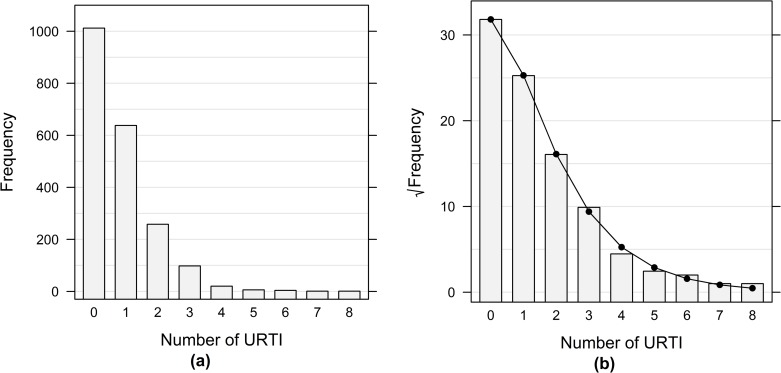
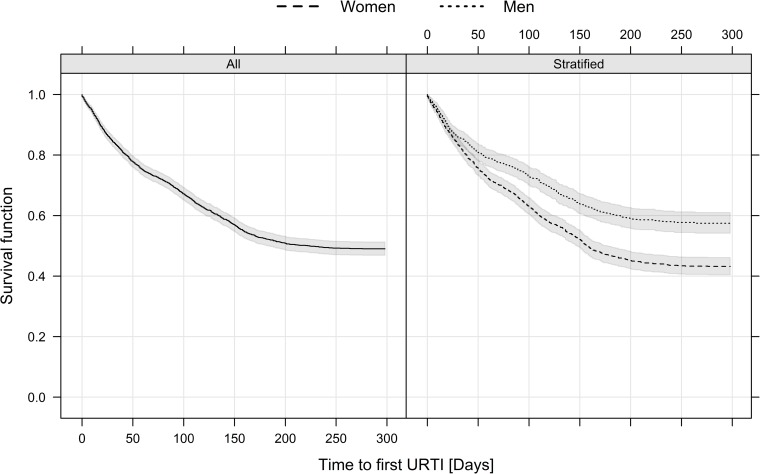
During 1,583 person-years 1,597 URTI occurred, resulting in an incidence of 1.01 infections/person-year (95% CI 0.96-1.06). The fitted regression models did not provide support for an association with physical activity or sleep habits. Factors positively associated with experiencing URTI were having children ≤ 6 years, female gender, higher education and treatment for allergy, asthma or lung cancer. Having children ≤ 6 years and female gender were related to a higher number of URTI among those experiencing URTI.
We did not find any association between physical activity, sleep duration or sleep quality and the occurrence of upper respiratory tract infections in adult Swedish population.
先前的研究发现较高水平的身体活动对感染具有保护作用,且短睡眠和长睡眠均会对免疫反应产生负面影响。然而,这些关系仍存在争议。我们旨在通过一项前瞻性队列研究调查身体活动和睡眠习惯是否会影响上呼吸道感染(URTI)的发病率。
共有2038名年龄在25 - 64岁的成年人作为瑞典一个工业城镇有酬就业人群的随机样本。通过自我报告问卷评估身体活动和睡眠习惯。身体活动以每天代谢能量转换小时数表示。睡眠以每晚睡眠时间及其感知质量进行评估。在9个月的随访期内前瞻性地自我报告URTI结局。使用针对潜在混杂因素进行调整的障碍回归模型估计身体活动和睡眠与URTI的关联。
在1583人年期间发生了1597例URTI,发病率为1.01次感染/人年(95%CI 0.96 - 1.06)。拟合的回归模型未支持与身体活动或睡眠习惯的关联。与发生URTI呈正相关的因素有6岁及以下子女、女性、高等教育以及过敏、哮喘或肺癌治疗。6岁及以下子女和女性与发生URTI者中较高的URTI次数相关。
我们未在成年瑞典人群中发现身体活动、睡眠时间或睡眠质量与上呼吸道感染发生之间存在任何关联。