Pandey Pramod, Chiu Colleen, Miao Max, Wang Yi, Settles Matthew, Del Rio Noelia Silva, Castillo Alejandro, Souza Alex, Pereira Richard, Jeannotte Richard
Department of Population Health and Reproduction, School of Veterinary Medicine, University of California, Davis, California, United States of America.
Department of Plant Sciences, College of Agricultural and Environmental Sciences, University of California, Davis, California, United States of America.
PLoS One. 2018 Jan 5;13(1):e0190126. doi: 10.1371/journal.pone.0190126. eCollection 2018.
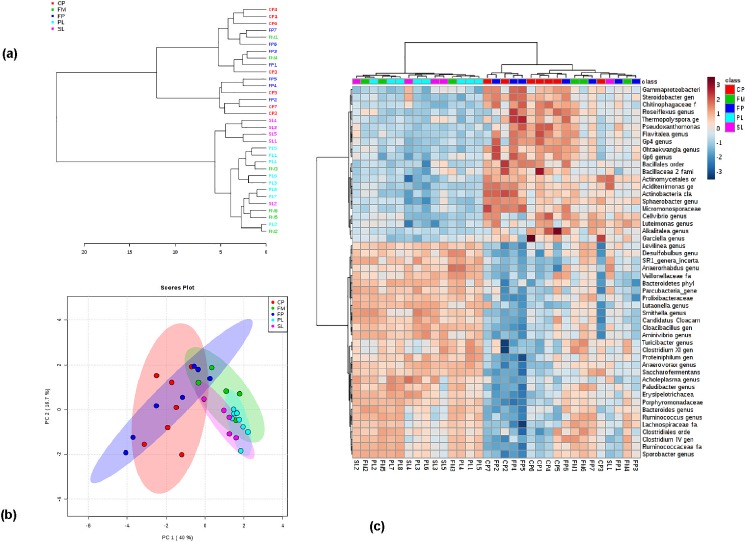
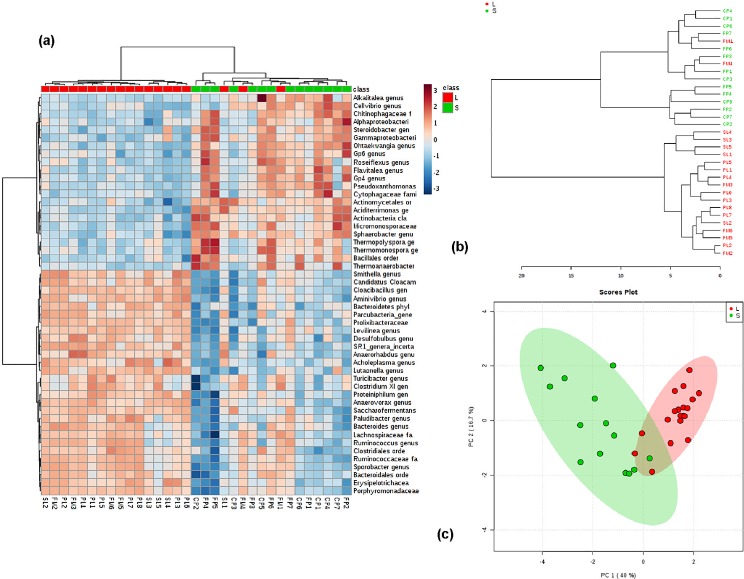
Dairy farms generate a considerable amount of manure, which is applied in cropland as fertilizer. While the use of manure as fertilizer reduces the application of chemical fertilizers, the main concern with regards to manure application is microbial pollution. Manure is a reservoir of a broad range of microbial populations, including pathogens, which have potential to cause contamination and pose risks to public and animal health. Despite the widespread use of manure fertilizer, the change in microbial diversity of manure under various treatment processes is still not well-understood. We hypothesize that the microbial population of animal waste changes with manure handling used in a farm environment. Consequential microbial risk caused by animal manure may depend on manure handling. In this study, a reconnaissance effort for sampling dairy manure in California Central Valley followed by 16S rRNA analysis of content and diversity was undertaken to understand the microbiome of manure after various handling processes. The microbial community analysis of manure revealed that the population in liquid manure differs from that in solid manure. For instance, the bacteria of genus Sulfuriomonas were unique in liquid samples, while the bacteria of genus Thermos were observed only in solid samples. Bacteria of genus Clostridium were present in both solid and liquid samples. The population among liquid samples was comparable, as was the population among solid samples. These findings suggest that the mode of manure application (i.e., liquid versus solid) could have a potential impact on the microbiome of cropland receiving manure as fertilizers.
奶牛场会产生大量粪便,这些粪便被用作农田肥料。虽然将粪便用作肥料减少了化肥的使用,但粪便施用的主要问题是微生物污染。粪便中存在各种各样的微生物群体,包括病原体,它们有可能造成污染并对公众和动物健康构成风险。尽管粪便肥料被广泛使用,但在各种处理过程中粪便微生物多样性的变化仍未得到很好的理解。我们假设农场环境中动物粪便的微生物群体随粪便处理方式的不同而变化。动物粪便导致的相应微生物风险可能取决于粪便处理方式。在本研究中,我们对加利福尼亚中央谷地的奶牛粪便进行了一次侦察性采样,随后对其含量和多样性进行了16S rRNA分析,以了解各种处理过程后粪便的微生物群落。粪便的微生物群落分析表明,液体粪便中的微生物群体与固体粪便中的不同。例如,硫单胞菌属细菌在液体样本中是独特的,而嗜热菌属细菌仅在固体样本中被观察到。梭菌属细菌在固体和液体样本中都存在。液体样本中的微生物群体相当,固体样本中的微生物群体也是如此。这些发现表明,粪便施用方式(即液体与固体)可能会对接收粪便作为肥料的农田微生物群落产生潜在影响。