IST Austria (Institute of Science and Technology Austria), Klosterneuburg, Austria.
Evolution, Genetics and Behaviour, University of Regensburg, Regensburg, Germany.
Elife. 2018 Jan 9;7:e32073. doi: 10.7554/eLife.32073.
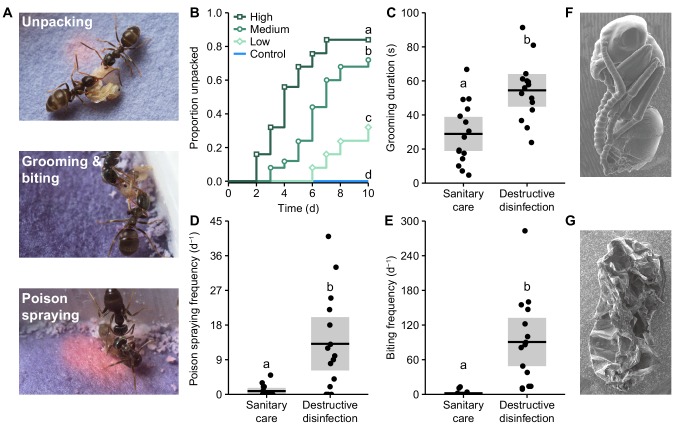
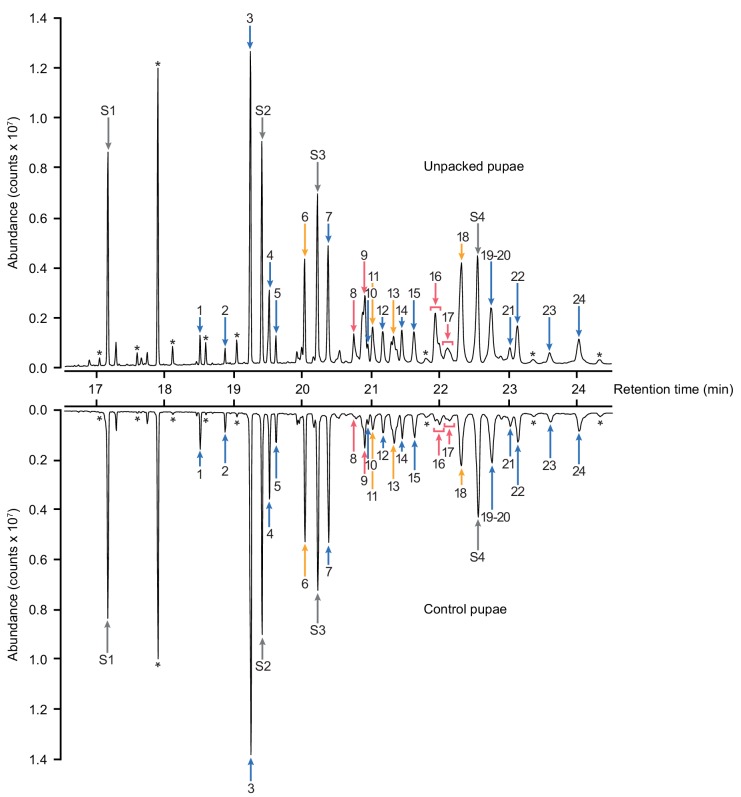
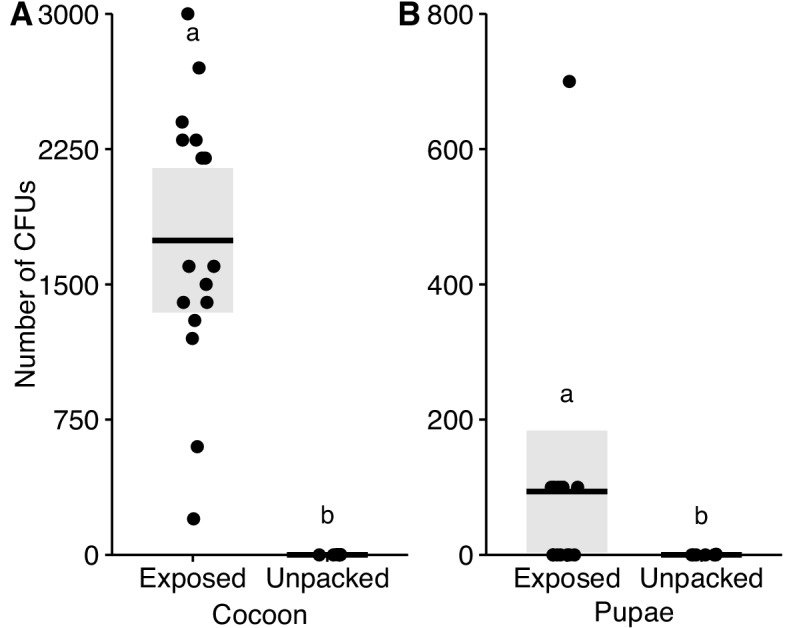
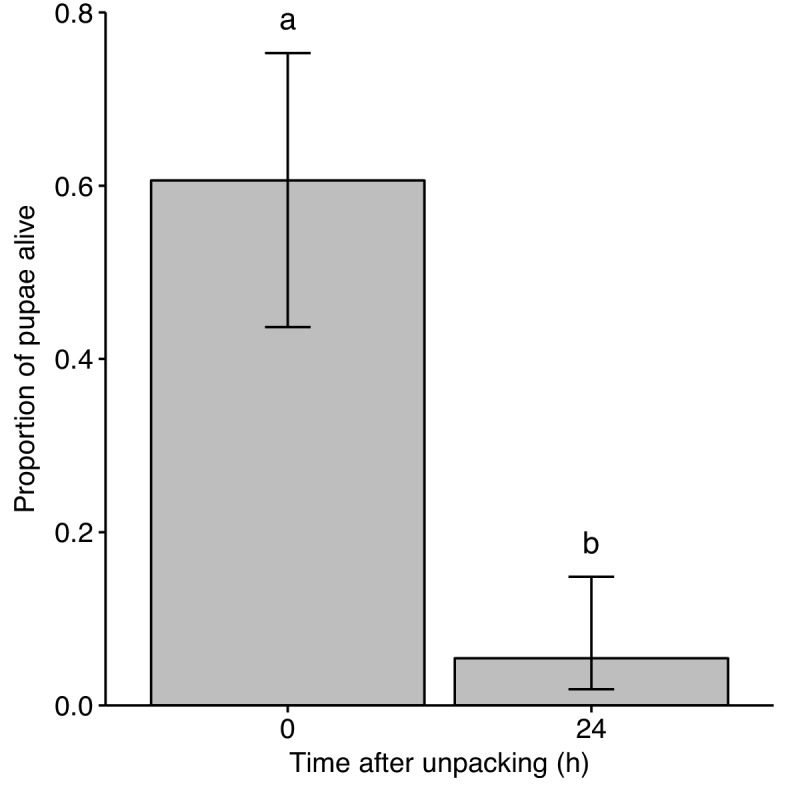
In social groups, infections have the potential to spread rapidly and cause disease outbreaks. Here, we show that in a social insect, the ant , the negative consequences of fungal infections () can be mitigated by employing an efficient multicomponent behaviour, termed destructive disinfection, which prevents further spread of the disease through the colony. Ants specifically target infected pupae during the pathogen's non-contagious incubation period, utilising chemical 'sickness cues' emitted by pupae. They then remove the pupal cocoon, perforate its cuticle and administer antimicrobial poison, which enters the body and prevents pathogen replication from the inside out. Like the immune system of a metazoan body that specifically targets and eliminates infected cells, ants destroy infected brood to stop the pathogen completing its lifecycle, thus protecting the rest of the colony. Hence, in an analogous fashion, the same principles of disease defence apply at different levels of biological organisation.
在社交群体中,感染有可能迅速传播并引发疾病爆发。在这里,我们表明在一种社会性昆虫——蚂蚁中,真菌感染的负面后果可以通过采用一种称为破坏性消毒的高效多组分行为来减轻,这种行为可以防止疾病通过群体进一步传播。蚂蚁在病原体非传染性潜伏期专门针对受感染的蛹,利用蛹发出的化学“疾病线索”。然后,它们取出蛹茧,刺穿其表皮并施用抗菌毒药,这种毒药进入体内并从内部阻止病原体复制。就像后生动物体的免疫系统专门针对和消除受感染的细胞一样,蚂蚁会破坏受感染的幼虫,阻止病原体完成其生命周期,从而保护群体的其余部分。因此,以类似的方式,相同的疾病防御原则适用于不同层次的生物组织。