Department of Life Sciences, Imperial College of London, London, SW7 2AZ, UK.
Faculty of Science, Health, Education and Engineering, University of the Sunshine Coast, 90 Sippy Downs Drive, Sippy Downs, 4556, QLD, Australia.
Sci Rep. 2018 Jan 8;8(1):97. doi: 10.1038/s41598-017-18115-1.
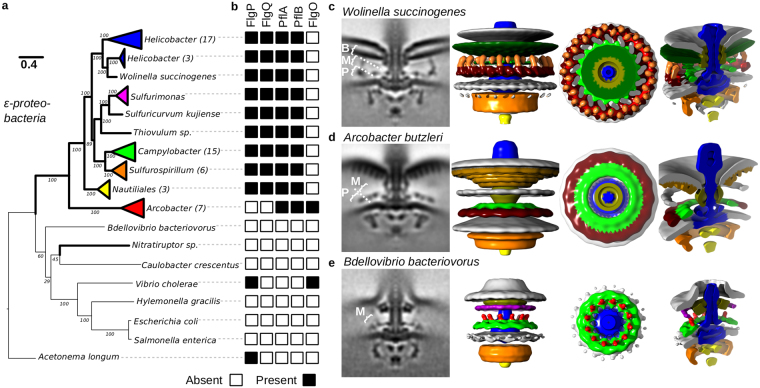
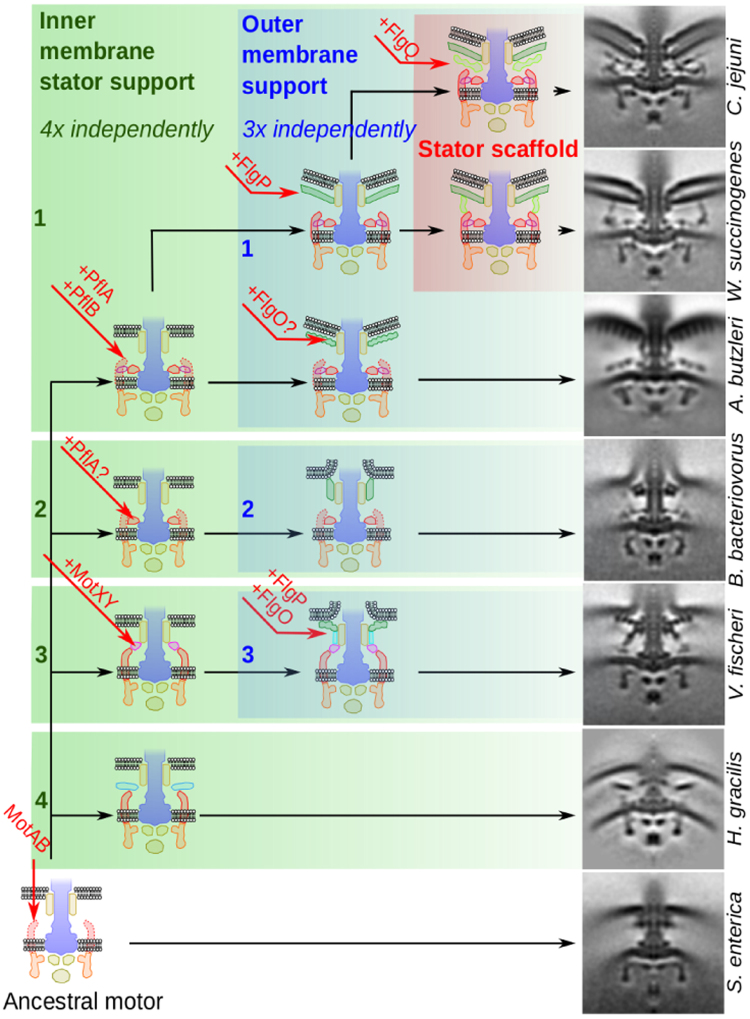
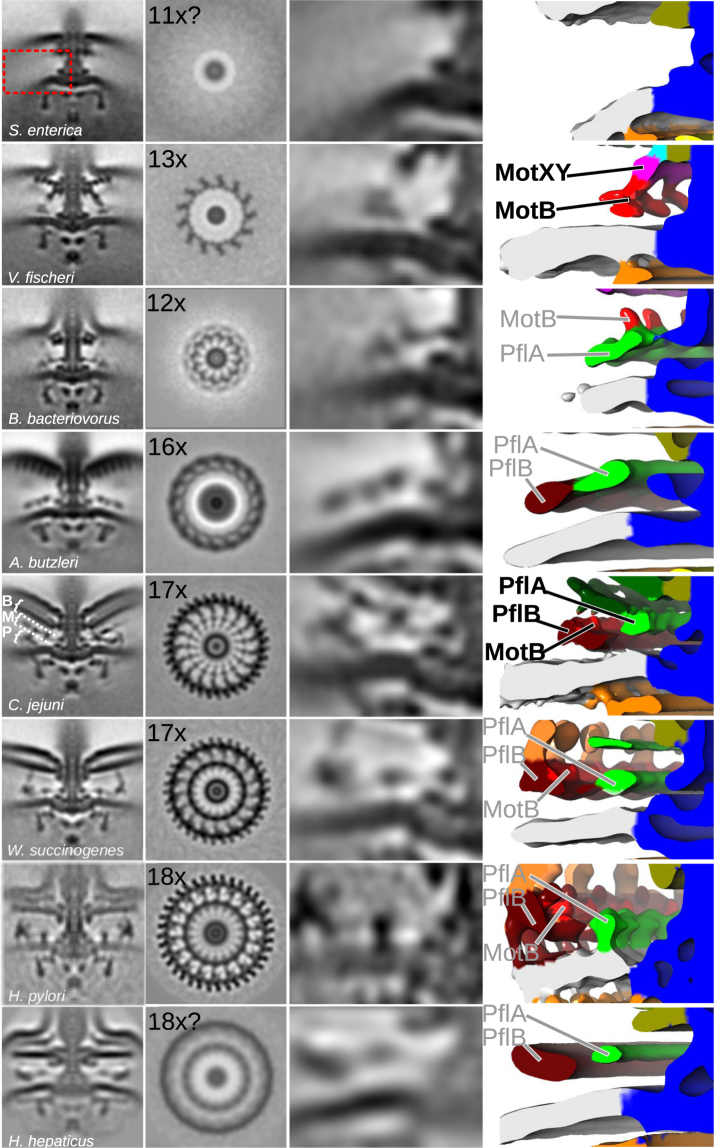
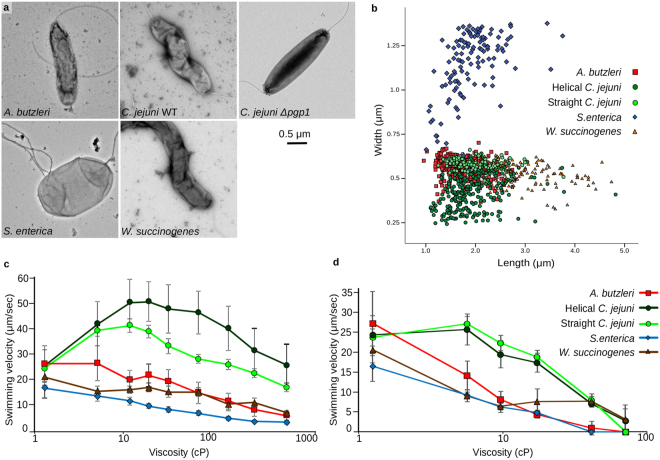
Understanding the evolution of molecular machines underpins our understanding of the development of life on earth. A well-studied case are bacterial flagellar motors that spin helical propellers for bacterial motility. Diverse motors produce different torques, but how this diversity evolved remains unknown. To gain insights into evolution of the high-torque ε-proteobacterial motor exemplified by the Campylobacter jejuni motor, we inferred ancestral states by combining phylogenetics, electron cryotomography, and motility assays to characterize motors from Wolinella succinogenes, Arcobacter butzleri and Bdellovibrio bacteriovorus. Observation of ~12 stator complexes in many proteobacteria, yet ~17 in ε-proteobacteria suggest a "quantum leap" evolutionary event. Campylobacter-type motors have high stator occupancy in wider rings of additional stator complexes that are scaffolded by large proteinaceous periplasmic rings. We propose a model for motor evolution wherein independent inner- and outer-membrane structures fused to form a scaffold for additional stator complexes. Significantly, inner- and outer-membrane associated structures have evolved independently multiple times, suggesting that evolution of such structures is facile and poised the ε-proteobacteria to fuse them to form the high-torque Campylobacter-type motor.
理解分子机器的进化是我们理解地球上生命发展的基础。一个研究得很好的例子是细菌鞭毛马达,它为细菌的运动旋转螺旋桨。不同的马达产生不同的扭矩,但这种多样性是如何进化的仍然未知。为了深入了解以弯曲杆菌(Campylobacter jejuni)马达为代表的高扭矩 ε-变形菌马达的进化,我们通过结合系统发育学、电子晶体断层扫描和运动分析来推断祖先状态,从而对来自沃林氏菌(Wolinella succinogenes)、弯曲杆菌(Arcobacter butzleri)和噬菌蛭弧菌(Bdellovibrio bacteriovorus)的马达进行了特征描述。在许多变形菌中观察到约 12 个定子复合物,但在 ε-变形菌中观察到约 17 个,这表明发生了“量子飞跃”进化事件。弯曲杆菌型马达在更宽的定子复合物环中有较高的定子占有率,这些定子复合物由大型蛋白质质周质环支架支撑。我们提出了一个马达进化模型,其中独立的内膜和外膜结构融合形成了额外定子复合物的支架。重要的是,内膜和外膜相关结构已经独立进化了多次,这表明这种结构的进化是容易的,并使 ε-变形菌能够融合它们形成高扭矩的弯曲杆菌型马达。