Cao Meng-Ting, Liu Hui-Fang, Liu Zhi-Gang, Xiao Ping, Chen Jing-Jing, Tan Yuan, Jiang Xiao-Xin, Jiang Zhi-Chao, Qiu Yu, Huang Hong-Jun, Zhang Qiu-Gui, Jiang Guan-Min
Department of Clinical Laboratory, Hunan Cancer Hospital and The Affiliated Cancer Hospital of Xiangya School of Medicine, Central South University, Changsha, Hunan, China.
Department of Clinical Laboratory, The First Affiliated Hospital of University of South China, Hengyang, Hunan, China.
Oncotarget. 2017 Nov 21;8(65):108498-108508. doi: 10.18632/oncotarget.22590. eCollection 2017 Dec 12.
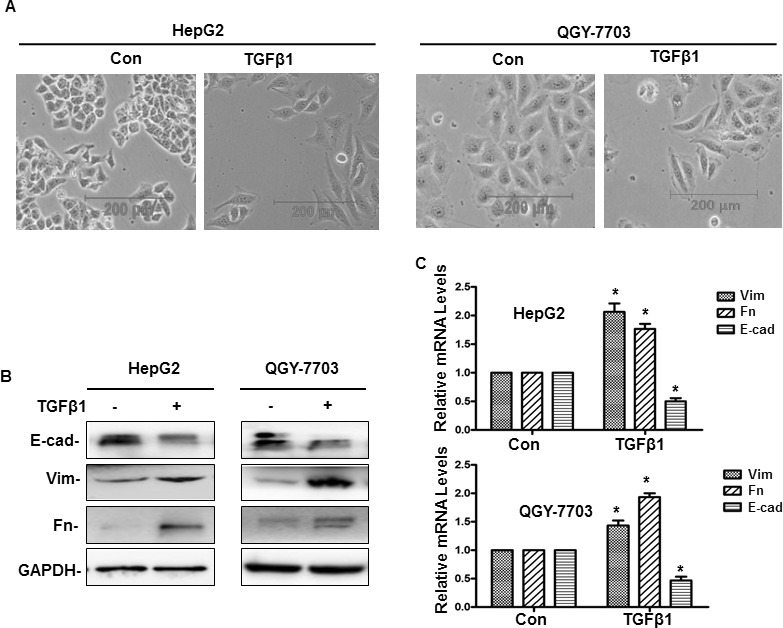
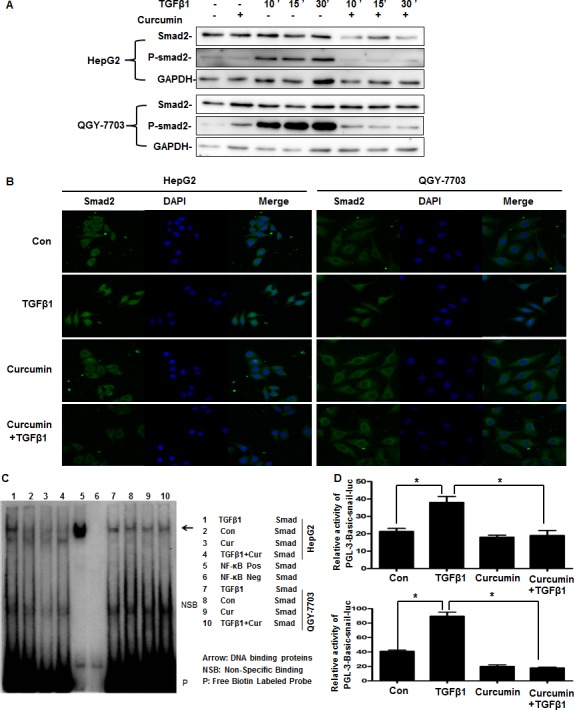
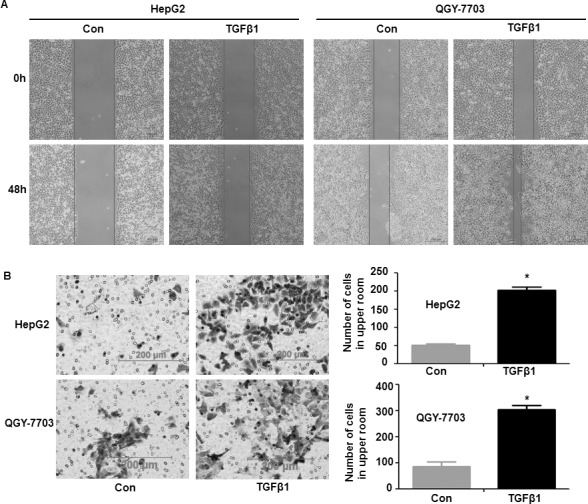
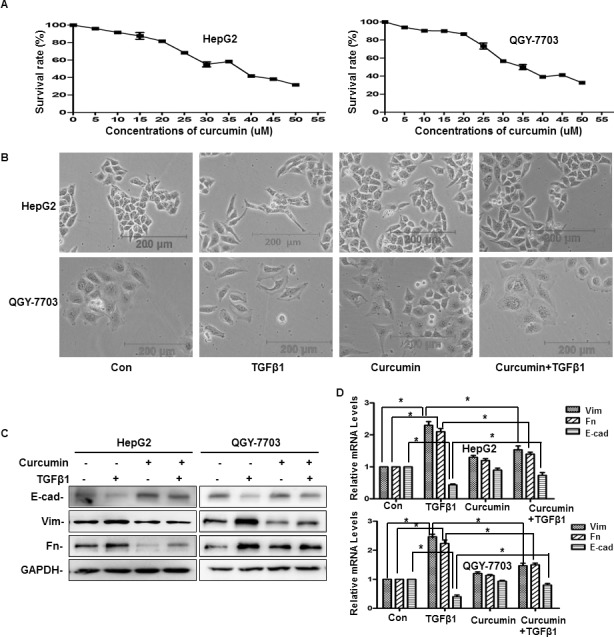
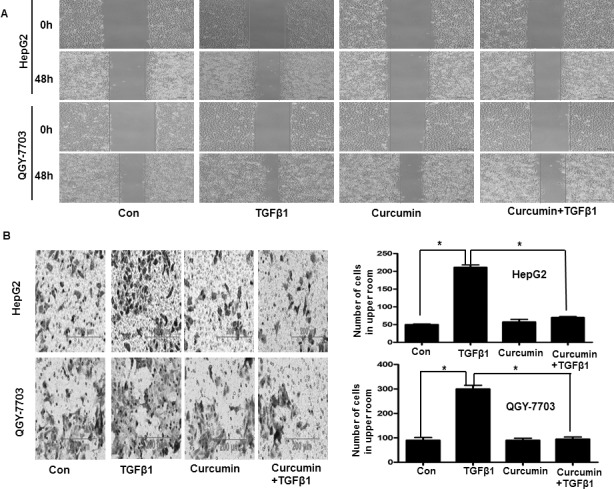
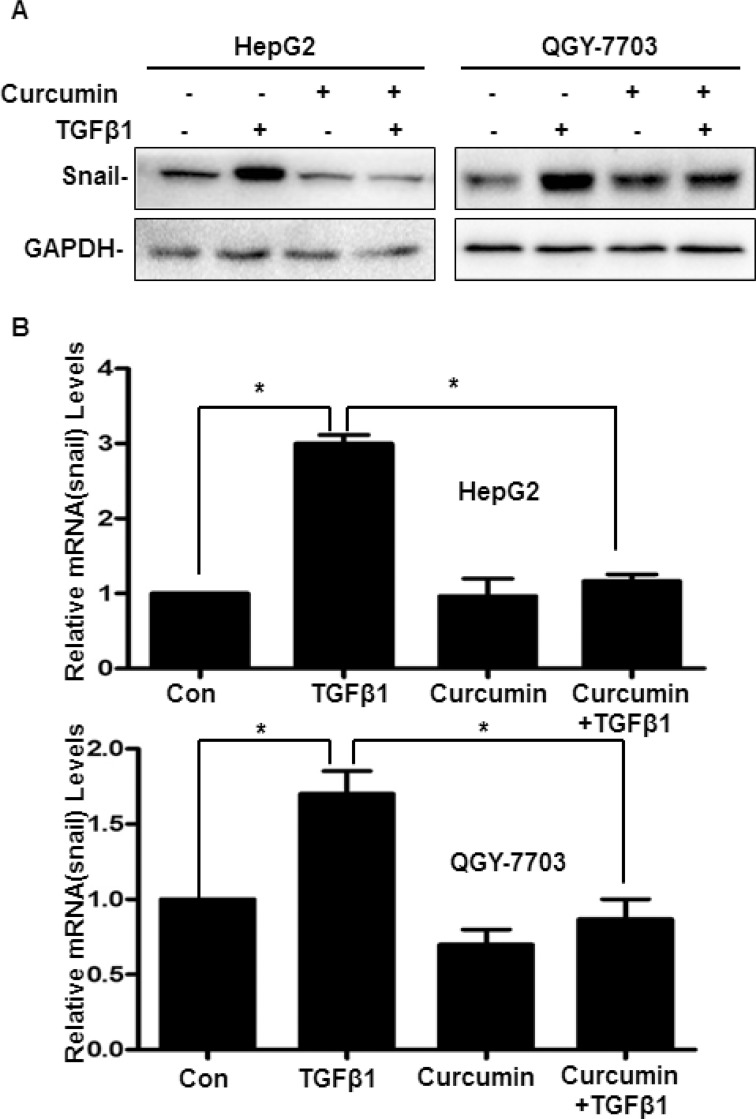
Hepatocellular carcinoma (HCC) remains the third cause of cancer-related mortality. Resection and transplantation are the only curative treatments available but are greatly hampered by high recurrence rates and development of metastasis, the initiation of cancer metastasis requires migration and invasion of cells, which is enabled by epithelial-mesenchymal transitions (EMT). TGF-β1 is a secreted protein that performs many cellular functions, including the control of cell growth, cell proliferation, cell differentiation and apoptosis. TGF-β1 is known as a major inducer of EMT, and it was reported that TGF-β1 induced EMT via Smad-dependent and Smad-independent pathways. However, the extrinsic signals of TGF-β1 regulated the EMT in hepatoma cells remains to be elucidated, and searching drugs to inhibit TGF-β1 induced EMT may be considered to be a potentially effective therapeutic strategy in HCC. Fortunately, in this study, we found that curcumin inhibited TGF-β1-induced EMT in hepatoma cells. Furthermore, we demonstrated that curcumin inhibited TGF-β1-induced EMT via inhibiting Smad2 phosphorylation and nuclear translocation, then suppressing Smad2 combined with the promoter of Snail which inhibited the transcriptional expression of Snail. These findings suggesting curcumin could be a useful agent for antitumor therapy and also a promising drug combined with other strategies to preventing and treating HCC.
肝细胞癌(HCC)仍是癌症相关死亡的第三大原因。手术切除和移植是仅有的可用治愈性治疗方法,但因高复发率和转移的发生而受到极大阻碍,癌症转移的起始需要细胞的迁移和侵袭,这是由上皮-间质转化(EMT)实现的。转化生长因子-β1(TGF-β1)是一种分泌蛋白,具有多种细胞功能,包括控制细胞生长、细胞增殖、细胞分化和凋亡。TGF-β1被认为是EMT的主要诱导因子,据报道TGF-β1通过Smad依赖和Smad非依赖途径诱导EMT。然而,TGF-β1调节肝癌细胞中EMT的外在信号仍有待阐明,寻找抑制TGF-β1诱导EMT的药物可能被认为是肝癌潜在有效的治疗策略。幸运的是,在本研究中,我们发现姜黄素可抑制肝癌细胞中TGF-β1诱导的EMT。此外,我们证明姜黄素通过抑制Smad2磷酸化和核转位,进而抑制Smad2与Snail启动子结合,从而抑制Snail的转录表达,来抑制TGF-β1诱导的EMT。这些发现表明姜黄素可能是一种有用的抗肿瘤治疗药物,也是一种与其他预防和治疗肝癌策略联合使用的有前景的药物。