Center for Biomedical Engineering, Brown University, Providence, Rhode Island, USA.
Department of Molecular Pharmacology, Physiology, and Biotechnology, Brown University, Providence, Rhode Island, USA.
Stem Cells Transl Med. 2018 Feb;7(2):232-240. doi: 10.1002/sctm.17-0207. Epub 2018 Jan 9.
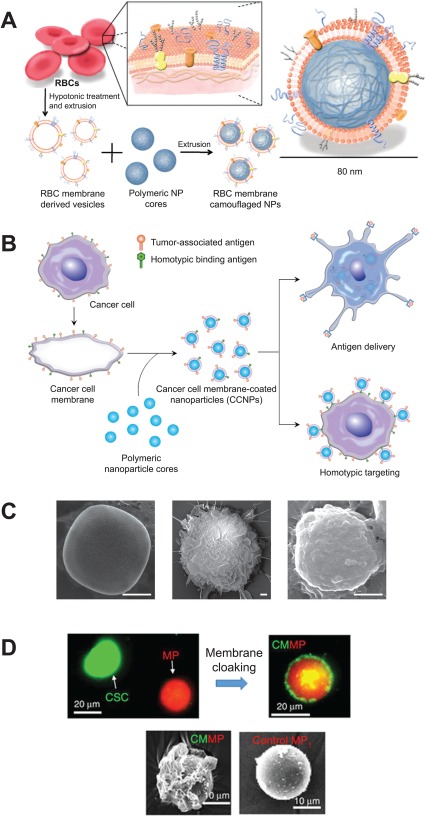
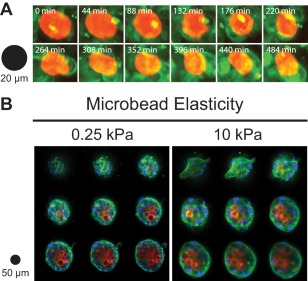
Stem and non-stem cell behavior is heavily influenced by the surrounding microenvironment, which includes other cells, matrix, and potentially biomaterials. Researchers have been successful in developing scaffolds and encapsulation techniques to provide stem cells with mechanical, topographical, and chemical cues to selectively direct them toward a desired differentiation pathway. However, most of these systems fail to present truly physiological replications of the in vivo microenvironments that stem cells are typically exposed to in tissues. Thus, cell mimicking microparticles (CMMPs) have been developed to more accurately recapitulate the properties of surrounding cells while still offering ways to tailor what stimuli are presented. This nascent field holds the promise of reducing, or even eliminating, the need for live cells in select, regenerative medicine therapies, and diagnostic applications. Recent, CMMP-based studies show great promise for the technology, yet only reproduce a small subset of cellular characteristics from among those possible: size, morphology, topography, mechanical properties, surface molecules, and tailored chemical release to name the most prominent. This Review summarizes the strengths, weaknesses, and ideal applications of micro/nanoparticle fabrication and customization methods relevant to cell mimicking and provides an outlook on the future of this technology. Moving forward, researchers should seek to combine multiple techniques to yield CMMPs that replicate as many cellular characteristics as possible, with an emphasis on those that most strongly influence the desired therapeutic effects. The level of flexibility in customizing CMMP properties allows them to substitute for cells in a variety of regenerative medicine, drug delivery, and diagnostic systems. Stem Cells Translational Medicine 2018;7:232-240.
干细胞和非干细胞的行为受到周围微环境的强烈影响,包括其他细胞、基质和潜在的生物材料。研究人员已经成功开发出支架和封装技术,为干细胞提供机械、形貌和化学线索,以有选择地引导它们朝向所需的分化途径。然而,这些系统中的大多数都无法真实地复制干细胞在组织中通常遇到的体内微环境。因此,细胞模拟微颗粒(CMMP)已经被开发出来,以更准确地再现周围细胞的特性,同时仍然提供定制呈现何种刺激的方法。这个新兴领域有望减少,甚至消除在某些再生医学治疗和诊断应用中对活细胞的需求。最近,基于 CMMP 的研究为该技术带来了巨大的希望,但仅再现了细胞特征中的一小部分:大小、形态、形貌、机械性能、表面分子和定制的化学释放等。本综述总结了与细胞模拟相关的微/纳米颗粒制造和定制方法的优缺点和理想应用,并对该技术的未来进行了展望。展望未来,研究人员应该寻求结合多种技术来产生尽可能多地复制细胞特征的 CMMP,重点是那些对所需治疗效果影响最大的特征。CMMP 特性的定制灵活性允许它们在各种再生医学、药物输送和诊断系统中替代细胞。《干细胞转化医学》2018 年;7:232-240。