Mahidol-Oxford Tropical Medicine Research Unit, Faculty of Tropical Medicine, Mahidol University, Bangkok, Thailand.
Centre for Tropical Medicine and Global Health, Nuffield Department of Medicine, Churchill Hospital, Oxford, UK.
Malar J. 2018 Jan 9;17(1):15. doi: 10.1186/s12936-017-2158-4.
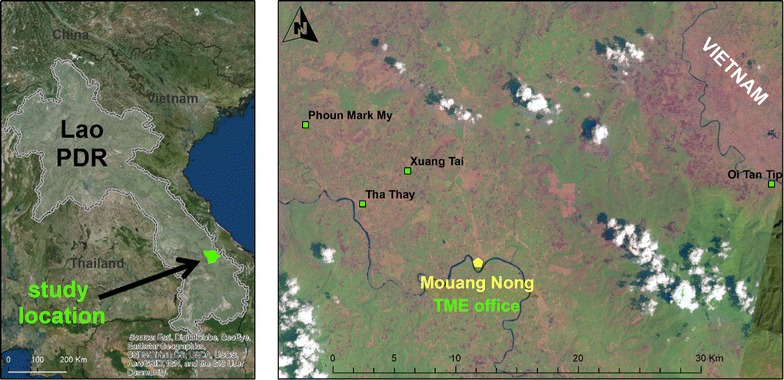
As a part of targeted malaria elimination (TME) in the Greater Mekong Sub-region (GMS), mass drug administration (MDA) with anti-malarials was conducted in four villages in Nong District, Savannakhet Province, Lao PDR (Laos). A high proportion of the target population participated in the MDA, with over 87% agreeing to take the anti-malarial. Drawing on qualitative data collected alongside the MDA, this article explores the factors that led to this high population coverage.
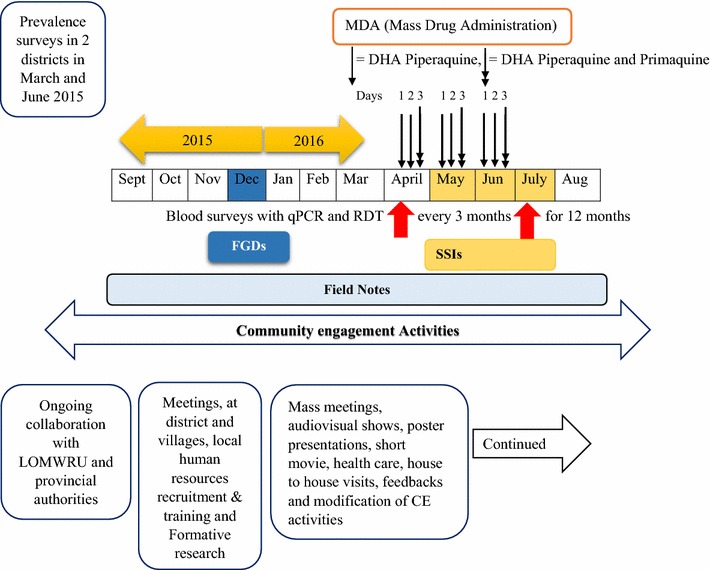
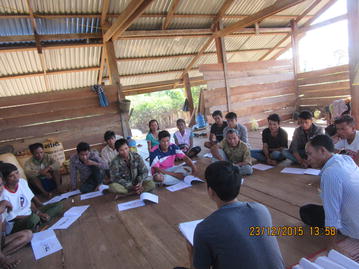
Qualitative data collection methods included observations, which were recorded in field notes, focus group discussions (FGDs), and semi-structured interviews (SSIs). Data were collected on local context, MDA-related knowledge, attitudes and perceptions. FGDs and SSIs were audio-recorded, transcribed and translated to English. All transcriptions and field notes underwent qualitative content analysis using QSR NVivo.
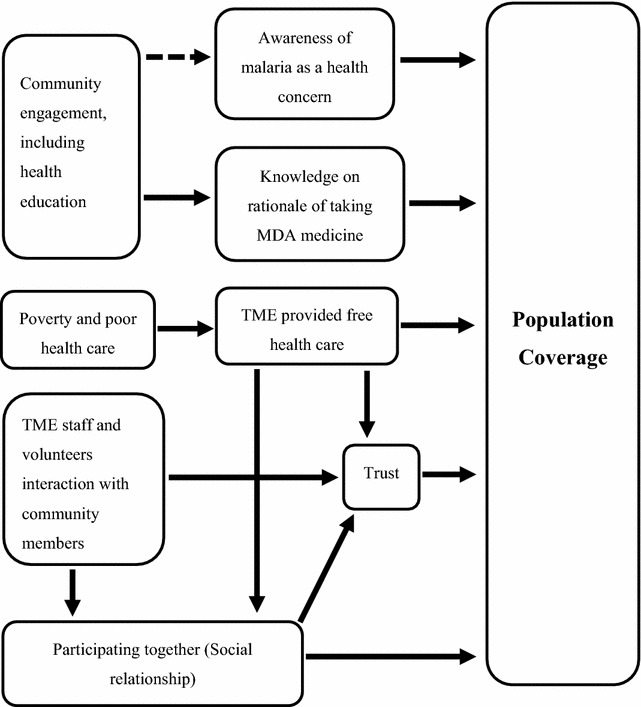
Respondents recognized malaria as a health concern and described the need for a malaria control program. The risk of malaria including asymptomatic infection was explained in terms of participants' work in forest and fields, and poor hygiene. During the MDA rounds, there was an improvement in knowledge on the concept of asymptomatic malaria, the rationale of MDA and the blood test. In all four villages, poverty affected access to healthcare and the provision of free care by TME was highly appreciated. TME was jointly undertaken by research staff and local volunteers. Authorities were involved in all TME activities. Lao Theung communities were cohesive and community members tended to follow each other's behaviour closely including participation in MDA. Factors such as understanding the concept and rationale of the study, free health care, collaboration with the village volunteers, support from authorities and cohesive communities contributed in building trust and high population coverage in MDA.
Future malaria control programmes can become successful in achieving the high coverage in MDAs drawing from the success of TME in Laos. A high population coverage in TME was a combination of various factors that included the community engagement to promote the concept and rationale of MDA for asymptomatic malaria in addition to their baseline understanding of malaria as a health concern, provision of free primary health care, partnering of the research with local volunteers and authorities, building social relationship with community members and the cohesive nature of the communities boosted the trust and participation in MDA.
作为大湄公河次区域(GMS)有针对性消除疟疾(TME)的一部分,老挝南部省份侬区的四个村庄开展了抗疟药物全民服药(MDA)。目标人群中的很大一部分参加了 MDA,超过 87%的人同意服用抗疟药。本文利用 MDA 期间收集的定性数据,探讨了导致高人群覆盖率的因素。
定性数据收集方法包括观察,记录在实地笔记中,焦点小组讨论(FGD)和半结构化访谈(SSI)。收集了有关当地背景、MDA 相关知识、态度和看法的资料。对 FGD 和 SSI 进行了录音、转录和翻译成英文。所有转录和实地笔记均使用 QSR NVivo 进行了定性内容分析。
受访者认识到疟疾是一个健康问题,并描述了对疟疾控制计划的需求。疟疾风险,包括无症状感染,是根据参与者在森林和田野中的工作以及卫生条件差来解释的。在 MDA 回合中,参与者对无症状疟疾的概念、MDA 的基本原理和血液检测有了更好的了解。在所有四个村庄,贫困影响了获得医疗保健的机会,而 TME 提供的免费医疗服务受到高度赞赏。TME 由研究人员和当地志愿者共同开展。当局参与了所有 TME 活动。老挝人社区凝聚力强,社区成员倾向于密切关注彼此的行为,包括参加 MDA。理解研究的概念和基本原理、免费医疗保健、与村庄志愿者的合作、当局的支持以及社区的凝聚力等因素有助于建立信任和 MDA 中的高人群覆盖率。
未来的疟疾控制计划可以借鉴老挝 TME 的成功经验,在 MDA 中取得高覆盖率。TME 中的高人群覆盖率是各种因素的结合,包括社区参与,以促进 MDA 对无症状疟疾的概念和基本原理,除了他们对疟疾作为健康问题的基本了解,免费提供初级卫生保健,将研究与当地志愿者和当局合作,与社区成员建立社会关系,以及社区的凝聚力,提高了 MDA 的信任度和参与度。