Department of Chemistry and Education, Seoul National University, 1 Gwanak-Ro, Gwanak-Gu, Seoul, 08826, South Korea.
Sci Rep. 2018 Jan 9;8(1):185. doi: 10.1038/s41598-017-18502-8.
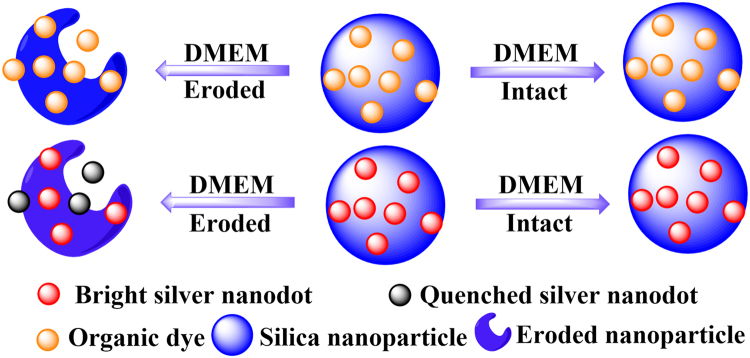
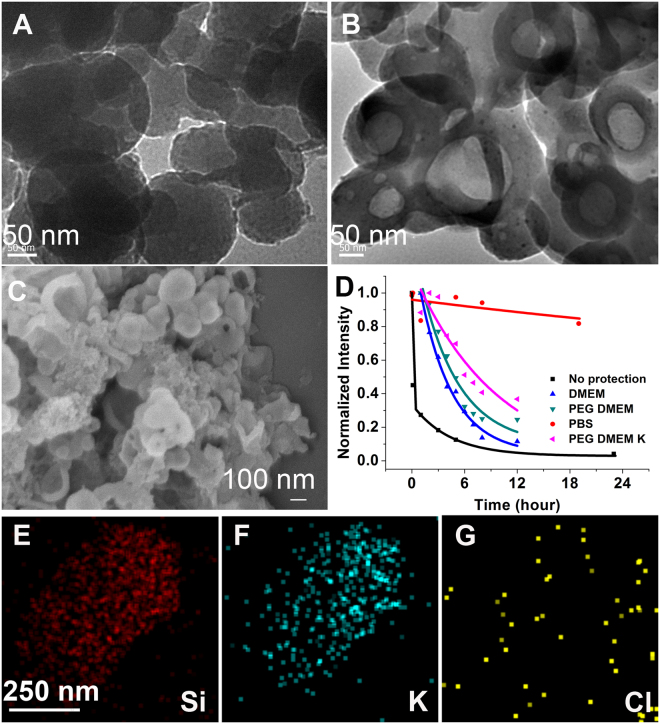
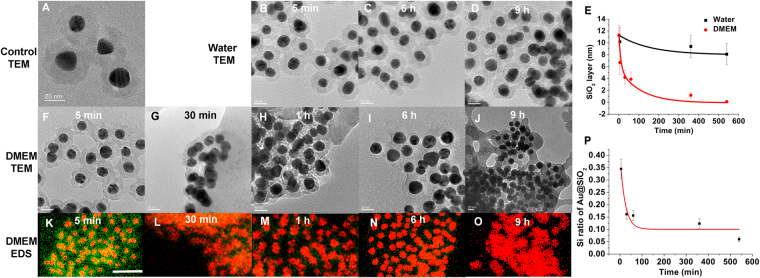
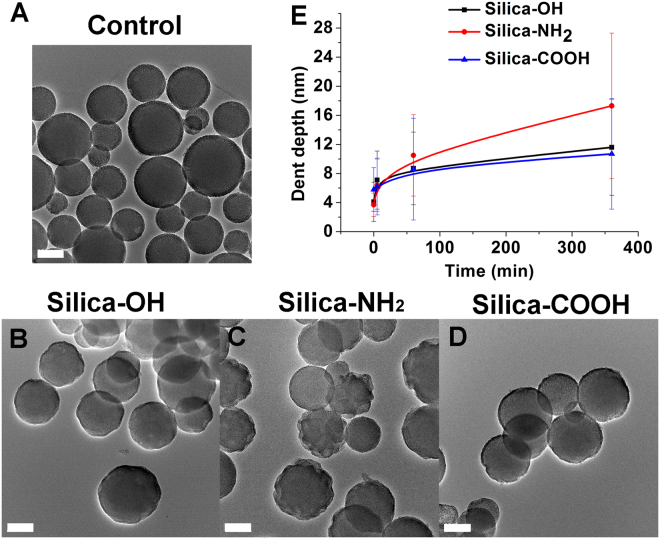
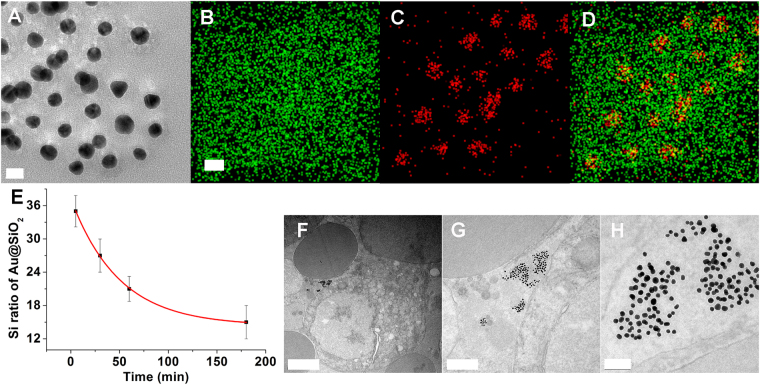
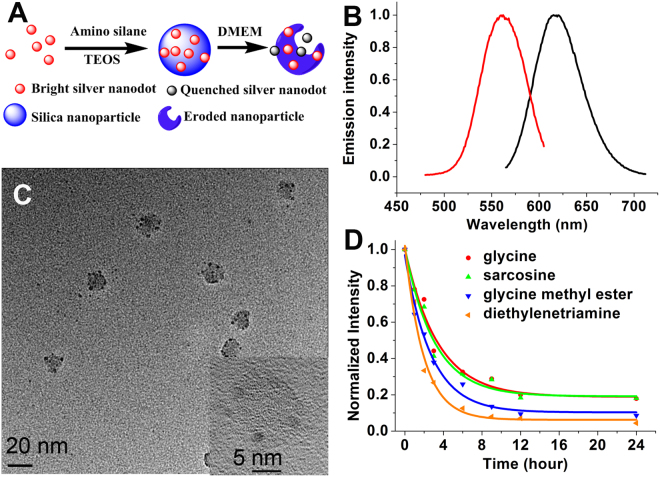
The stability of silica nanostructure in the core-silica shell nanomaterials is critical to understanding the activity of these nanomaterials since the exposure of core materials due to the poor stability of silica may cause misinterpretation of experiments, but unfortunately reports on the stability of silica have been inconsistent. Here, we show that luminescent silver nanodots (AgNDs) can be used to monitor the stability of silica nanostructures. Though relatively stable in water and phosphate buffered saline, silica nanoparticles are eroded by biological media, leading to the exposure of AgNDs from AgND@SiO nanoparticles and the quenching of nanodot luminescence. Our results reveal that a synergistic effect of organic compounds, particularly the amino groups, accelerates the erosion. Our work indicates that silica nanostructures are vulnerable to cellular medium and it may be possible to tune the release of drug molecules from silica-based drug delivery vehicles through controlled erosion.
核壳型纳米材料中二氧化硅纳米结构的稳定性对于理解这些纳米材料的活性至关重要,因为由于二氧化硅稳定性差导致核心材料暴露可能会导致对实验的误解,但不幸的是,关于二氧化硅稳定性的报道一直不一致。在这里,我们表明,发光银纳米点(AgNDs)可用于监测二氧化硅纳米结构的稳定性。尽管 AgNDs 在水中和磷酸盐缓冲盐水中相对稳定,但它们会被生物介质侵蚀,导致 AgND@SiO2 纳米粒子中的 AgND 暴露出来,并使纳米点的荧光猝灭。我们的结果表明,有机化合物(特别是氨基)的协同作用加速了侵蚀。我们的工作表明,二氧化硅纳米结构易受细胞介质的影响,通过控制侵蚀,有可能从基于二氧化硅的药物输送载体中控制药物分子的释放。