Key Laboratory for Major Obstetric Diseases of Guangdong Province, Key Laboratory of Reproduction and Genetics of Guangdong Higher Education Institutes, The Third Affiliated Hospital of Guangzhou Medical University, Guangzhou, 510150, China.
Key Laboratory of Regenerative Biology of the Chinese Academy of Sciences and Guangdong Provincial Key Laboratory of Stem Cells and Regenerative Medicine, South China Institute for Stem Cell Biology and Regenerative Medicine, Guangzhou Institutes of Biomedicine and Health, Chinese Academy of Sciences, Guangzhou, 510530, China.
Protein Cell. 2018 Mar;9(3):283-297. doi: 10.1007/s13238-017-0499-y. Epub 2018 Jan 9.
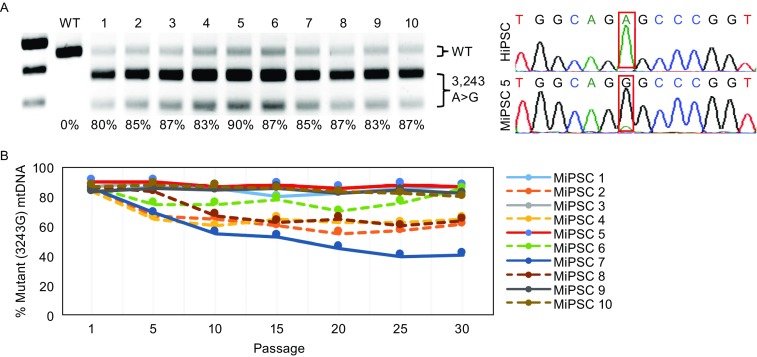
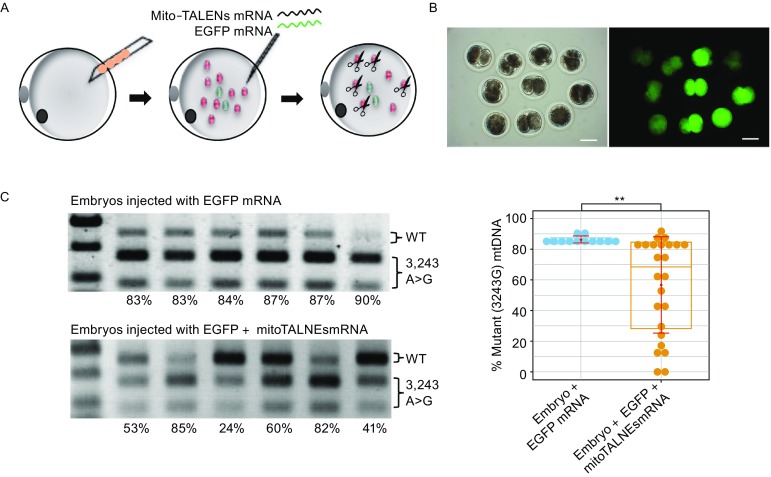
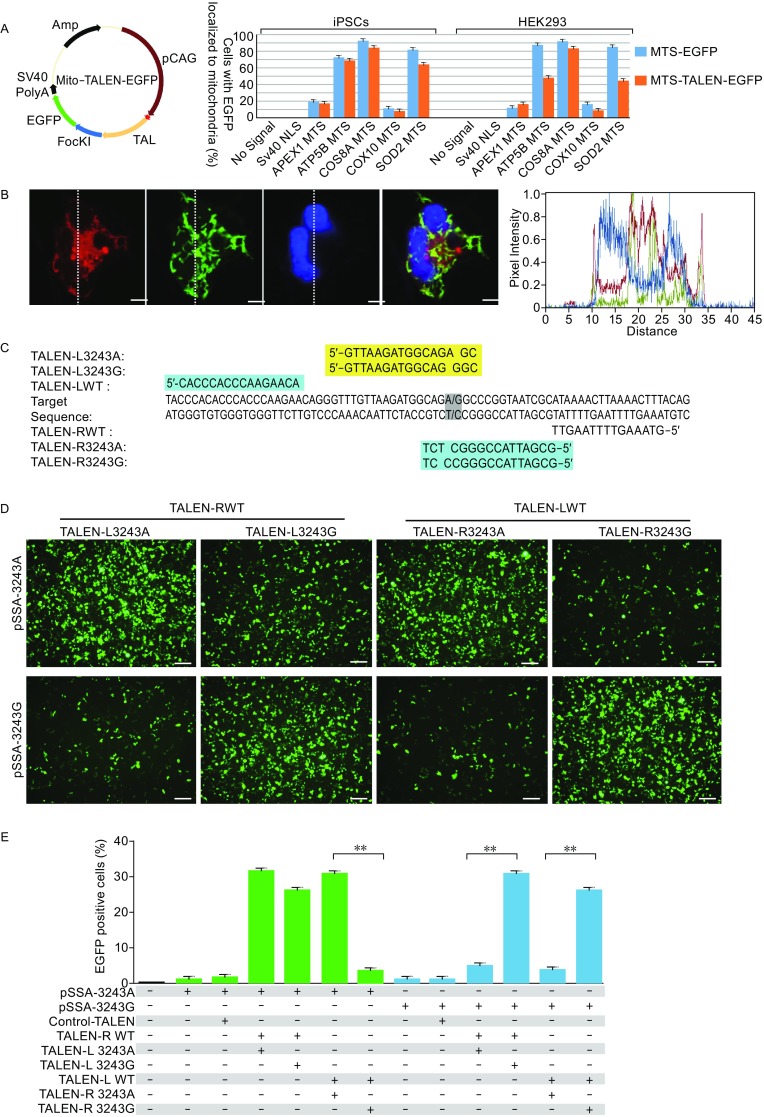
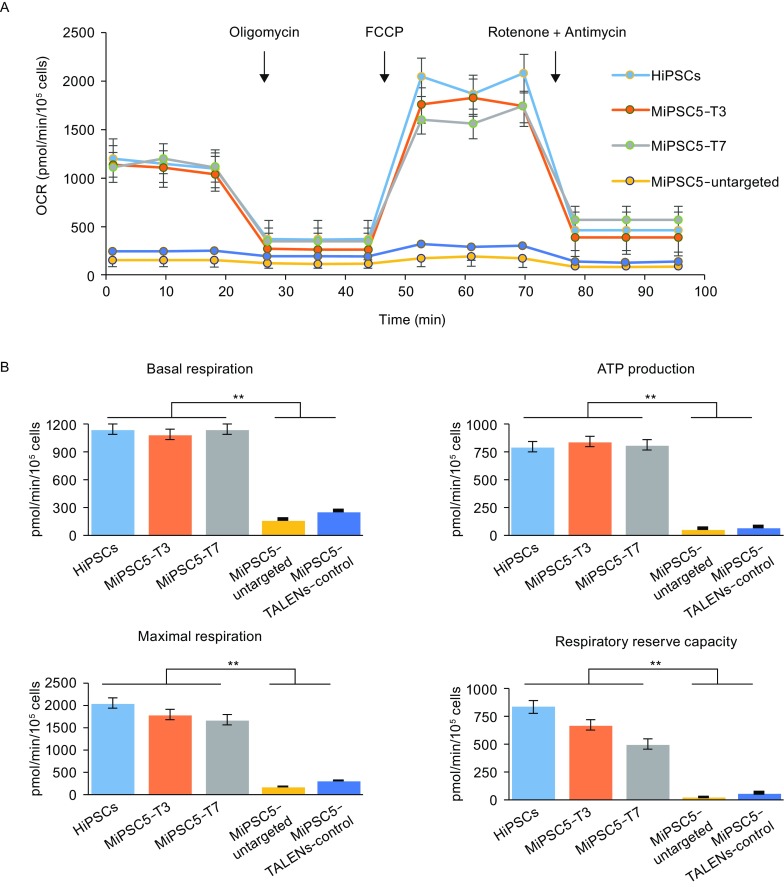
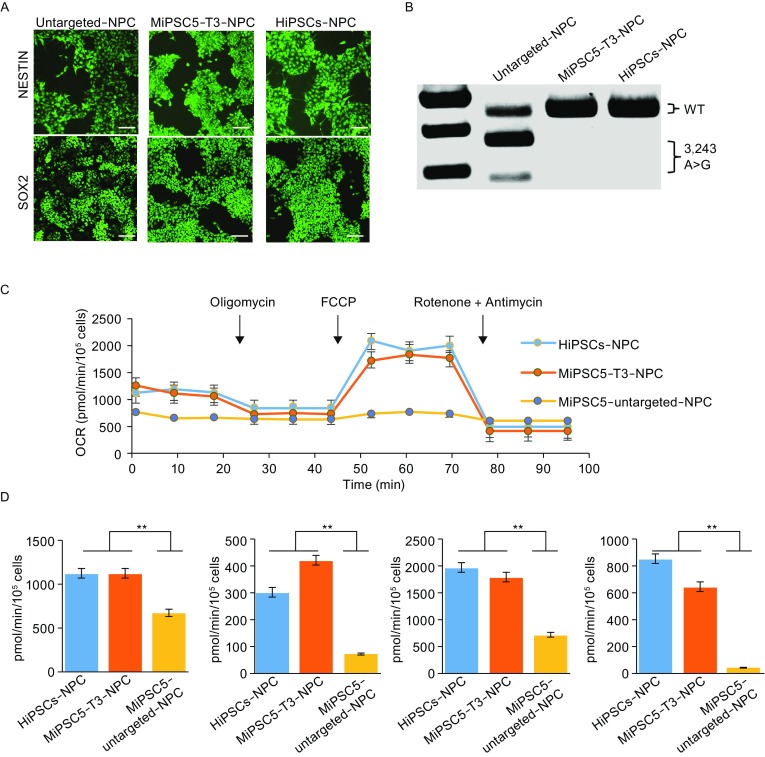
Mitochondrial diseases are maternally inherited heterogeneous disorders that are primarily caused by mitochondrial DNA (mtDNA) mutations. Depending on the ratio of mutant to wild-type mtDNA, known as heteroplasmy, mitochondrial defects can result in a wide spectrum of clinical manifestations. Mitochondria-targeted endonucleases provide an alternative avenue for treating mitochondrial disorders via targeted destruction of the mutant mtDNA and induction of heteroplasmic shifting. Here, we generated mitochondrial disease patient-specific induced pluripotent stem cells (MiPSCs) that harbored a high proportion of m.3243A>G mtDNA mutations and caused mitochondrial encephalomyopathy and stroke-like episodes (MELAS). We engineered mitochondrial-targeted transcription activator-like effector nucleases (mitoTALENs) and successfully eliminated the m.3243A>G mutation in MiPSCs. Off-target mutagenesis was not detected in the targeted MiPSC clones. Utilizing a dual fluorescence iPSC reporter cell line expressing a 3243G mutant mtDNA sequence in the nuclear genome, mitoTALENs displayed a significantly limited ability to target the nuclear genome compared with nuclear-localized TALENs. Moreover, genetically rescued MiPSCs displayed normal mitochondrial respiration and energy production. Moreover, neuronal progenitor cells differentiated from the rescued MiPSCs also demonstrated normal metabolic profiles. Furthermore, we successfully achieved reduction in the human m.3243A>G mtDNA mutation in porcine oocytes via injection of mitoTALEN mRNA. Our study shows the great potential for using mitoTALENs for specific targeting of mutant mtDNA both in iPSCs and mammalian oocytes, which not only provides a new avenue for studying mitochondrial biology and disease but also suggests a potential therapeutic approach for the treatment of mitochondrial disease, as well as the prevention of germline transmission of mutant mtDNA.
线粒体疾病是一种母系遗传的异质性疾病,主要由线粒体 DNA(mtDNA)突变引起。根据突变型和野生型 mtDNA 的比例,即异质性,线粒体缺陷可导致广泛的临床表现。线粒体靶向核酸内切酶通过靶向破坏突变型 mtDNA 和诱导异质性转变,为治疗线粒体疾病提供了另一种途径。在这里,我们生成了携带有高比例 m.3243A>G mtDNA 突变的线粒体疾病患者特异性诱导多能干细胞(MiPSCs),这些突变导致线粒体脑肌病伴高乳酸血症和卒中样发作(MELAS)。我们设计了线粒体靶向转录激活样效应物核酸酶(mitoTALENs),并成功地消除了 MiPSCs 中的 m.3243A>G 突变。在靶向 MiPSC 克隆中未检测到脱靶突变。利用核基因组中表达 3243G 突变 mtDNA 序列的双荧光 iPSC 报告细胞系,mitoTALENs 显示出与核定位 TALENs 相比,靶向核基因组的能力显著受限。此外,经过基因修复的 MiPSCs 显示出正常的线粒体呼吸和能量产生。此外,从修复的 MiPSCs 分化而来的神经元祖细胞也表现出正常的代谢谱。此外,我们通过注射 mitoTALEN mRNA 成功地减少了猪卵母细胞中的人 m.3243A>G mtDNA 突变。我们的研究表明,mitoTALENs 具有在 iPSCs 和哺乳动物卵母细胞中特异性靶向突变型 mtDNA 的巨大潜力,不仅为研究线粒体生物学和疾病提供了新途径,还为治疗线粒体疾病以及预防突变型 mtDNA 的种系传递提供了潜在的治疗方法。