Jarosz-Biej Magdalena, Kamińska Natalia, Matuszczak Sybilla, Cichoń Tomasz, Pamuła-Piłat Jolanta, Czapla Justyna, Smolarczyk Ryszard, Skwarzyńska Daria, Kulik Klaudia, Szala Stanisław
Center for Translational Research and Molecular Biology of Cancer, Maria Sklodowska-Curie Memorial Cancer Center and Institute of Oncology, Gliwice Branch, Gliwice, Poland.
PLoS One. 2018 Jan 10;13(1):e0191012. doi: 10.1371/journal.pone.0191012. eCollection 2018.
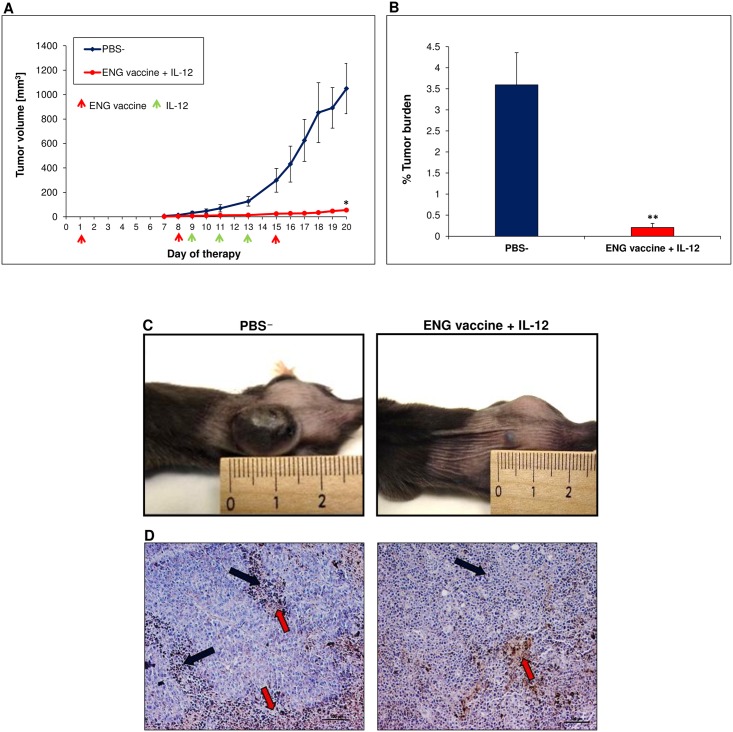
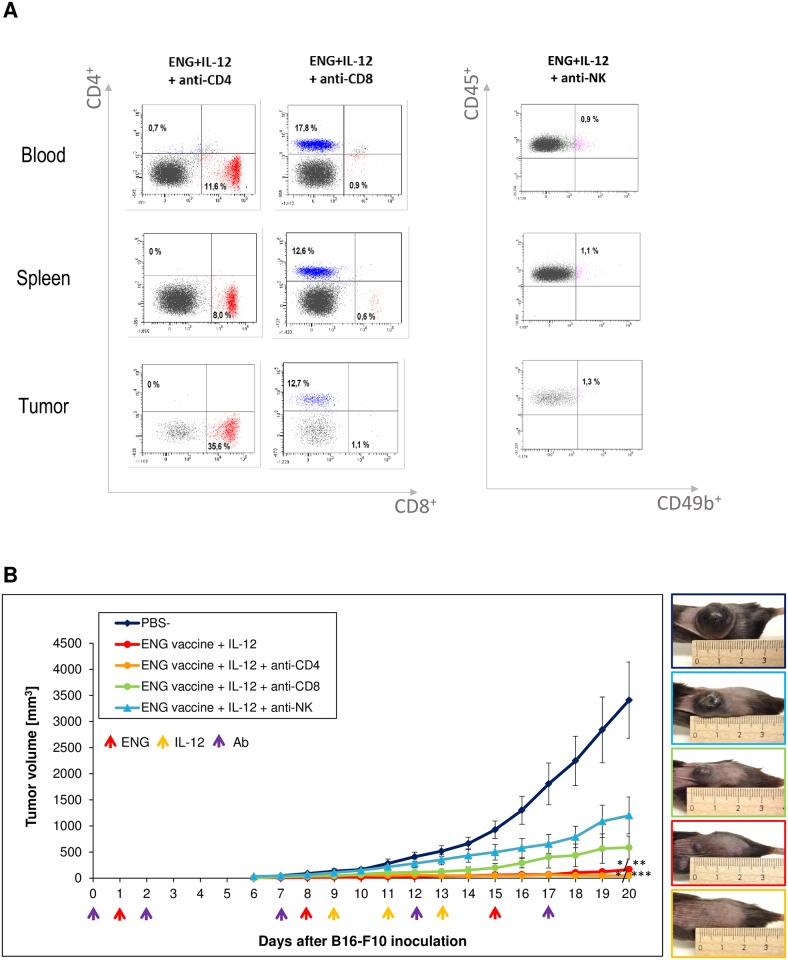
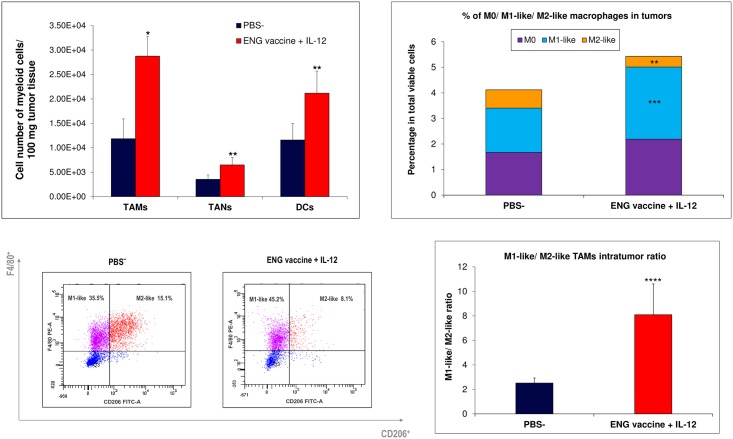
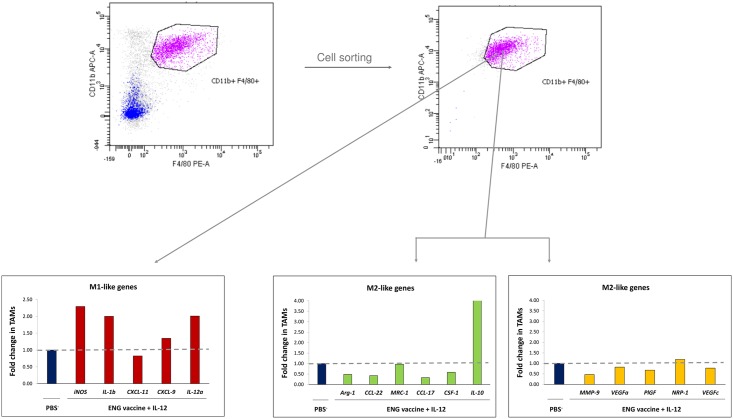
Tumor-associated macrophages (TAMs) play a significant role in at least two key processes underlying neoplastic progression: angiogenesis and immune surveillance. TAMs phenotypic changes play important role in tumor vessel abnormalization/ normalization. M2-like TAMs stimulate immunosuppression and formation of defective tumor blood vessels leading to tumor progression. In contrast M1-like TAMs trigger immune response and normalize irregular tumor vascular network which should sensitize cancer cells to chemo- and radiotherapy and lead to tumor growth regression. Here, we demonstrated that combination of endoglin-based DNA vaccine with interleukin 12 repolarizes TAMs from tumor growth-promoting M2-like phenotype to tumor growth-inhibiting M1-like phenotype. Combined therapy enhances tumor infiltration by CD4+, CD8+ lymphocytes and NK cells. Depletion of TAMs as well as CD8+ lymphocytes and NK cells, but not CD4+ lymphocytes, reduces the effect of combined therapy. Furthermore, combined therapy improves tumor vessel maturation, perfusion and reduces hypoxia. It caused that suboptimal doses of doxorubicin reduced the growth of tumors in mice treated with combined therapy. To summarize, combination of antiangiogenic drug and immunostimulatory agent repolarizes TAMs phenotype from M2-like (pro-tumor) into M1-like (anti-tumor) which affects the structure of tumor blood vessels, improves the effect of chemotherapy and leads to tumor growth regression.
肿瘤相关巨噬细胞(TAM)在肿瘤进展的至少两个关键过程中发挥着重要作用:血管生成和免疫监视。TAM的表型变化在肿瘤血管异常化/正常化中起重要作用。M2样TAM刺激免疫抑制并形成有缺陷的肿瘤血管,导致肿瘤进展。相反,M1样TAM触发免疫反应并使不规则的肿瘤血管网络正常化,这应使癌细胞对化疗和放疗敏感并导致肿瘤生长消退。在此,我们证明基于内皮糖蛋白的DNA疫苗与白细胞介素12联合使用可使TAM从促进肿瘤生长的M2样表型重新极化至抑制肿瘤生长的M1样表型。联合治疗增强了CD4 +、CD8 +淋巴细胞和NK细胞对肿瘤的浸润。去除TAM以及CD8 +淋巴细胞和NK细胞,但不去除CD4 +淋巴细胞,会降低联合治疗的效果。此外,联合治疗可改善肿瘤血管成熟度、灌注并减少缺氧。这使得次优剂量的阿霉素减少了接受联合治疗的小鼠体内肿瘤的生长。总之,抗血管生成药物和免疫刺激剂的联合使用可使TAM表型从M2样(促肿瘤)重新极化至M1样(抗肿瘤),这会影响肿瘤血管结构,提高化疗效果并导致肿瘤生长消退。