Edwards Luke J, Pine Kerrin J, Ellerbrock Isabel, Weiskopf Nikolaus, Mohammadi Siawoosh
Department of Neurophysics, Max Planck Institute for Human Cognitive and Brain Sciences, Leipzig, Germany.
Wellcome Trust Centre for Neuroimaging, UCL Institute of Neurology, University College London, London, United Kingdom.
Front Neurosci. 2017 Dec 20;11:720. doi: 10.3389/fnins.2017.00720. eCollection 2017.
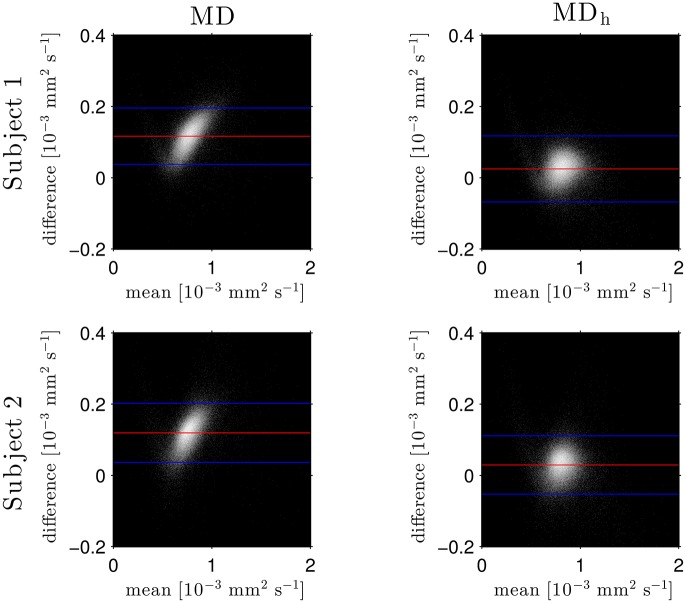
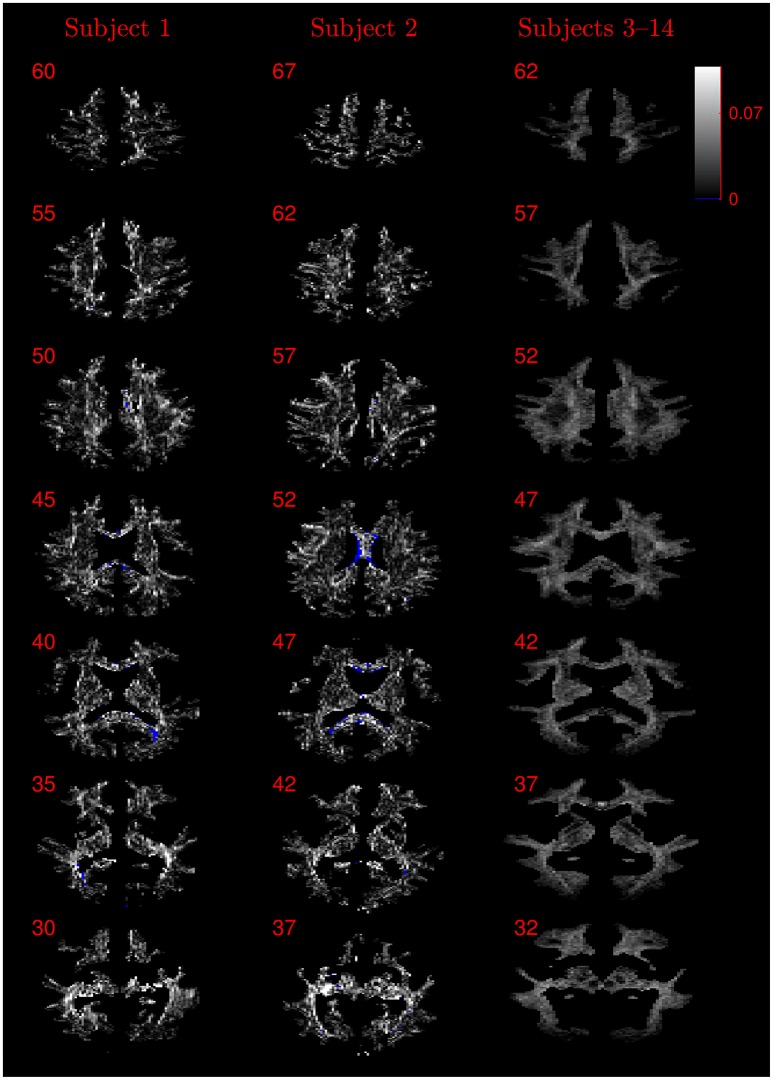
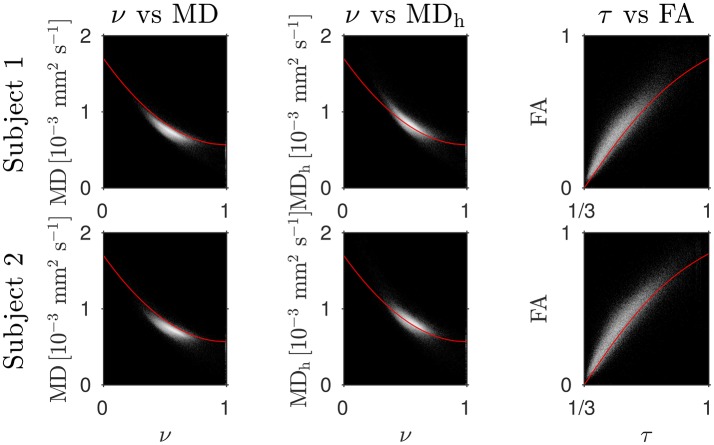
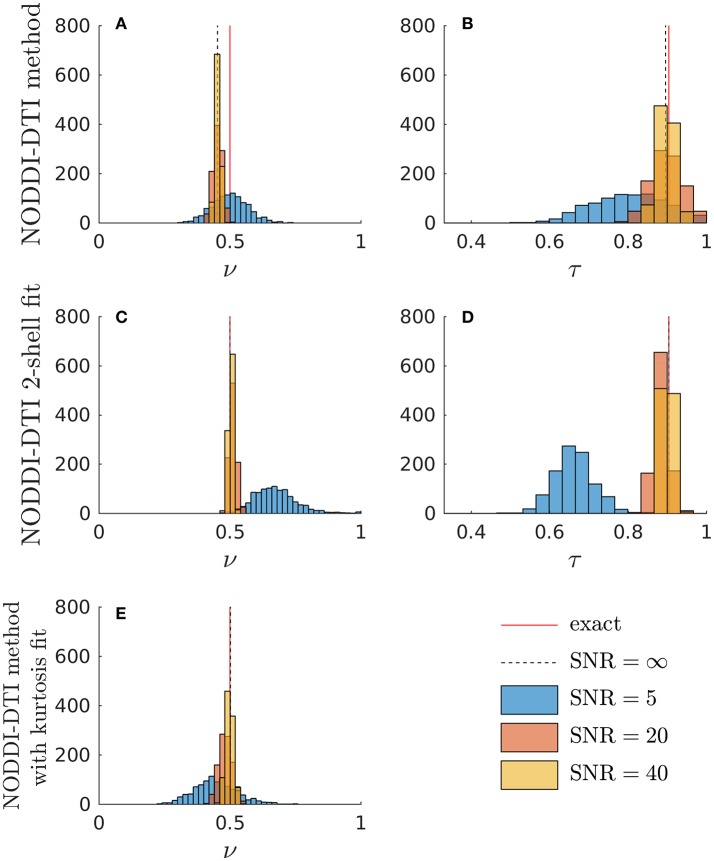
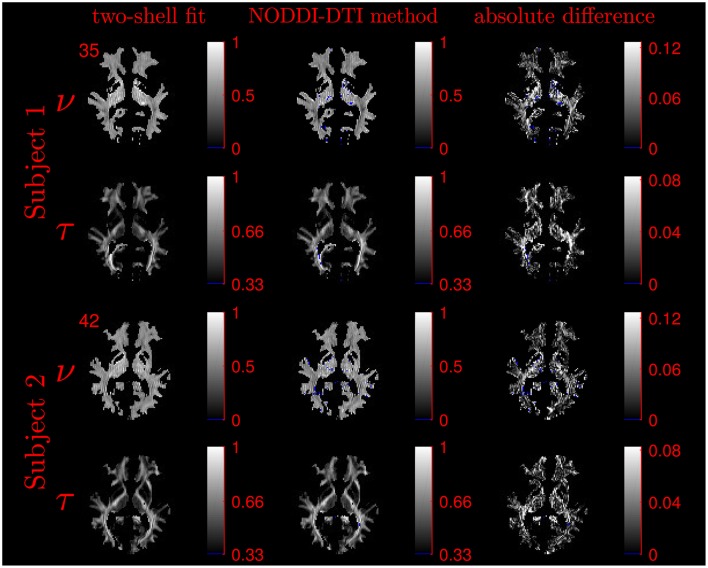
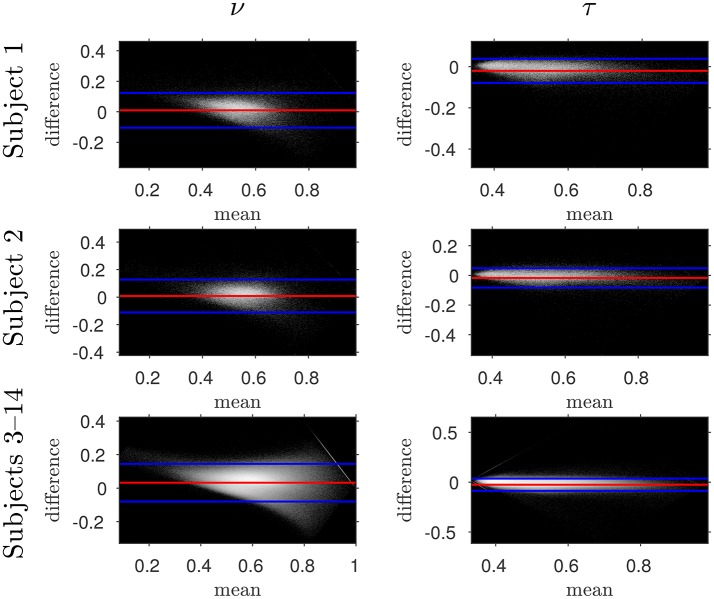
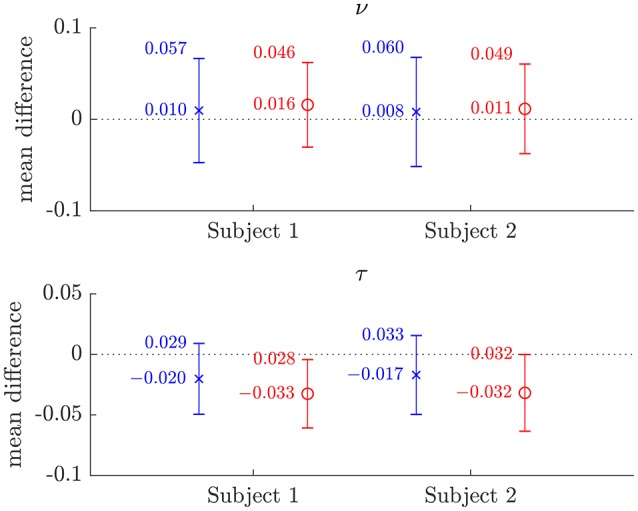
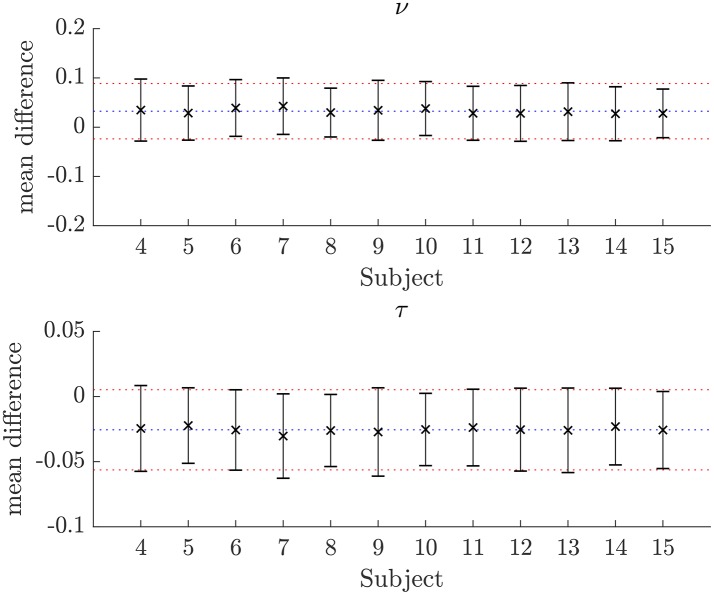
The NODDI-DTI signal model is a modification of the NODDI signal model that formally allows interpretation of standard single-shell DTI data in terms of biophysical parameters in healthy human white matter (WM). The NODDI-DTI signal model contains no CSF compartment, restricting application to voxels without CSF partial-volume contamination. This modification allowed derivation of analytical relations between parameters representing axon density and dispersion, and DTI invariants (MD and FA) from the NODDI-DTI signal model. These relations formally allow extraction of biophysical parameters from DTI data. NODDI-DTI parameters were estimated by applying the proposed analytical relations to DTI parameters estimated from the first shell of data, and compared to parameters estimated by fitting the NODDI-DTI model to both shells of data (reference dataset) in the WM of 14 diffusion datasets recorded with two different protocols, and in simulated data. The first two datasets were also fit to the NODDI-DTI model using only the first shell (as for DTI) of data. NODDI-DTI parameters estimated from DTI, and NODDI-DTI parameters estimated by fitting the model to the first shell of data gave similar errors compared to two-shell NODDI-DTI estimates. The simulations showed the NODDI-DTI method to be more noise-robust than the two-shell fitting procedure. The NODDI-DTI method gave unphysical parameter estimates in a small percentage of voxels, reflecting voxelwise DTI estimation error or NODDI-DTI model invalidity. In the course of evaluating the NODDI-DTI model, it was found that diffusional kurtosis strongly biased DTI-based MD values, and so, making assumptions based on healthy WM, a novel heuristic correction requiring only DTI data was derived and used to mitigate this bias. Since validations were only performed on healthy WM, application to grey matter or pathological WM would require further validation. Our results demonstrate NODDI-DTI to be a promising model and technique to interpret restricted datasets acquired for DTI analysis in healthy white matter with greater biophysical specificity, though its limitations must be borne in mind.
NODDI-DTI信号模型是对NODDI信号模型的一种修改,它正式允许根据健康人类白质(WM)中的生物物理参数来解释标准单壳DTI数据。NODDI-DTI信号模型不包含脑脊液(CSF)成分,因此仅限于应用于没有CSF部分容积污染的体素。这种修改使得能够从NODDI-DTI信号模型中推导出表示轴突密度和离散度的参数与DTI不变量(平均扩散率[MD]和各向异性分数[FA])之间的解析关系。这些关系正式允许从DTI数据中提取生物物理参数。通过将所提出的解析关系应用于从第一组数据估计的DTI参数来估计NODDI-DTI参数,并将其与通过将NODDI-DTI模型拟合到两组数据(参考数据集)而估计的参数进行比较,这些数据来自使用两种不同协议记录的14个扩散数据集中的WM以及模拟数据。前两个数据集也仅使用数据的第一组(如同DTI那样)拟合到NODDI-DTI模型。与双壳NODDI-DTI估计相比,从DTI估计的NODDI-DTI参数以及通过将模型拟合到第一组数据估计的NODDI-DTI参数具有相似的误差。模拟表明,NODDI-DTI方法比双壳拟合程序对噪声更具鲁棒性。NODDI-DTI方法在一小部分体素中给出了不符合物理实际的参数估计,这反映了体素级DTI估计误差或NODDI-DTI模型无效。在评估NODDI-DTI模型的过程中,发现扩散峰度强烈影响基于DTI的MD值,因此,基于健康WM做出假设,推导并使用了一种仅需要DTI数据的新型启发式校正方法来减轻这种偏差。由于验证仅在健康WM上进行,因此应用于灰质或病理性WM需要进一步验证。我们的结果表明,NODDI-DTI是一个有前景的模型和技术,能够以更高的生物物理特异性解释为健康白质DTI分析获取的受限数据集,不过必须牢记其局限性。