Dalke Claudia, Neff Frauke, Bains Savneet Kaur, Bright Scott, Lord Deborah, Reitmeir Peter, Rößler Ute, Samaga Daniel, Unger Kristian, Braselmann Herbert, Wagner Florian, Greiter Matthias, Gomolka Maria, Hornhardt Sabine, Kunze Sarah, Kempf Stefan J, Garrett Lillian, Hölter Sabine M, Wurst Wolfgang, Rosemann Michael, Azimzadeh Omid, Tapio Soile, Aubele Michaela, Theis Fabian, Hoeschen Christoph, Slijepcevic Predrag, Kadhim Munira, Atkinson Michael, Zitzelsberger Horst, Kulka Ulrike, Graw Jochen
Helmholtz Center Munich, German Research Center for Environmental Health, Institute of Developmental Genetics, 85764, Neuherberg, Germany.
Helmholtz Center Munich, German Research Center for Environmental Health, Institute of Pathology, Neuherberg, Germany.
Radiat Environ Biophys. 2018 May;57(2):99-113. doi: 10.1007/s00411-017-0728-z. Epub 2018 Jan 11.
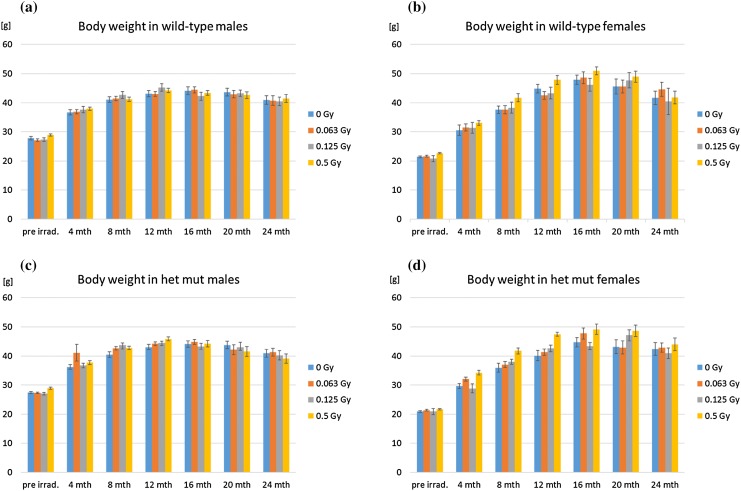
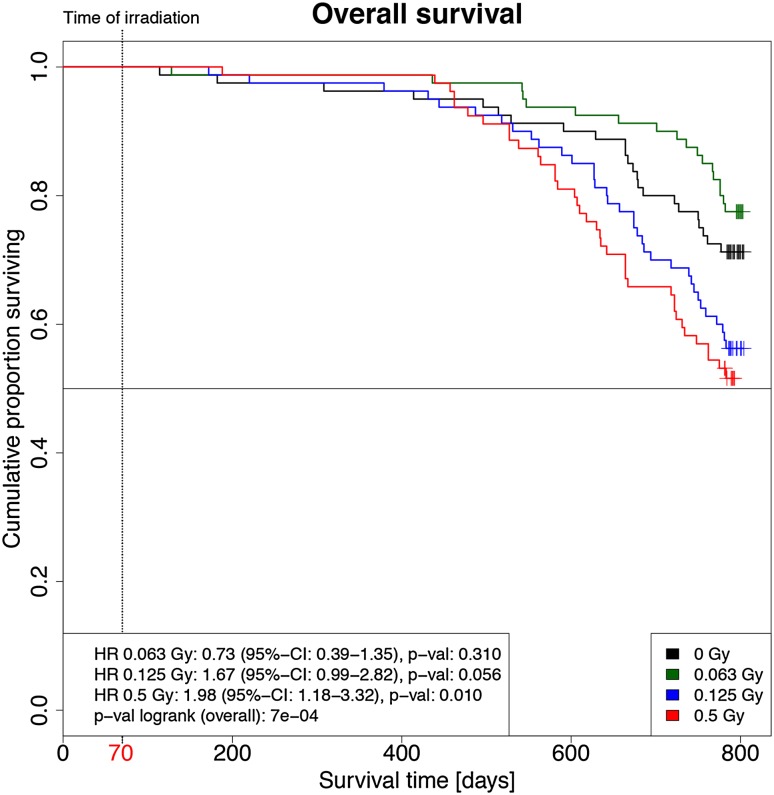
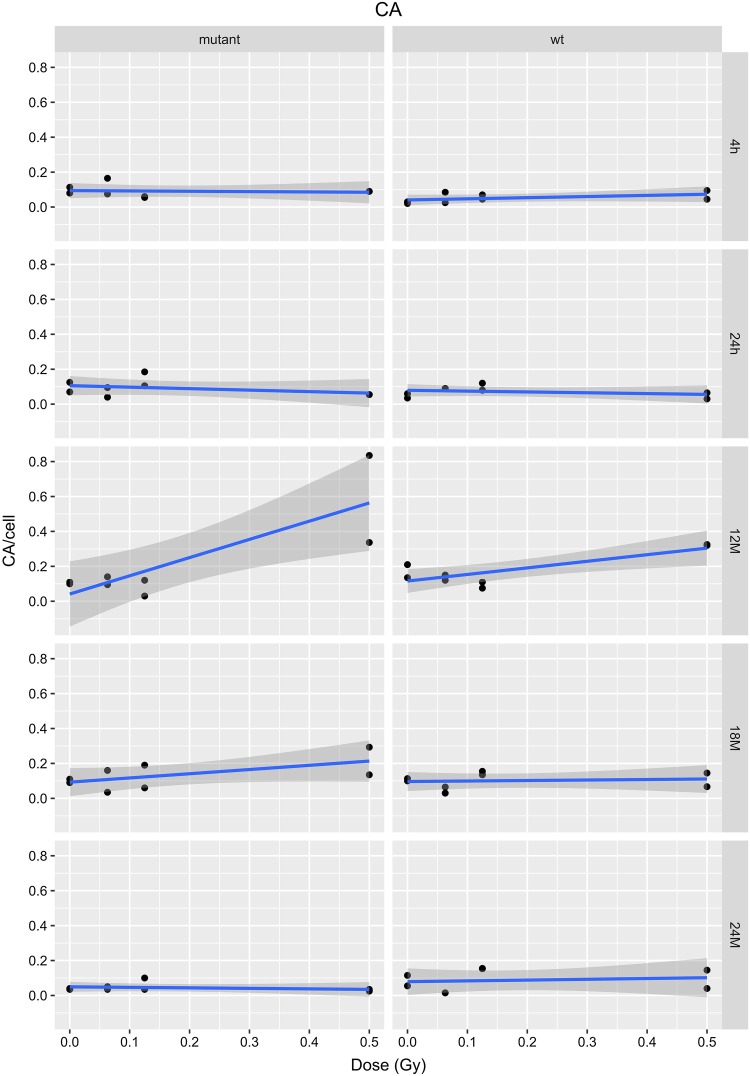
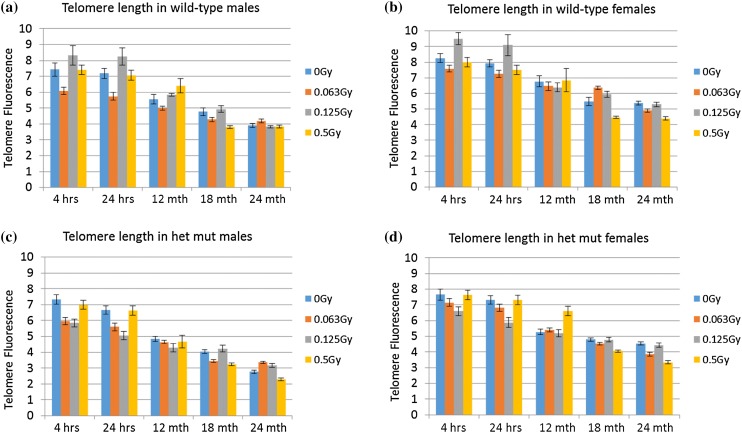
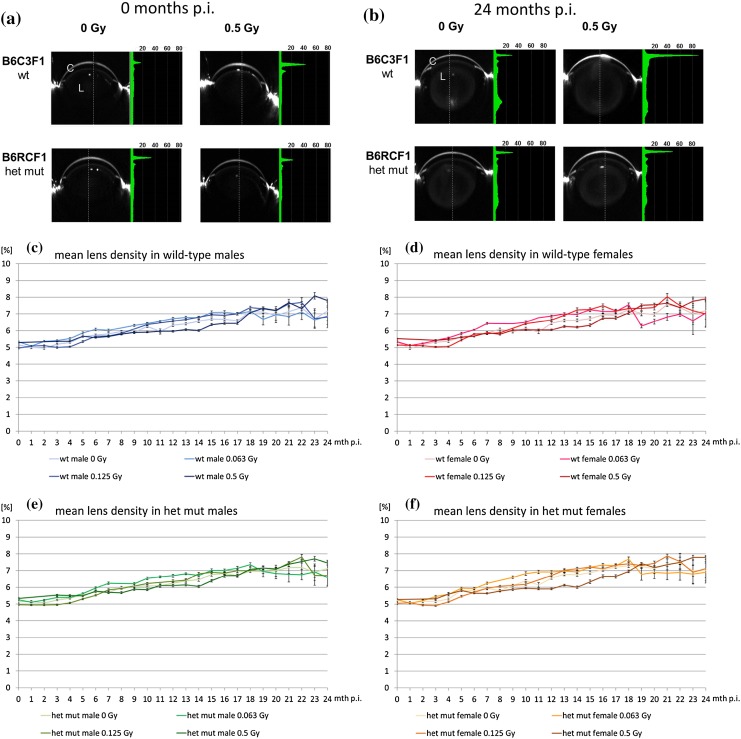
Because of the increasing application of ionizing radiation in medicine, quantitative data on effects of low-dose radiation are needed to optimize radiation protection, particularly with respect to cataract development. Using mice as mammalian animal model, we applied a single dose of 0, 0.063, 0.125 and 0.5 Gy at 10 weeks of age, determined lens opacities for up to 2 years and compared it with overall survival, cytogenetic alterations and cancer development. The highest dose was significantly associated with increased body weight and reduced survival rate. Chromosomal aberrations in bone marrow cells showed a dose-dependent increase 12 months after irradiation. Pathological screening indicated a dose-dependent risk for several types of tumors. Scheimpflug imaging of the lens revealed a significant dose-dependent effect of 1% of lens opacity. Comparison of different biological end points demonstrated long-term effects of low-dose irradiation for several biological end points.
由于电离辐射在医学中的应用日益增加,为优化辐射防护,尤其是针对白内障的发生,需要有关低剂量辐射影响的定量数据。我们以小鼠作为哺乳动物动物模型,在10周龄时给予0、0.063、0.125和0.5 Gy的单次剂量,测定长达2年的晶状体混浊情况,并将其与总体生存率、细胞遗传学改变和癌症发生情况进行比较。最高剂量与体重增加和生存率降低显著相关。照射后12个月,骨髓细胞中的染色体畸变呈剂量依赖性增加。病理筛查表明几种肿瘤存在剂量依赖性风险。晶状体的Scheimpflug成像显示晶状体混浊1%存在显著的剂量依赖性效应。不同生物学终点的比较表明低剂量辐射对多个生物学终点具有长期影响。