Public Health England, Centre for Radiation, Chemical and Environmental Hazards, Chilton, Didcot, Oxon, UK.
Durham University, Department of Biosciences, Durham, UK.
Sci Rep. 2019 Jul 18;9(1):10418. doi: 10.1038/s41598-019-46893-3.
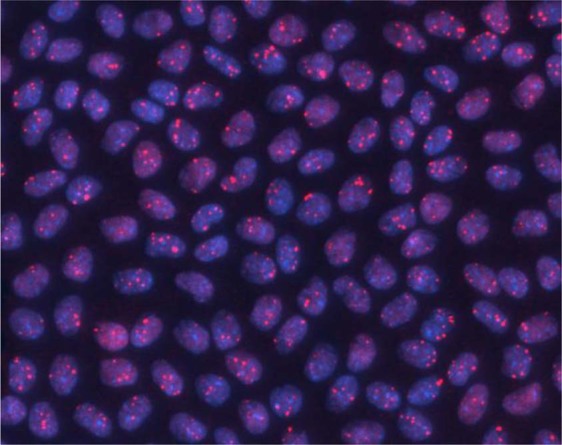
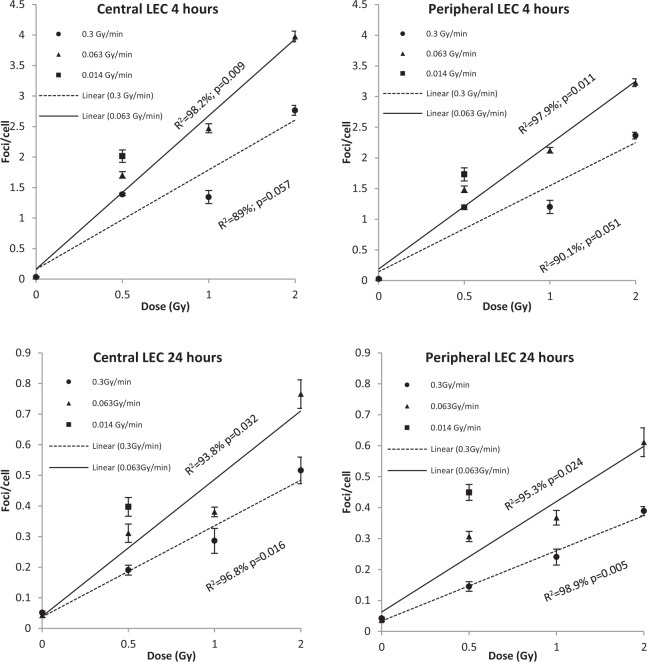
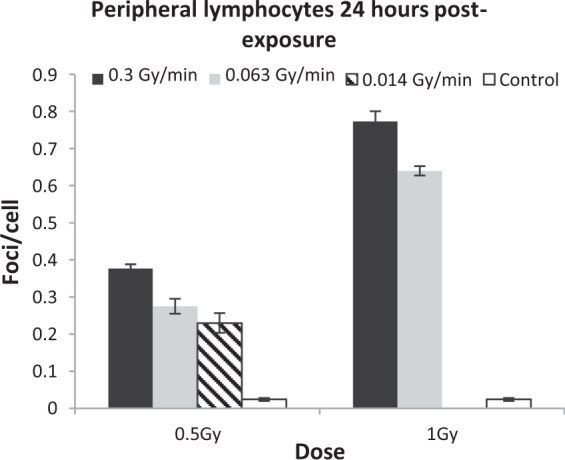
The influence of dose rate on radiation cataractogenesis has yet to be extensively studied. One recent epidemiological investigation suggested that protracted radiation exposure increases radiation-induced cataract risk: cumulative doses of radiation mostly <100 mGy received by US radiologic technologists over 5 years were associated with an increased excess hazard ratio for cataract development. However, there are few mechanistic studies to support and explain such observations. Low-dose radiation-induced DNA damage in the epithelial cells of the eye lens (LECs) has been proposed as a possible contributor to cataract formation and thus visual impairment. Here, 53BP1 foci was used as a marker of DNA damage. Unexpectedly, the number of 53BP1 foci that persisted in the mouse lens samples after γ-radiation exposure increased with decreasing dose-rate at 4 and 24 h. The C57BL/6 mice were exposed to 0.5, 1 and 2 Gy ƴ-radiation at 0.063 and 0.3 Gy/min and also 0.5 Gy at 0.014 Gy/min. This contrasts the data we obtained for peripheral blood lymphocytes collected from the same animal groups, which showed the expected reduction of residual 53BP1 foci with reducing dose-rate. These findings highlight the likely importance of dose-rate in low-dose cataract formation and, furthermore, represent the first evidence that LECs process radiation damage differently to blood lymphocytes.
辐射白内障ogenesis 的剂量率影响尚未得到广泛研究。最近的一项流行病学调查表明,长时间的辐射暴露会增加辐射诱导白内障的风险:在 5 年内,美国放射技师接受的辐射累积剂量大多<100 mGy,与白内障发展的超额危害比增加有关。然而,很少有机制研究来支持和解释这些观察结果。眼晶状体(LEC)上皮细胞中的低剂量辐射诱导的 DNA 损伤被认为是白内障形成和视力障碍的一个可能原因。在这里,53BP1 焦点被用作 DNA 损伤的标志物。出乎意料的是,在γ辐射暴露后,在 4 和 24 小时时,在小鼠晶状体样本中持续存在的 53BP1 焦点的数量随着剂量率的降低而增加。C57BL/6 小鼠在 0.063 和 0.3 Gy/min 的 0.5、1 和 2 Gy γ 射线下以及在 0.014 Gy/min 的 0.5 Gy 下进行照射。这与我们从相同动物组中收集的外周血淋巴细胞的数据形成对比,后者显示出预期的残留 53BP1 焦点随剂量率降低而减少。这些发现强调了剂量率在低剂量白内障形成中的重要性,此外,还代表了第一个证据,即 LEC 对辐射损伤的处理与血淋巴细胞不同。