Kumar Akhil, Wang Lin, Ng Chiam Yu, Maranas Costas D
The Huck Institutes of the Life Sciences, The Pennsylvania State University, University Park, PA, 16802, USA.
Department of Chemical Engineering, The Pennsylvania State University, University Park, PA, 16802, USA.
Nat Commun. 2018 Jan 12;9(1):184. doi: 10.1038/s41467-017-02362-x.
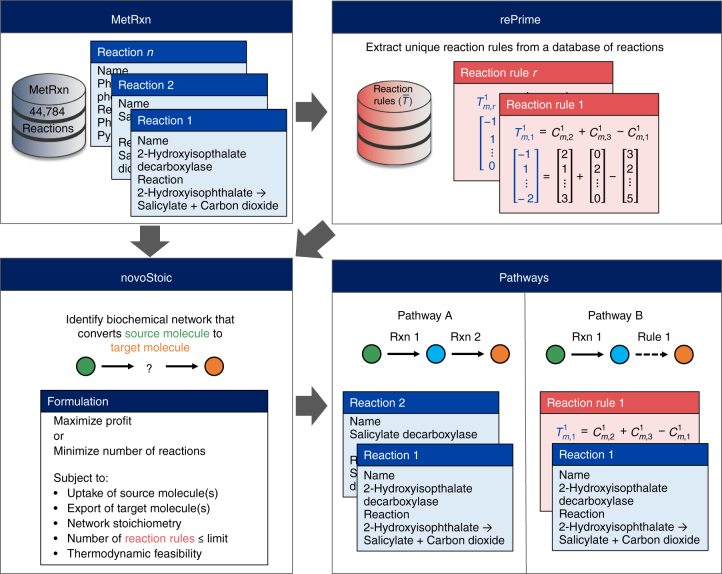
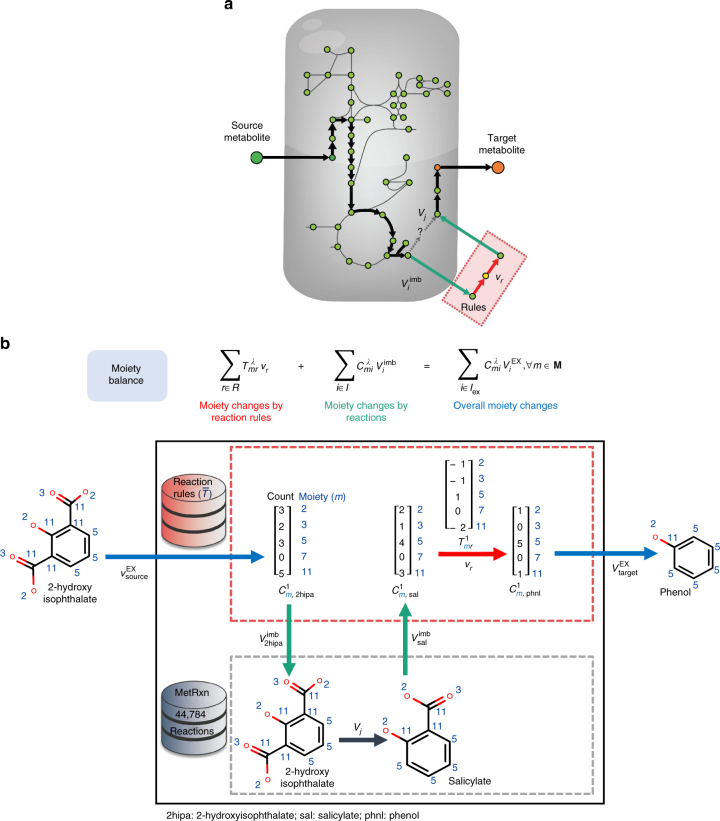
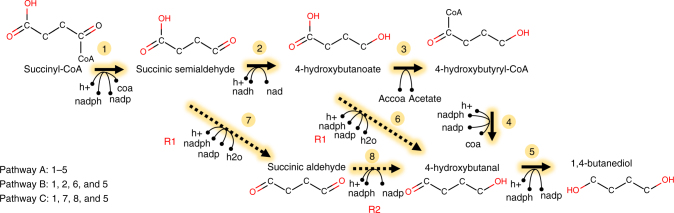
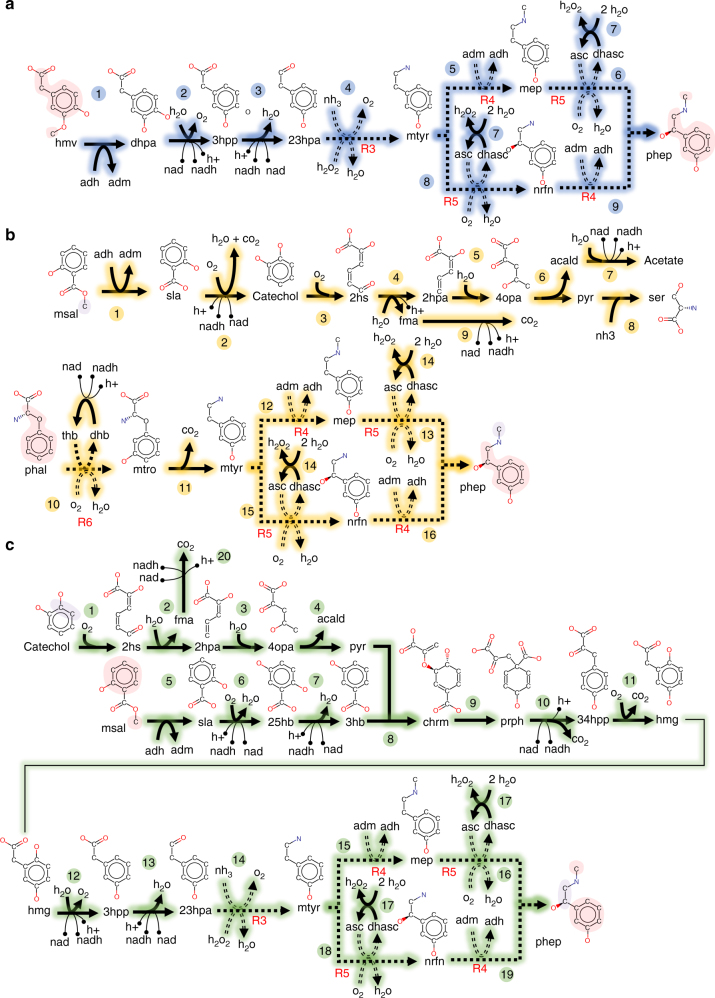
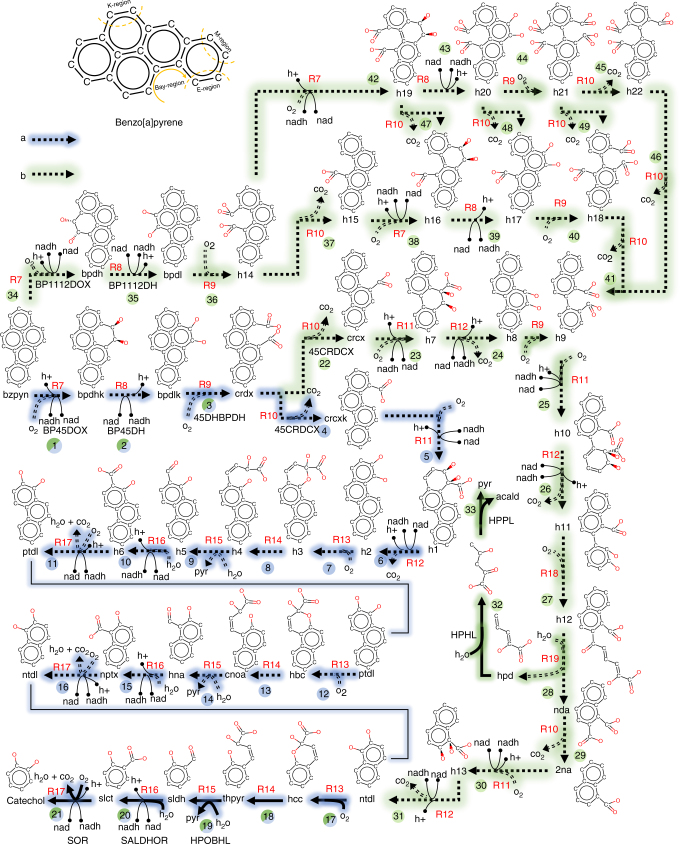
Existing retrosynthesis tools generally traverse production routes from a source to a sink metabolite using known enzymes or de novo steps. Generally, important considerations such as blending known transformations with putative steps, complexity of pathway topology, mass conservation, cofactor balance, thermodynamic feasibility, microbial chassis selection, and cost are largely dealt with in a posteriori fashion. The computational procedure we present here designs bioconversion routes while simultaneously considering any combination of the aforementioned design criteria. First, we track and codify as rules all reaction centers using a prime factorization-based encoding technique (rePrime). Reaction rules and known biotransformations are then simultaneously used by the pathway design algorithm (novoStoic) to trace both metabolites and molecular moieties through balanced bio-conversion strategies. We demonstrate the use of novoStoic in bypassing steps in existing pathways through putative transformations, assembling complex pathways blending both known and putative steps toward pharmaceuticals, and postulating ways to biodegrade xenobiotics.
现有的逆合成工具通常使用已知酶或从头合成步骤,从源代谢物到汇代谢物遍历生产路线。一般来说,诸如将已知转化与推测步骤相结合、途径拓扑结构的复杂性、质量守恒、辅因子平衡、热力学可行性、微生物底盘选择和成本等重要考虑因素,大多以后验方式处理。我们在此提出的计算程序在设计生物转化路线的同时,会考虑上述任何组合的设计标准。首先,我们使用基于质因数分解的编码技术(rePrime),将所有反应中心作为规则进行跟踪和编码。然后,途径设计算法(novoStoic)同时使用反应规则和已知的生物转化,通过平衡的生物转化策略来追踪代谢物和分子部分。我们展示了novoStoic在通过推测转化绕过现有途径中的步骤、组装融合已知和推测步骤以合成药物的复杂途径以及推测生物降解异生素的方法方面的应用。