Oregon Institute of Occupational Health Sciences, Oregon Health & Science University, 3181 S. W. Sam Jackson Park Rd, Portland, Oregon, 97239, USA.
Institute for Occupational Health Science, Shenzhen Prevention and Treatment Center for Occupational Diseases, 2019 Buxin Rd., Luohu District, Guangdong Province, Shenzhen, 518020, China.
Sci Rep. 2018 Jan 15;8(1):705. doi: 10.1038/s41598-017-17940-8.
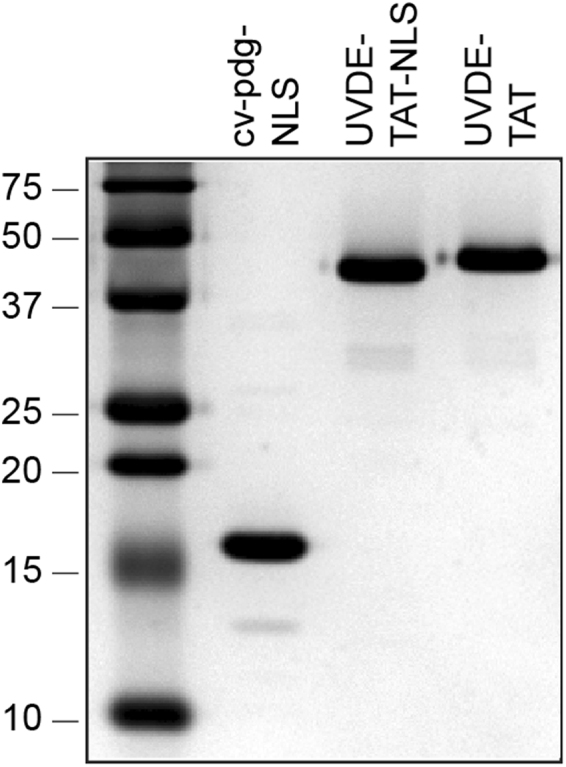
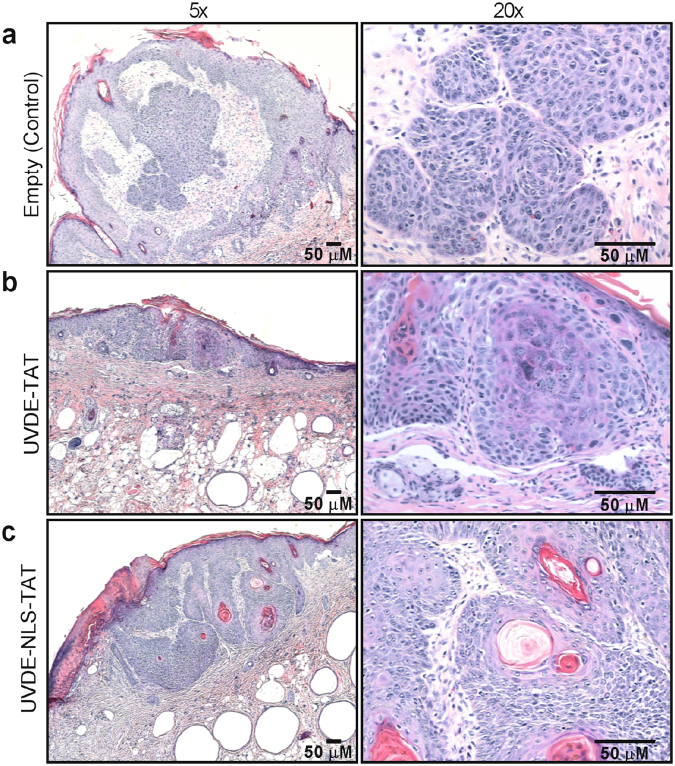
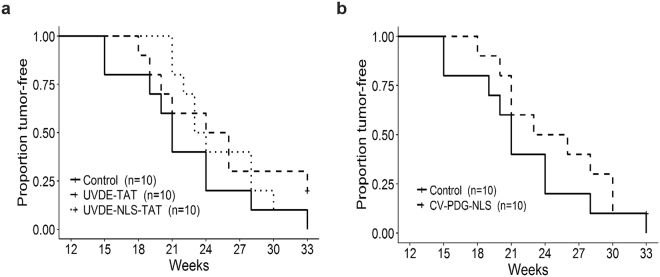
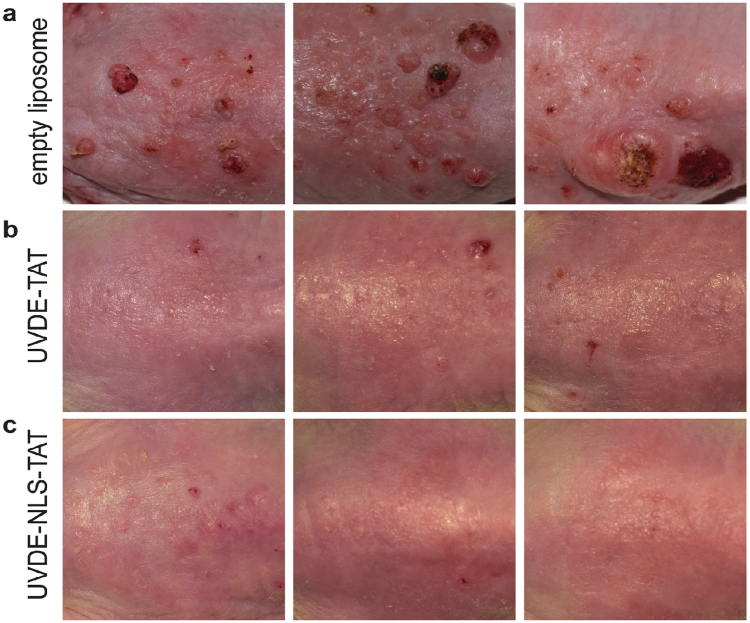
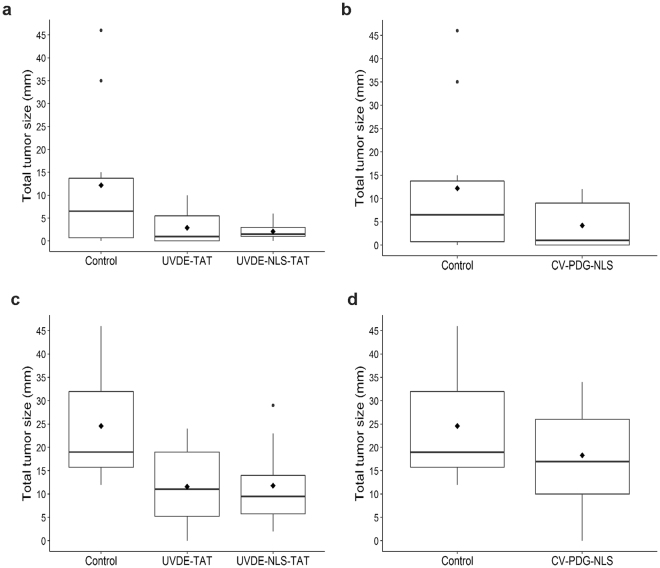
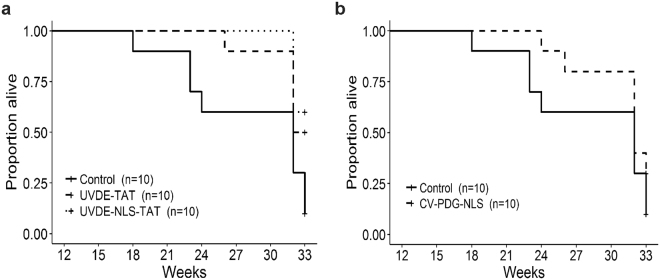
The molecular basis for ultraviolet (UV) light-induced nonmelanoma and melanoma skin cancers centers on cumulative genomic instability caused by inefficient DNA repair of dipyrimidine photoproducts. Inefficient DNA repair and subsequent translesion replication past these DNA lesions generate distinct molecular signatures of tandem CC to TT and C to T transitions at dipyrimidine sites. Since previous efforts to develop experimental strategies to enhance the repair capacity of basal keratinocytes have been limited, we have engineered the N-terminally truncated form (Δ228) UV endonuclease (UVDE) from Schizosaccharomyces pombe to include a TAT cell-penetrating peptide sequence with or without a nuclear localization signal (NLS): UVDE-TAT and UVDE-NLS-TAT. Further, a NLS was engineered onto a pyrimidine dimer glycosylase from Paramecium bursaria chlorella virus-1 (cv-pdg-NLS). Purified enzymes were encapsulated into liposomes and topically delivered to the dorsal surface of SKH1 hairless mice in a UVB-induced carcinogenesis study. Total tumor burden was significantly reduced in mice receiving either UVDE-TAT or UVDE-NLS-TAT versus control empty liposomes and time to death was significantly reduced with the UVDE-NLS-TAT. These data suggest that efficient delivery of exogenous enzymes for the initiation of repair of UVB-induced DNA damage may protect from UVB induction of squamous and basal cell carcinomas.
紫外线 (UV) 光诱导的非黑色素瘤和黑色素瘤皮肤癌的分子基础集中在由二嘧啶光产物的低效 DNA 修复引起的累积基因组不稳定性上。低效的 DNA 修复以及随后在这些 DNA 损伤处通过转位复制,会在二嘧啶位点产生串联 CC 到 TT 和 C 到 T 转换的独特分子特征。由于之前开发增强基础角质形成细胞修复能力的实验策略的努力受到限制,我们已经从酿酒酵母中工程改造了 N 端截断形式 (Δ228) 的 UV 内切酶 (UVDE),其中包括一个 TAT 细胞穿透肽序列,带有或不带有核定位信号 (NLS):UVDE-TAT 和 UVDE-NLS-TAT。此外,还在来自 Paramecium bursaria chlorella virus-1 (cv-pdg-NLS) 的嘧啶二聚体糖苷酶上设计了一个 NLS。纯化的酶被包裹在脂质体中,并在 UVB 诱导的致癌形成研究中局部递送到 SKH1 无毛小鼠的背部表面。与对照空脂质体相比,接受 UVDE-TAT 或 UVDE-NLS-TAT 的小鼠的总肿瘤负担显着降低,并且 UVDE-NLS-TAT 降低了死亡时间。这些数据表明,高效递外源性酶以启动修复 UVB 诱导的 DNA 损伤可能有助于预防 UVB 诱导的鳞状细胞癌和基底细胞癌。