Izquierdo Elisa, Yuan Lina, George Sally, Hubank Michael, Jones Chris, Proszek Paula, Shipley Janet, Gatz Susanne A, Stinson Caedyn, Moore Andrew S, Clifford Steven C, Hicks Debbie, Lindsey Janet C, Hill Rebecca M, Jacques Thomas S, Chalker Jane, Thway Khin, O'Connor Simon, Marshall Lynley, Moreno Lucas, Pearson Andrew, Chesler Louis, Walker Brian A, De Castro David Gonzalez
Molecular Diagnostics Department, The Institute of Cancer Research and Clinical Genomics, The Royal Marsden NHS Foundation, London, United Kingdom.
Glioma Team, Division of Molecular Pathology and Cancer Therapeutics, The Institute of Cancer Research, London, United Kingdom.
Oncotarget. 2017 Dec 6;8(67):112036-112050. doi: 10.18632/oncotarget.23000. eCollection 2017 Dec 19.
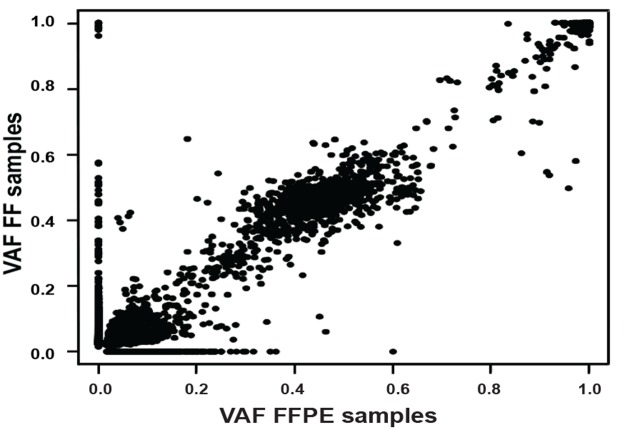
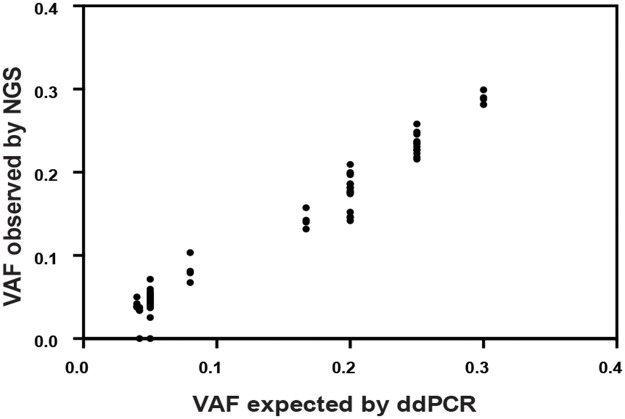
The implementation of personalised medicine in childhood cancers has been limited by a lack of clinically validated multi-target sequencing approaches specific for paediatric solid tumours. In order to support innovative clinical trials in high-risk patients with unmet need, we have developed a clinically relevant targeted sequencing panel spanning 311 kb and comprising 78 genes involved in childhood cancers. A total of 132 samples were used for the validation of the panel, including Horizon Discovery cell blends (n=4), cell lines (n=15), formalin-fixed paraffin embedded (FFPE, n=83) and fresh frozen tissue (FF, n=30) patient samples. Cell blends containing known single nucleotide variants (SNVs, n=528) and small insertion-deletions (indels n=108) were used to define panel sensitivities of ≥98% for SNVs and ≥83% for indels [95% CI] and panel specificity of ≥98% [95% CI] for SNVs. FFPE samples performed comparably to FF samples (n=15 paired). Of 95 well-characterised genetic abnormalities in 33 clinical specimens and 13 cell lines (including SNVs, indels, amplifications, rearrangements and chromosome losses), 94 (98.9%) were detected by our approach. We have validated a robust and practical methodology to guide clinical management of children with solid tumours based on their molecular profiles. Our work demonstrates the value of targeted gene sequencing in the development of precision medicine strategies in paediatric oncology.
儿童癌症个性化医疗的实施一直受到限制,因为缺乏针对小儿实体瘤的经过临床验证的多靶点测序方法。为了支持针对有未满足需求的高危患者开展创新临床试验,我们开发了一个临床相关的靶向测序面板,覆盖311 kb,包含78个与儿童癌症相关的基因。总共132个样本用于该面板的验证,包括Horizon Discovery细胞混合物(n = 4)、细胞系(n = 15)、福尔马林固定石蜡包埋(FFPE,n = 83)和新鲜冷冻组织(FF,n = 30)患者样本。含有已知单核苷酸变异(SNV,n = 528)和小插入缺失(indel,n = 108)的细胞混合物用于确定该面板对SNV的灵敏度≥98%,对indel的灵敏度≥83% [95%置信区间],以及对SNV的面板特异性≥98% [95%置信区间]。FFPE样本与FF样本表现相当(n = 15对配对样本)。在33个临床标本和13个细胞系中的95个特征明确的基因异常(包括SNV、indel、扩增、重排和染色体缺失)中,我们的方法检测到了94个(98.9%)。我们已经验证了一种强大且实用的方法,可根据儿童实体瘤患者的分子特征指导其临床管理。我们 的工作证明了靶向基因测序在儿科肿瘤学精准医疗策略开发中的价值。