Moustafa Ahmed, Li Weizhong, Anderson Ericka L, Wong Emily H M, Dulai Parambir S, Sandborn William J, Biggs William, Yooseph Shibu, Jones Marcus B, Venter J Craig, Nelson Karen E, Chang John T, Telenti Amalio, Boland Brigid S
Human Longevity Inc., San Diego, CA, USA.
J. Craig Venter Institute, La Jolla, CA, USA.
Clin Transl Gastroenterol. 2018 Jan 18;9(1):e132. doi: 10.1038/ctg.2017.58.
Inflammatory bowel diseases (IBD), comprised of Crohn's disease (CD) and ulcerative colitis (UC), are characterized by a complex pathophysiology that is thought to result from an aberrant immune response to a dysbiotic luminal microbiota in genetically susceptible individuals. New technologies support the joint assessment of host-microbiome interaction.
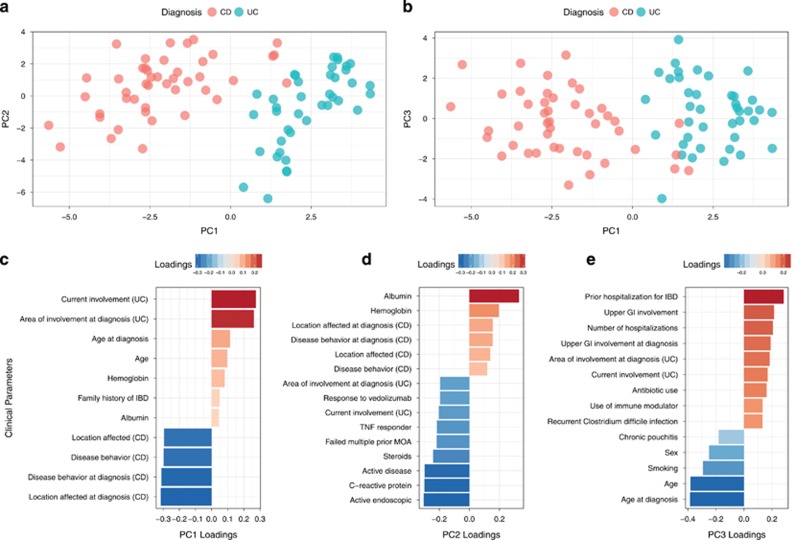
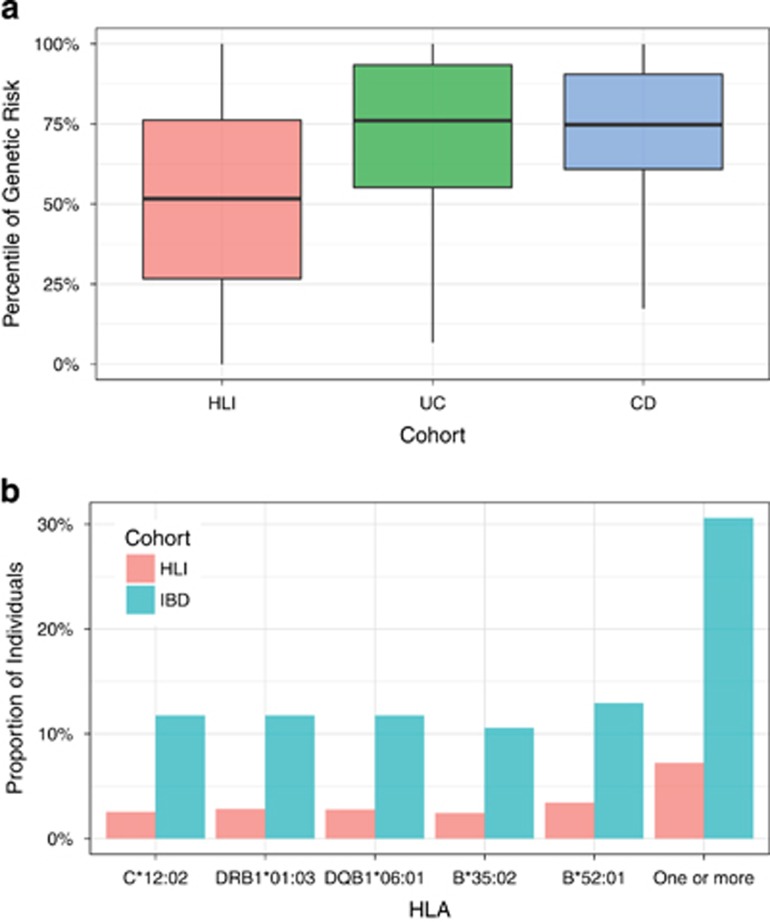
Using whole genome sequencing and shotgun metagenomics, we studied the clinical features, host genome, and stool microbial metagenome of 85 IBD patients, and compared the results to 146 control individuals. Genetic risk scores, computed on 159 single nucleotide variants, and human leukocyte antigen (HLA) types differentiated IBD patients from healthy controls.
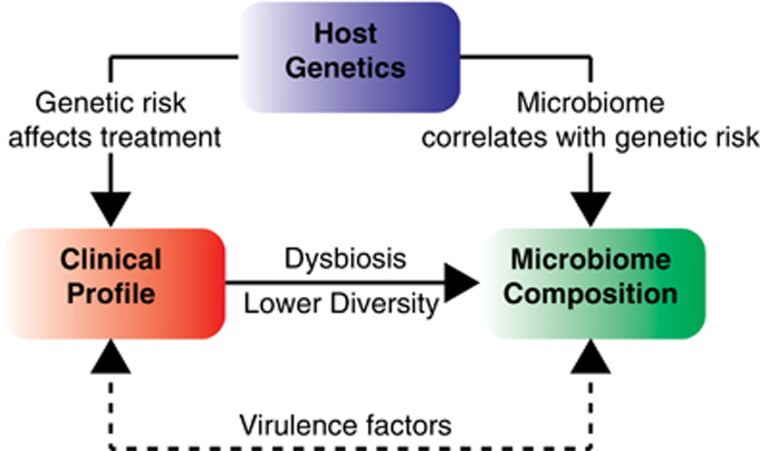
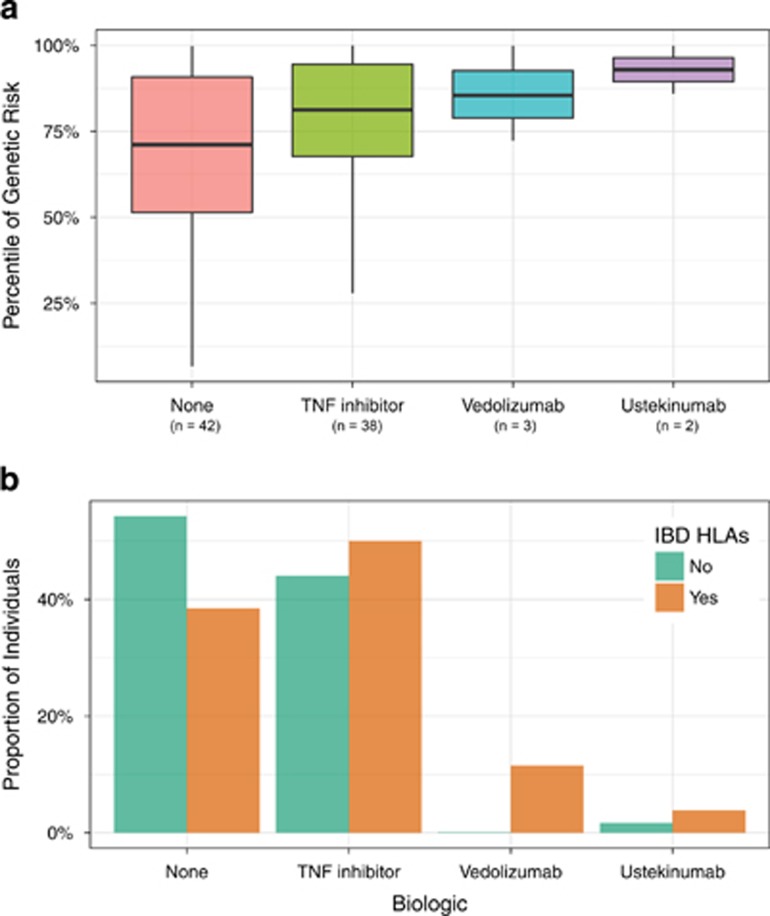
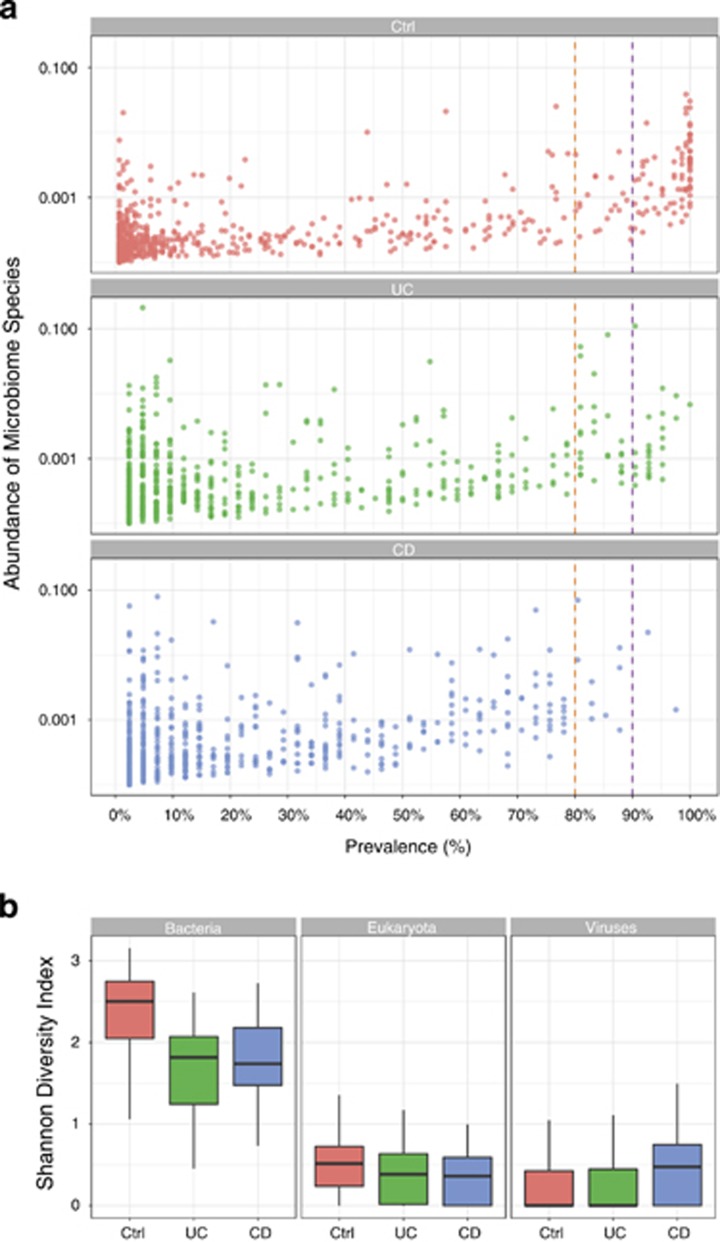
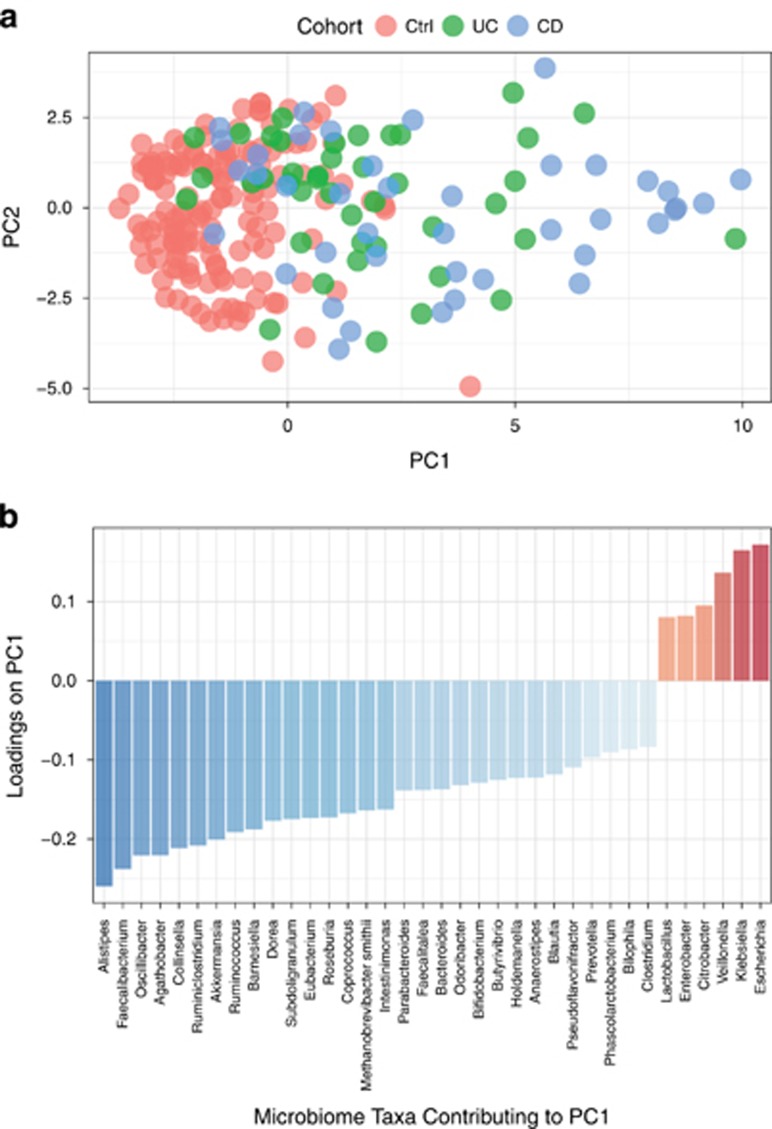
Genetic risk was associated with the need for use of biologics in IBD and, modestly, with the composition of the gut microbiome. As compared with healthy controls, IBD patients had hallmarks of stool microbiome dysbiosis, with loss of a diversified core microbiome, enrichment and depletion of specific bacteria, and enrichment of bacterial virulence factors.
We show that genetic risk may have a role in early risk stratification in the care of IBD patients and propose that expression of virulence factors in a dysbiotic microbiome may contribute to pathogenesis in IBD.
炎症性肠病(IBD)包括克罗恩病(CD)和溃疡性结肠炎(UC),其特征在于复杂的病理生理学,被认为是由遗传易感个体对生态失调的肠道微生物群的异常免疫反应导致的。新技术支持对宿主-微生物组相互作用的联合评估。
我们使用全基因组测序和鸟枪法宏基因组学,研究了85例IBD患者的临床特征、宿主基因组和粪便微生物宏基因组,并将结果与146名对照个体进行比较。根据159个单核苷酸变异计算的遗传风险评分和人类白细胞抗原(HLA)类型区分IBD患者和健康对照。
遗传风险与IBD患者使用生物制剂的必要性相关,并且与肠道微生物组的组成有一定关联。与健康对照相比,IBD患者具有粪便微生物组生态失调的特征,包括多样化核心微生物组的丧失、特定细菌的富集和减少以及细菌毒力因子的富集。
我们表明遗传风险可能在IBD患者护理的早期风险分层中起作用,并提出生态失调微生物组中毒力因子的表达可能有助于IBD的发病机制。