Department of Entomology, Ohio Agricultural Research and Development Center, The Ohio State University, 1680 Madison Avenue, Wooster, OH, 44691, USA.
BMC Genomics. 2018 Jan 18;19(1):60. doi: 10.1186/s12864-017-4281-6.
The brown marmorated stink bug (Halyomorpha halys) is an invasive pest in North America which causes severe economic losses on tree fruits, ornamentals, vegetables, and field crops. The H. halys is an extreme generalist and this feeding behaviour may have been a major contributor behind its establishment and successful adaptation in invasive habitats of North America. To develop an understanding into the mechanism of H. halys' generalist herbivory, here we specifically focused on genes putatively facilitating its adaptation on diverse host plants.
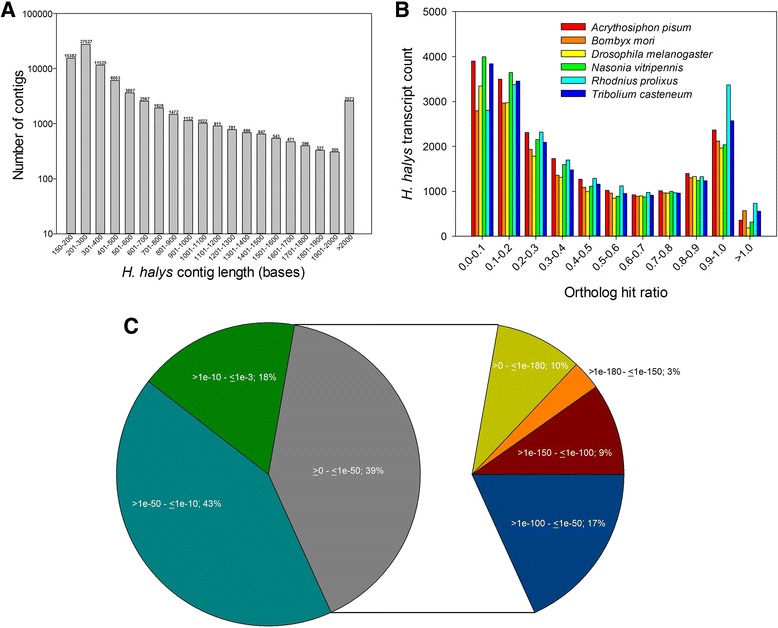
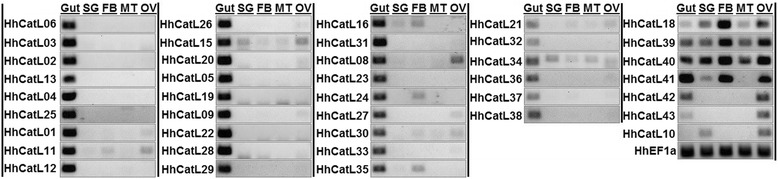
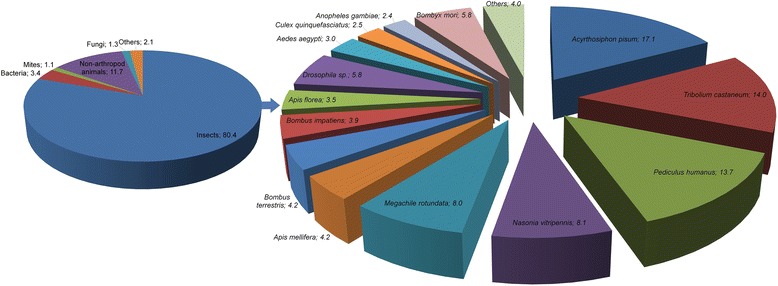
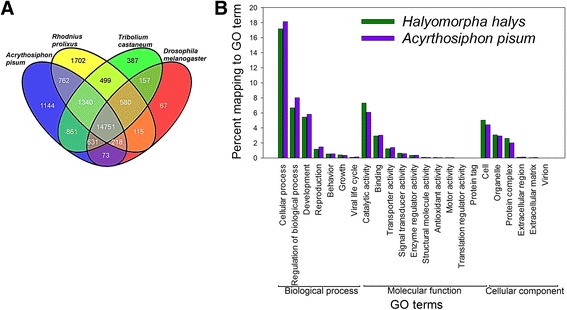
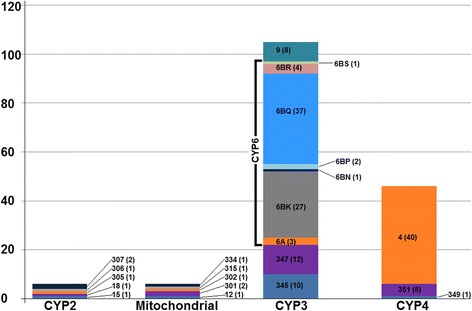
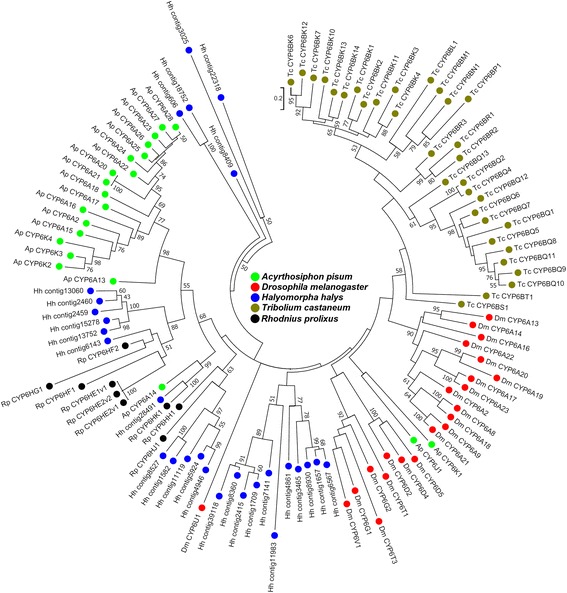
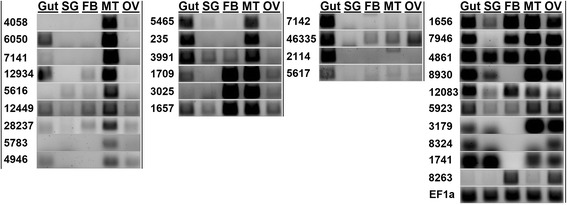
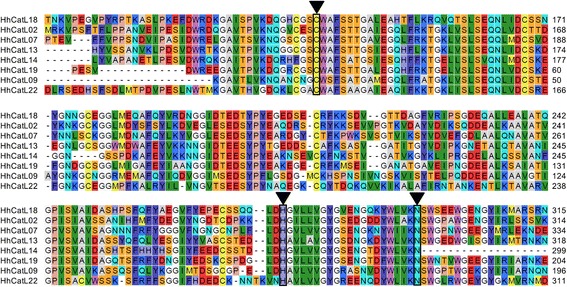
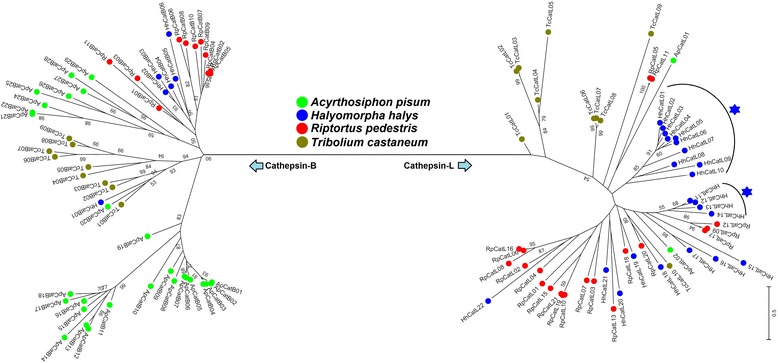
We generated over 142 million reads via sequencing eight RNA-Seq libraries, each representing an individual H. halys adult. The de novo assembly contained 79,855 high quality transcripts, totalling 39,600,178 bases. Following a comprehensive transcriptome analysis, H. halys had an expanded suite of cytochrome P450 and cathepsin-L genes compared to other insects. Detailed characterization of P450 genes from the CYP6 family, known for herbivore adaptation on host plants, strongly hinted towards H. halys-specific expansions involving gene duplications. In subsequent RT-PCR experiments, both P450 and cathepsin genes exhibited tissue-specific or distinct expression patterns which supported their principal roles of detoxification and/or digestion in a particular tissue.
Our analysis into P450 and cathepsin genes in H. halys offers new insights into potential mechanisms for understanding generalist herbivory and adaptation success in invasive habitats. Additionally, the large-scale transcriptomic resource developed here provides highly useful data for gene discovery; functional, population and comparative genomics as well as efforts to assemble and annotate the H. halys genome.
棕褐硬皮肿腿蜂(Halyomorpha halys)是一种入侵北美的害虫,它会给核果、观赏植物、蔬菜和大田作物造成严重的经济损失。H. halys 是一种极端的杂食性昆虫,这种摄食行为可能是它在北美的入侵栖息地建立和成功适应的主要原因之一。为了深入了解 H. halys 这种广谱性食草性的机制,我们特别关注那些可能有助于它适应多种宿主植物的基因。
我们通过对 8 个 RNA-Seq 文库中的每个个体成年 H. halys 进行测序,共生成了超过 1.42 亿个读数。从头组装包含了 79855 个高质量的转录本,共计 39600178 个碱基。在对转录组进行全面分析后,与其他昆虫相比,H. halys 拥有更多的细胞色素 P450 和组织蛋白酶-L 基因。对 CYP6 家族中与宿主植物上的食草动物适应相关的 P450 基因的详细特征分析强烈暗示了 H. halys 特有的基因扩增,包括基因重复。在随后的 RT-PCR 实验中,P450 和组织蛋白酶基因都表现出组织特异性或不同的表达模式,这支持了它们在特定组织中解毒和/或消化的主要作用。
我们对 H. halys 中 P450 和组织蛋白酶基因的分析为理解广谱食草性和在入侵栖息地的适应成功提供了新的见解。此外,我们在这里开发的大规模转录组资源为基因发现、功能、群体和比较基因组学以及组装和注释 H. halys 基因组的工作提供了非常有用的数据。