Department of Animal Science, Texas A&M University, College Station, TX, 77843, USA.
Center for Phage Technology, Texas A&M University, College Station, TX, 77843, USA.
Sci Rep. 2018 Jan 18;8(1):1062. doi: 10.1038/s41598-018-19455-2.
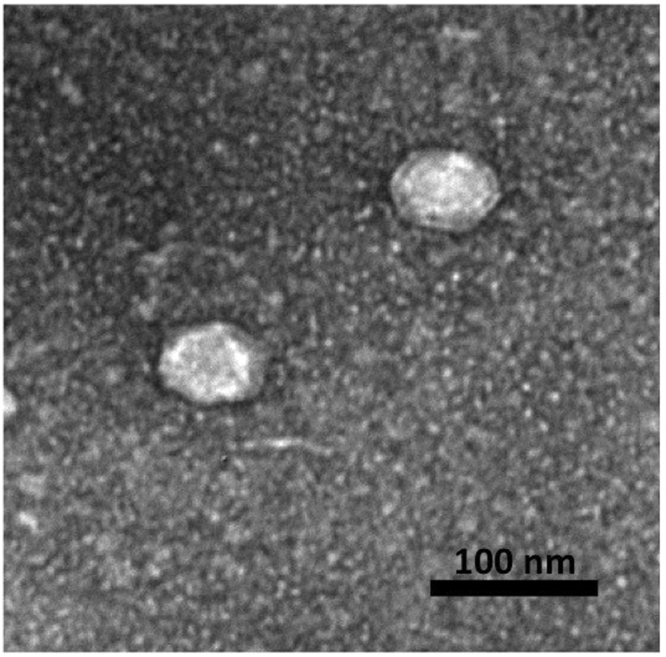
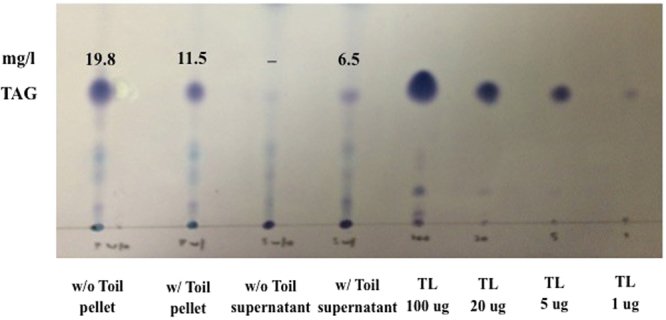
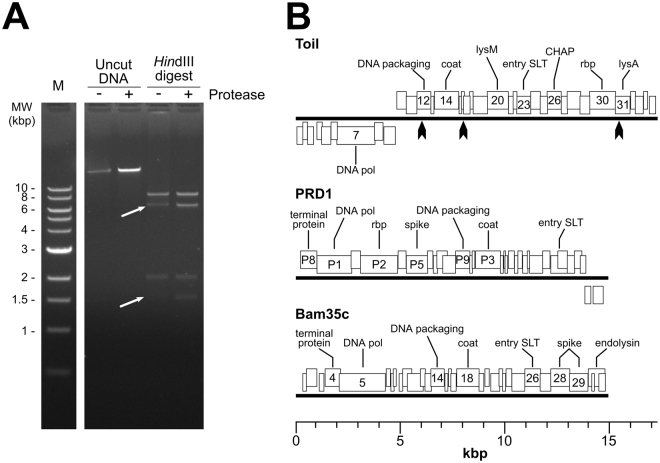
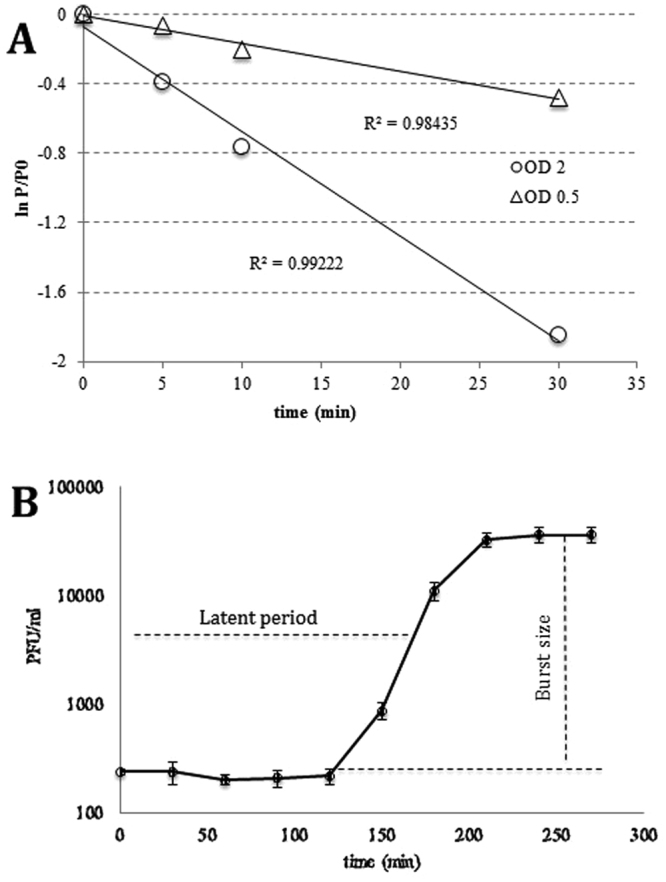
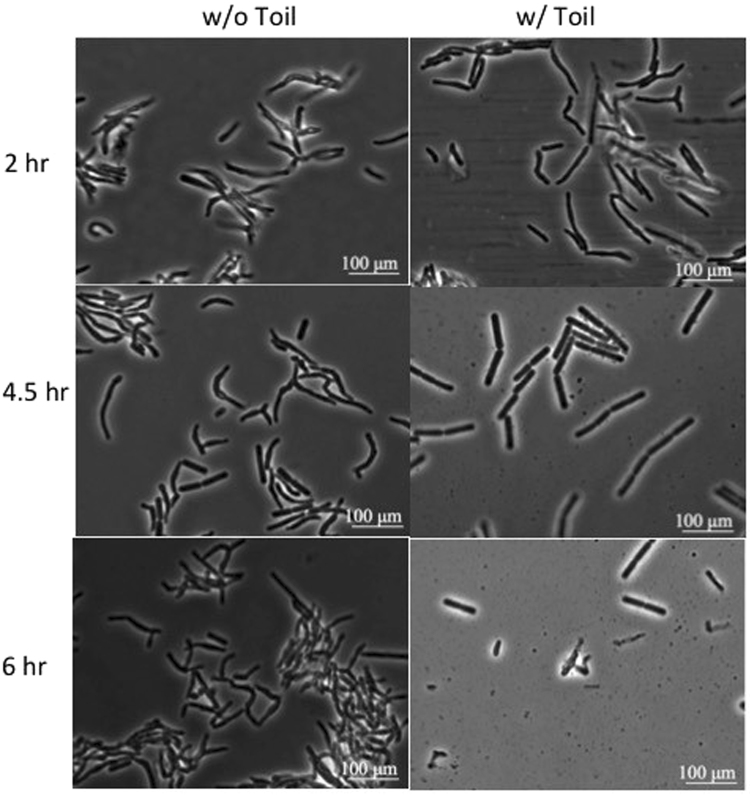
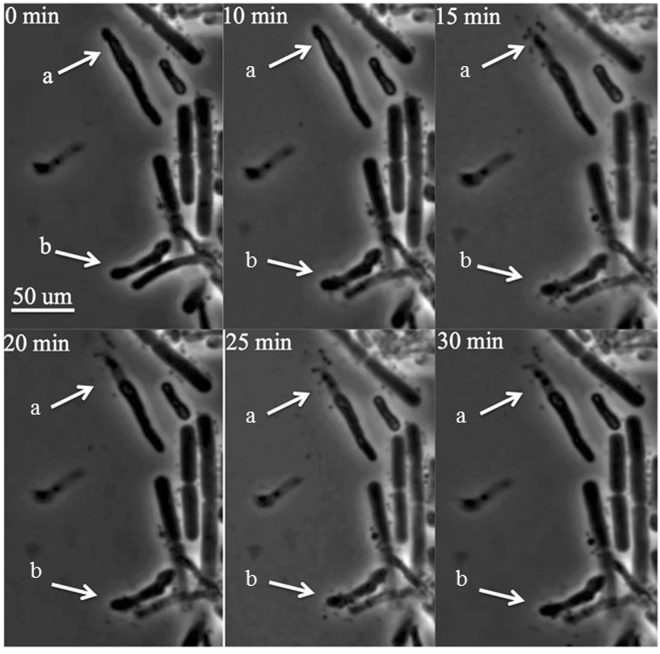
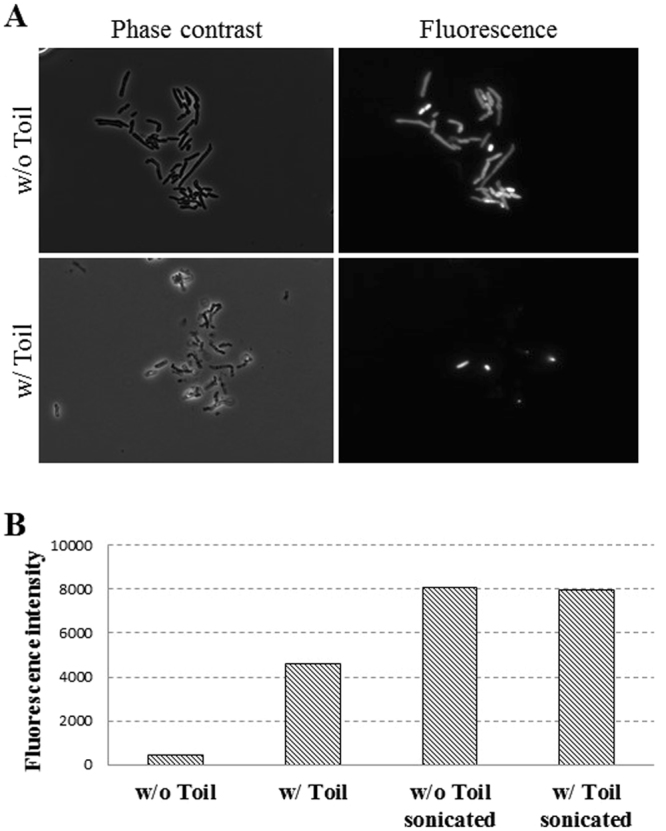
The oleaginous bacterium Rhodococcus opacus PD630 is metabolically diverse and can be cultivated on various renewable resources to serve as a sustainable triacylglycerol (TAG) feedstock for biodiesel production. Current methods for TAG extraction are costly, but infection of cultures by lytic bacteriophages (phages) may be a viable approach for achieving release of intracellular lipid from oleaginous bacteria such as R. opacus. This study reports the novel tectiviral phage Toil capable of releasing intracellular contents including a fluorescent protein marker and TAGs into the supernatant after phage infection of R. opacus PD631, a domesticated derivative of strain PD630. Phage Toil is placed in the Tectiviridae by its morphology, the presence of a lipid membrane, its genome architecture and the presence of terminal covalently-linked proteins. Toil is the first tectivirus capable of infecting a member of the Actinobacteria. Microscopy shows that infected cells do not undergo sudden lysis but instead maintain their original shape for several hours, with the cellular morphology gradually deteriorating. Approximately 30% of intracellular TAGs could be recovered from the culture supernatants of Toil-infected PD631 cells. Phage Toil has potential to be used as an agent in extraction of TAGs from oleaginous bacterium R. opacus.
This study reported the first tectivirus (Phage Toil) capable of infecting a member of the Actinobacteria. In this study, we showed that Phage Toil can infect oleaginous bacterium Rhodococcus opacus to release intracellular contents such as a fluorescent protein marker and TAG lipid granules, which can serve as a starting material for biodiesel production. This study demonstrates a new method to extract TAGs by using this phage. Additionally, Phage Toil can be a new model phage to advance knowledge regarding phage infection mechanisms in Rhodococcus and other mycolic acid-containing bacteria such as Mycobacterium.
产油菌 Rhodococcus opacus PD630 代谢多样,可利用各种可再生资源进行培养,作为生物柴油生产的可持续三酰基甘油 (TAG) 原料。目前的 TAG 提取方法成本高昂,但裂解噬菌体(噬菌体)感染培养物可能是从产油菌(如 Rhodococcus opacus)中释放细胞内脂质的可行方法。本研究报告了一种新型的 tectiviral 噬菌体 Toil,它能够在感染 R. opacus PD631 后将细胞内内容物(包括荧光蛋白标记物和 TAG)释放到上清液中,R. opacus PD631 是 PD630 菌株的驯化衍生物。噬菌体 Toil 的形态、脂质膜的存在、基因组结构和末端共价连接蛋白的存在,将其归入 Tectiviridae。Toil 是第一个能够感染放线菌成员的 tectivirus。显微镜观察表明,感染细胞不会突然裂解,而是保持原来的形状几个小时,细胞形态逐渐恶化。从 Toil 感染的 PD631 细胞的培养上清液中可以回收约 30%的细胞内 TAG。噬菌体 Toil 有可能被用作从产油菌 Rhodococcus opacus 中提取 TAG 的试剂。
本研究报告了第一个能够感染放线菌成员的 tectivirus(噬菌体 Toil)。在本研究中,我们表明噬菌体 Toil 可以感染产油菌 Rhodococcus opacus,以释放细胞内内容物,如荧光蛋白标记物和 TAG 脂质颗粒,这些可以作为生物柴油生产的起始材料。本研究展示了一种通过使用这种噬菌体提取 TAG 的新方法。此外,噬菌体 Toil 可以成为一种新的模式噬菌体,以推进关于噬菌体感染 Rhodococcus 和其他含有分枝菌酸的细菌(如 Mycobacterium)的机制的知识。