Choi Jong Hee, Lee Min Jung, Jang Minhee, Kim Hak-Jae, Lee Sanghyun, Lee Sang Won, Kim Young Ock, Cho Ik-Hyun
Department of Science in Korean Medicine, Graduate School, Kyung Hee University, Seoul, Republic of Korea.
Brain Korea 21 Plus Program, Graduate School, Kyung Hee University, Seoul, Republic of Korea.
J Ginseng Res. 2018 Jan;42(1):107-115. doi: 10.1016/j.jgr.2017.04.012. Epub 2017 Apr 29.
Depression is one of the most commonly diagnosed neuropsychiatric diseases, but the underlying mechanism and medicine are not well-known. Although has been reported to exert protective effects in various neurological studies, little information is available regarding its antidepressant effects.
Here, we examined the antidepressant effect and underlying mechanism of extract (PGE) in a chronic restraint stress (CRS)-induced depression model in mice.
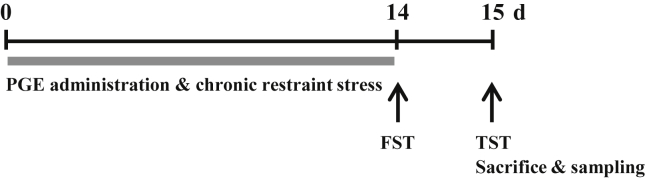
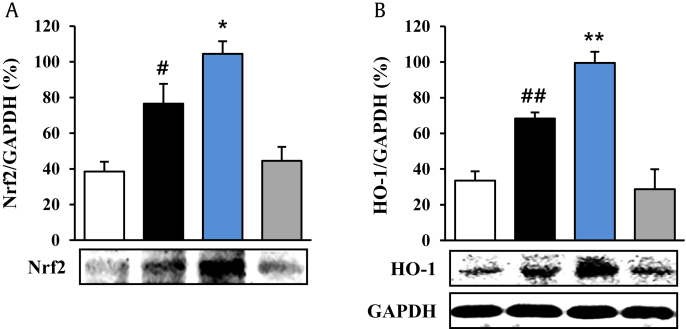
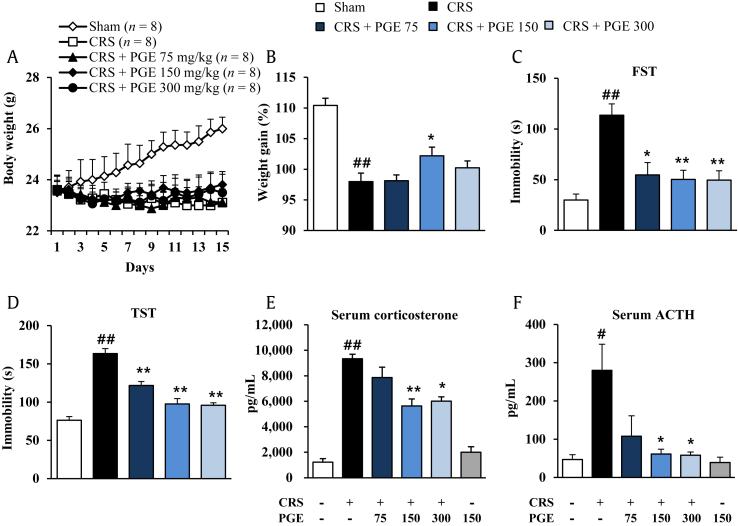
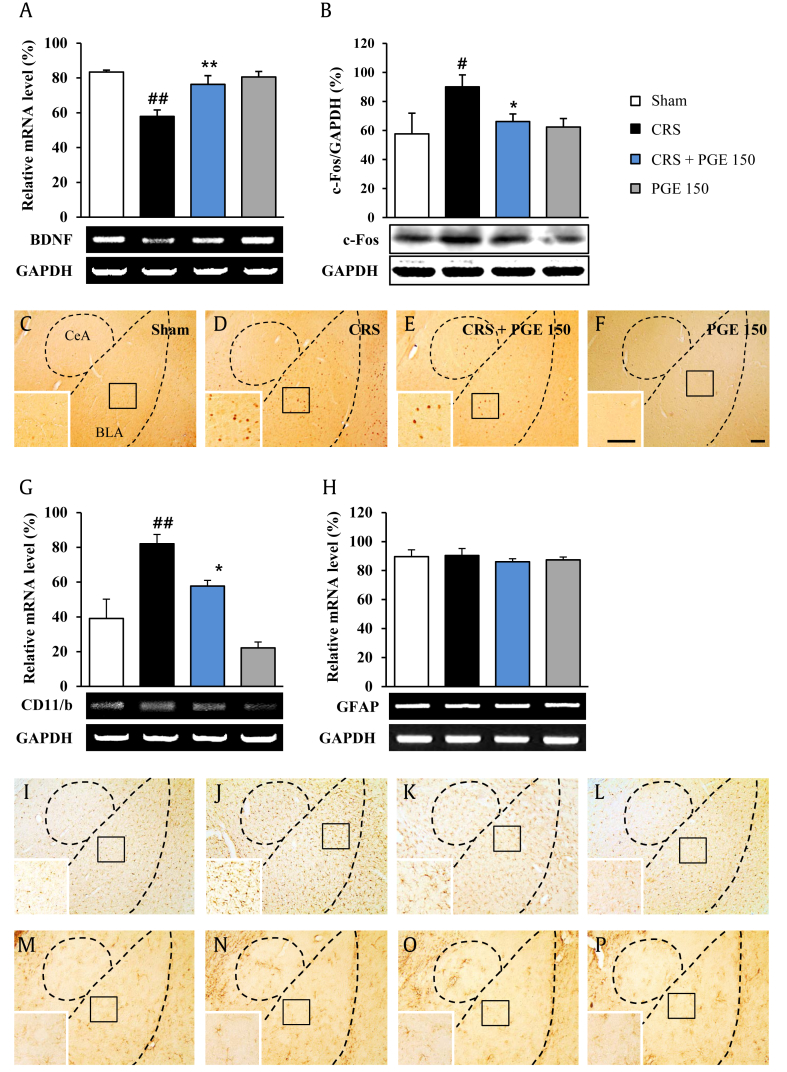
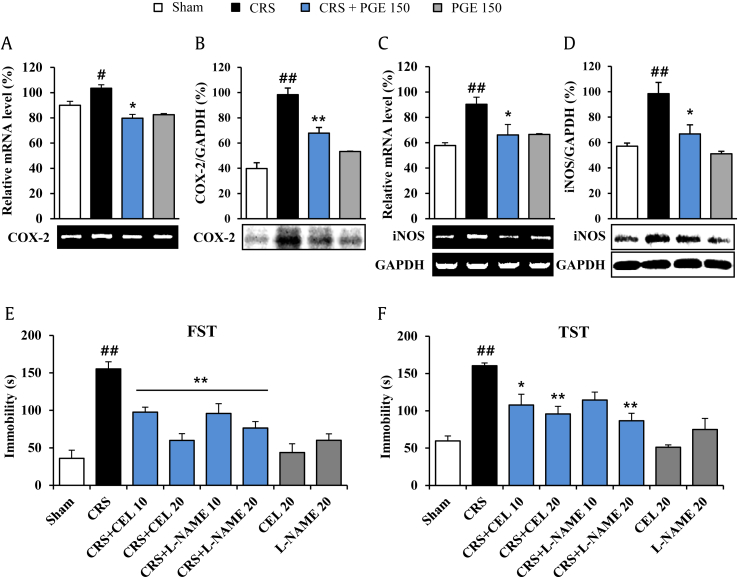
Oral administration of PGE for 14 d decreased immobility (depression-like behaviors) time in forced swim and tail suspended tests after CRS induction, which corresponded with attenuation of the levels of serum adrenocorticotropic hormone and corticosterone, as well as attenuated c-Fos expression in the amygdala. PGE enhanced messenger RNA expression level of brain-derived neurotrophic factor but ameliorated microglial activation and neuroinflammation (the level of messenger RNA and protein expression of cyclooxygenase-2 and inducible nitric oxide synthase) in the amygdala of mice after CRS induction. Interestingly, 14-d treatment with celecoxib, a selective cyclooxygenase-2 inhibitor, and -nitro-L-arginine methyl ester hydrochloride, a selective inducible nitric oxide synthase inhibitor, attenuated depression-like behaviors after CRS induction. Additionally, PGE inhibited the upregulation of the nuclear factor erythroid 2 related factor 2 and heme oxygenase-1 pathways.
Taken together, our findings suggest that PGE exerts antidepressant-like effect of CRS-induced depression by antineuroinflammatory and antioxidant (nuclear factor erythroid 2 related factor 2/heme oxygenase-1 activation) activities by inhibiting the hypothalamo-pituitary-adrenal axis mechanism. Further studies are needed to evaluate the potential of components of as an alternative treatment of depression, including clinical trial evaluation.
抑郁症是最常被诊断出的神经精神疾病之一,但其潜在机制和药物尚不明确。尽管在各种神经学研究中已报道[某种物质,原文未明确]具有保护作用,但关于其抗抑郁作用的信息却很少。
在此,我们研究了[某种提取物,原文未明确]提取物(PGE)在慢性束缚应激(CRS)诱导的小鼠抑郁模型中的抗抑郁作用及其潜在机制。
在CRS诱导后,口服PGE 14天可减少强迫游泳和悬尾试验中的不动时间(抑郁样行为),这与血清促肾上腺皮质激素和皮质酮水平的降低以及杏仁核中c-Fos表达的减弱相对应。PGE可提高脑源性神经营养因子的信使核糖核酸表达水平,但可改善CRS诱导后小鼠杏仁核中的小胶质细胞活化和神经炎症(环氧化酶-2和诱导型一氧化氮合酶的信使核糖核酸和蛋白质表达水平)。有趣的是,用选择性环氧化酶-2抑制剂塞来昔布和选择性诱导型一氧化氮合酶抑制剂盐酸N-硝基-L-精氨酸甲酯进行14天治疗,可减轻CRS诱导后的抑郁样行为。此外,PGE抑制了核因子红细胞2相关因子2和血红素加氧酶-1途径的上调。
综上所述,我们的研究结果表明,PGE通过抑制下丘脑-垂体-肾上腺轴机制,发挥抗神经炎症和抗氧化(核因子红细胞2相关因子2/血红素加氧酶-1活化)活性,对CRS诱导的抑郁产生抗抑郁样作用。需要进一步研究来评估[某种物质,原文未明确]成分作为抑郁症替代治疗方法的潜力,包括临床试验评估。