Fiore Donatella, Ramesh Prashanthi, Proto Maria C, Piscopo Chiara, Franceschelli Silvia, Anzelmo Serena, Medema Jan P, Bifulco Maurizio, Gazzerro Patrizia
Department of Pharmacy, University of Salerno, Fisciano, Italy.
Laboratory of Experimental Oncology and Radiobiology, Center for Experimental and Molecular Medicine, Academisch Medisch Centrum, University of Amsterdam, Amsterdam, Netherlands.
Front Pharmacol. 2018 Jan 4;8:949. doi: 10.3389/fphar.2017.00949. eCollection 2017.
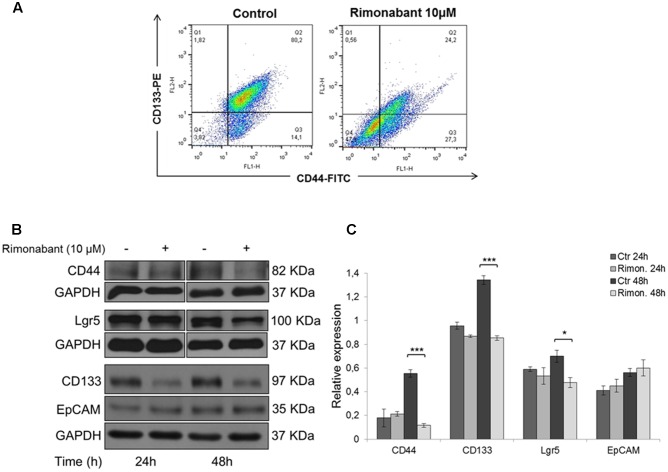
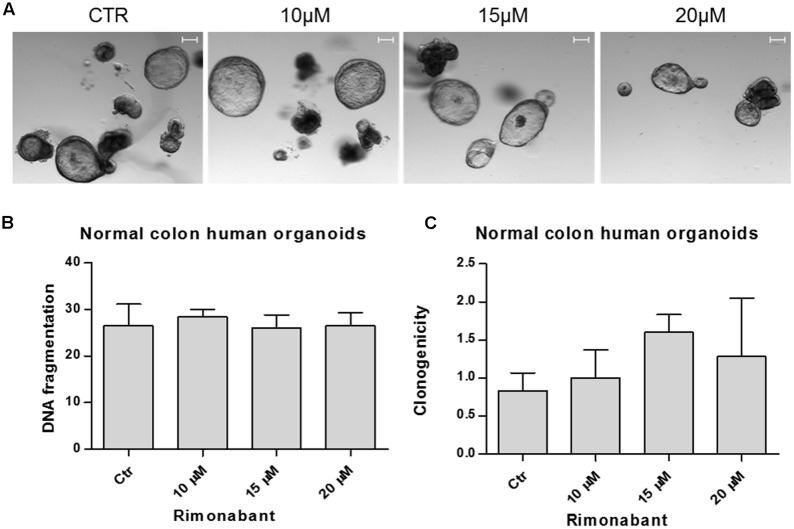
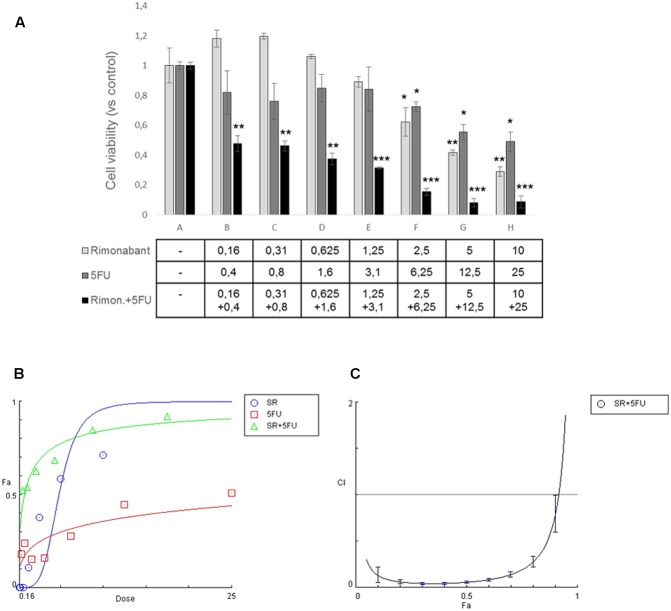
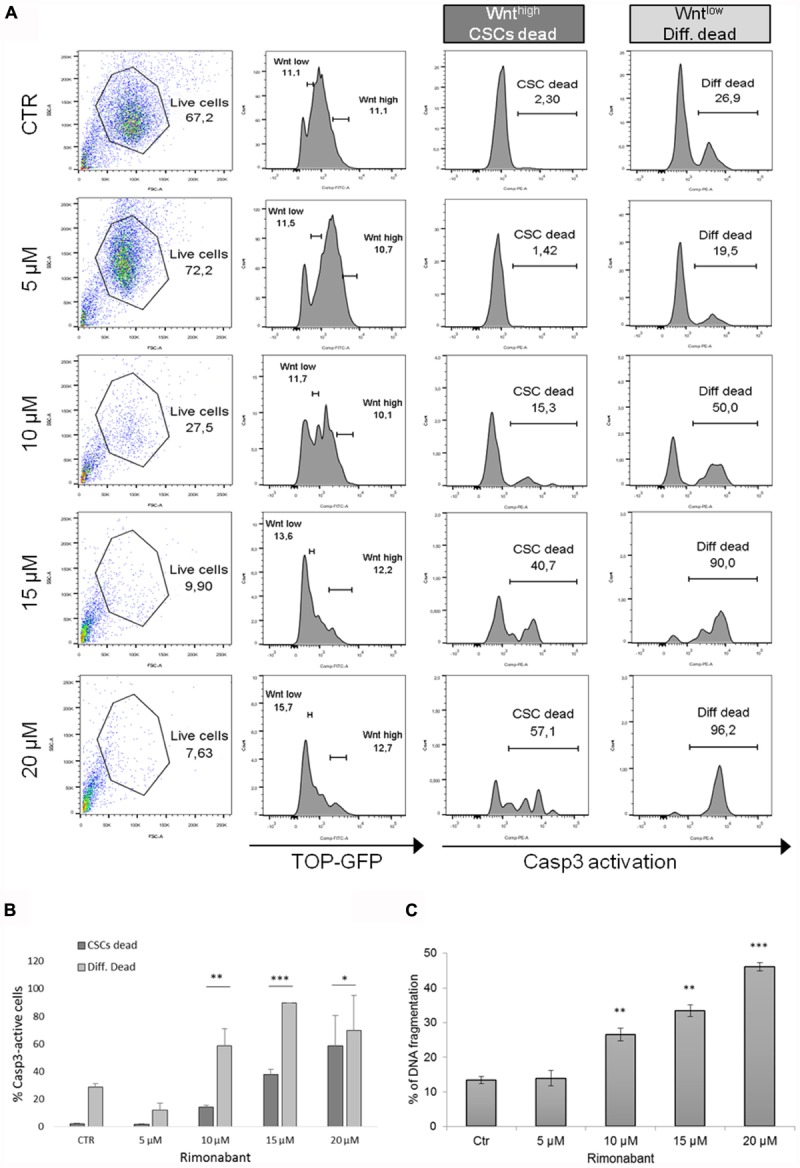
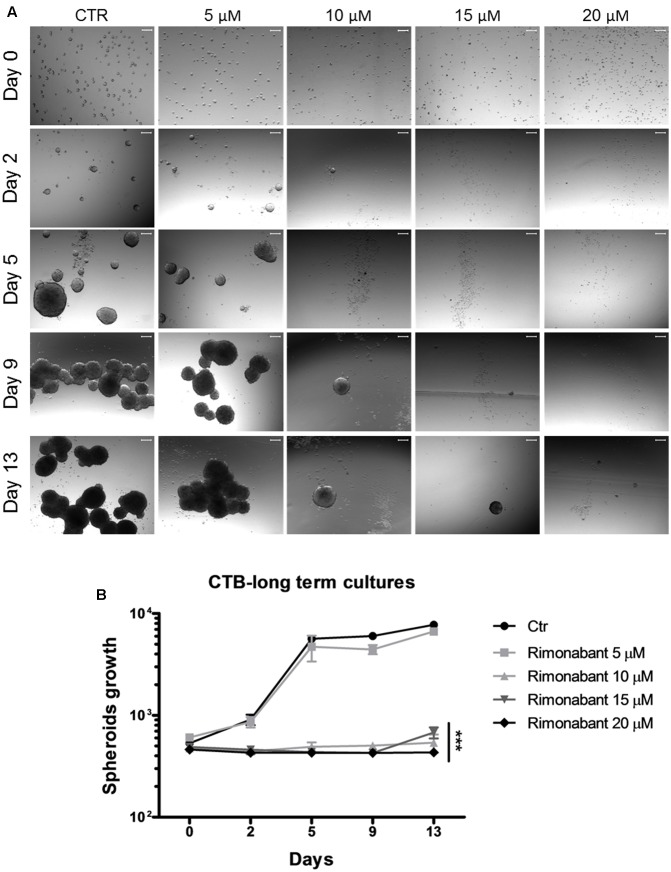
Colorectal cancer (CRC), like other tumor types, is a highly heterogeneous disease. Within the tumor bulk, intra-tumoral heterogeneity is also ascribable to Cancer Stem Cells (CSCs) subpopulation, characterized by high chemoresistance and the unique ability to retain tumorigenic potential, thus associated to tumor recurrence. High dynamic plasticity of CSCs, makes the development of winning therapeutic strategies even more complex to completely eradicate tumor fuel. Rimonabant, originally synthesized as antagonist/inverse agonist of Cannabinoid Receptor 1, is able to inactivate Wnt signaling, both and , in CRC models, through inhibition of p300-histone acetyltransferase activity. Since Wnt/β-Catenin pathway is the main player underlying CSCs dynamic, this finding candidates Rimonabant as potential modulator of cancer stemness, in CRC. In this work, using established 3D cultures of primary colon CSCs, taking into account the tumor heterogeneity through monitoring of Wnt activity, we demonstrated that Rimonabant was able to reduces both tumor differentiated cells and colon CSCs proliferation and to control their survival in long term cultures. Interestingly, in model of wild type human organoids, retaining both architecture and heterogeneity of original tissue, Rimonabant showed no toxicity against cells from healthy colon epithelium, suggesting its potential selectivity toward cancer cells. Overall, results from this work provided new insights on anti-tumor efficacy of Rimonabant, strongly suggesting that it could be a novel lead compound for CRC treatment.
与其他肿瘤类型一样,结直肠癌(CRC)是一种高度异质性疾病。在肿瘤组织内,肿瘤内异质性也可归因于癌症干细胞(CSCs)亚群,其特征是具有高化学抗性以及保留致瘤潜力的独特能力,因此与肿瘤复发相关。CSCs的高动态可塑性使得制定有效的治疗策略以完全根除肿瘤根源变得更加复杂。利莫那班最初合成时是作为大麻素受体1的拮抗剂/反向激动剂,在CRC模型中,它能够通过抑制p300-组蛋白乙酰转移酶活性来使Wnt信号失活,无论是在体外还是体内。由于Wnt/β-连环蛋白途径是CSCs动态变化的主要驱动因素,这一发现使利莫那班成为CRC中癌症干性的潜在调节剂。在这项研究中,我们使用已建立的原发性结肠CSCs三维培养体系,通过监测Wnt活性来考虑肿瘤异质性,结果表明利莫那班能够减少肿瘤分化细胞和结肠CSCs的增殖,并在长期培养中控制它们的存活。有趣的是,在保留原始组织结构和异质性的野生型人类类器官模型中,利莫那班对健康结肠上皮细胞没有毒性,表明其对癌细胞具有潜在的选择性。总体而言,这项研究的结果为利莫那班的抗肿瘤疗效提供了新的见解,强烈表明它可能是一种用于CRC治疗的新型先导化合物。