Oma Veslemøy Sunniva, Klem Thea, Tråvén Madeleine, Alenius Stefan, Gjerset Britt, Myrmel Mette, Stokstad Maria
Department of Production Animal Clinical Sciences, Norwegian University of Life Sciences, P.O. Box 8146 Dep, 0033, Oslo, Norway.
Department of Clinical Sciences, Swedish University of Agricultural Sciences, 75007, Uppsala, Sweden.
BMC Vet Res. 2018 Jan 22;14(1):22. doi: 10.1186/s12917-018-1335-1.
In order to prevent spread of the endemic pathogens bovine coronavirus (BCoV) and bovine respiratory syncytial virus (BRSV) between herds, knowledge of indirect transmission by personnel and fomites is fundamental. The aims of the study were to determine the duration of viral RNA carriage and the infectivity of viral particles on fomites and human nasal mucosa after exposure to BCoV and BRSV. During two animal infection experiments, swabs were collected from personnel (nasal mucosa) and their clothes, boots and equipment after contact with calves shedding either virus. Viral RNA was quantified by RT-qPCR or droplet digital RT-PCR (RT-ddPCR), and selected samples with high levels of viral RNA were tested by cell culture for infectivity.
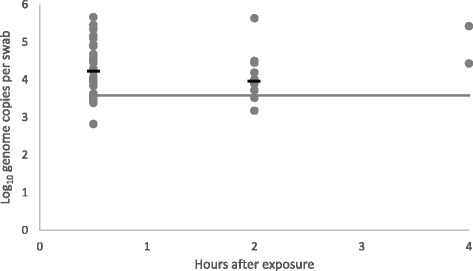
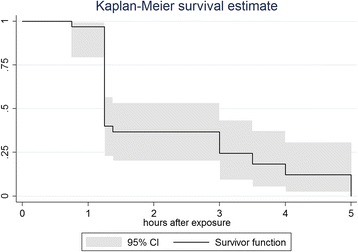
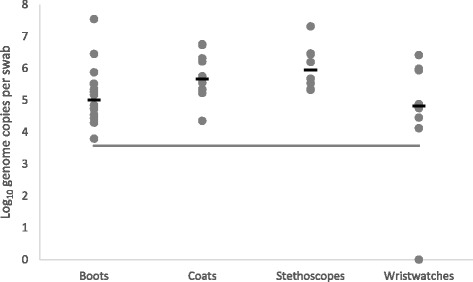
For BCoV, 46% (n = 80) of the swabs from human nasal mucosa collected 30 min after exposure were positive by RT-qPCR. After two, four and six hours, 15%, 5% and 0% of the swabs were positive, respectively. Infective virions were not detected in mucosal swabs (n = 2). A high viral RNA load was detected on 97% (n = 44) of the fomites 24 h after exposure, and infective virions were detected in two of three swabs. For BRSV, 35% (n = 26) of the human nasal mucosa swabs collected 30 min after exposure, were positive by RT-ddPCR, but none were positive for infective virions. Of the fomites, 89% (n = 38) were positive for BRSV RNA 24 h after exposure, but all were negative for infective viruses.
The results indicate that human nasal mucosa can carry both BCoV and BRSV RNA after exposure to virus shedding calves, but the carriage seems short-lived and the transmission potential is likely limited. High viral loads on contaminates fomites 24 h after exposure to infected animals, and detection of infective BCoV, indicate that contaminated fomites represent a significant risk for indirect transmission between herds.
为防止地方性病原体牛冠状病毒(BCoV)和牛呼吸道合胞病毒(BRSV)在牛群间传播,了解人员和污染物的间接传播情况至关重要。本研究的目的是确定病毒RNA在污染物及人鼻黏膜上的携带持续时间,以及暴露于BCoV和BRSV后病毒颗粒的感染性。在两项动物感染实验中,在与感染病毒的小牛接触后,从人员(鼻黏膜)及其衣物、靴子和设备上采集拭子。通过逆转录定量聚合酶链反应(RT-qPCR)或液滴数字逆转录聚合酶链反应(RT-ddPCR)对病毒RNA进行定量,并对病毒RNA水平高的选定样本进行细胞培养以检测感染性。
对于BCoV,暴露30分钟后采集的人鼻黏膜拭子中,46%(n = 80)通过RT-qPCR检测呈阳性。两小时、四小时和六小时后,拭子阳性率分别为15%、5%和0%。在黏膜拭子(n = 2)中未检测到感染性病毒粒子。暴露24小时后,97%(n = 44)的污染物上检测到高病毒RNA载量,三份拭子中有两份检测到感染性病毒粒子。对于BRSV,暴露30分钟后采集的人鼻黏膜拭子中,35%(n = 26)通过RT-ddPCR检测呈阳性,但均未检测到感染性病毒粒子。在污染物中,暴露24小时后89%(n = 38)的BRSV RNA呈阳性,但所有样本的感染性病毒均为阴性。
结果表明,人鼻黏膜在接触排毒小牛后可携带BCoV和BRSV RNA,但携带似乎是短暂的,传播潜力可能有限。暴露于感染动物24小时后,污染物上的病毒载量很高,且检测到感染性BCoV,表明受污染的污染物是牛群间间接传播的重大风险。