Department of Biomedical Engineering, Vanderbilt University, Nashville, Tennessee.
Department of Cell and Developmental Biology, Vanderbilt University School of Medicine, Nashville, Tennessee.
Cancer Res. 2018 Apr 1;78(7):1845-1858. doi: 10.1158/0008-5472.CAN-17-2388. Epub 2018 Jan 22.
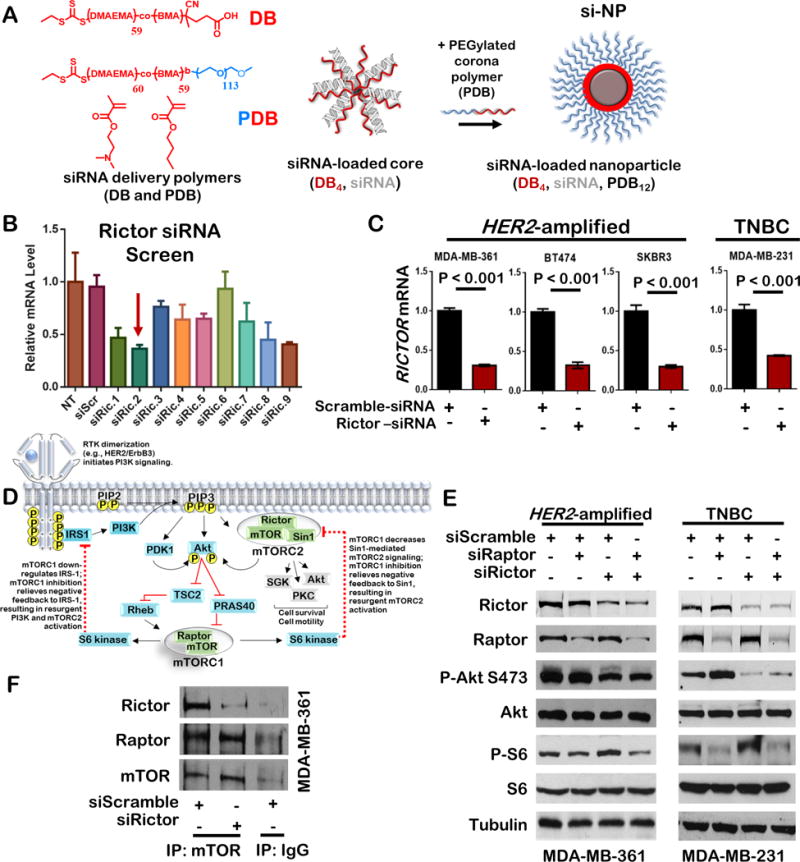
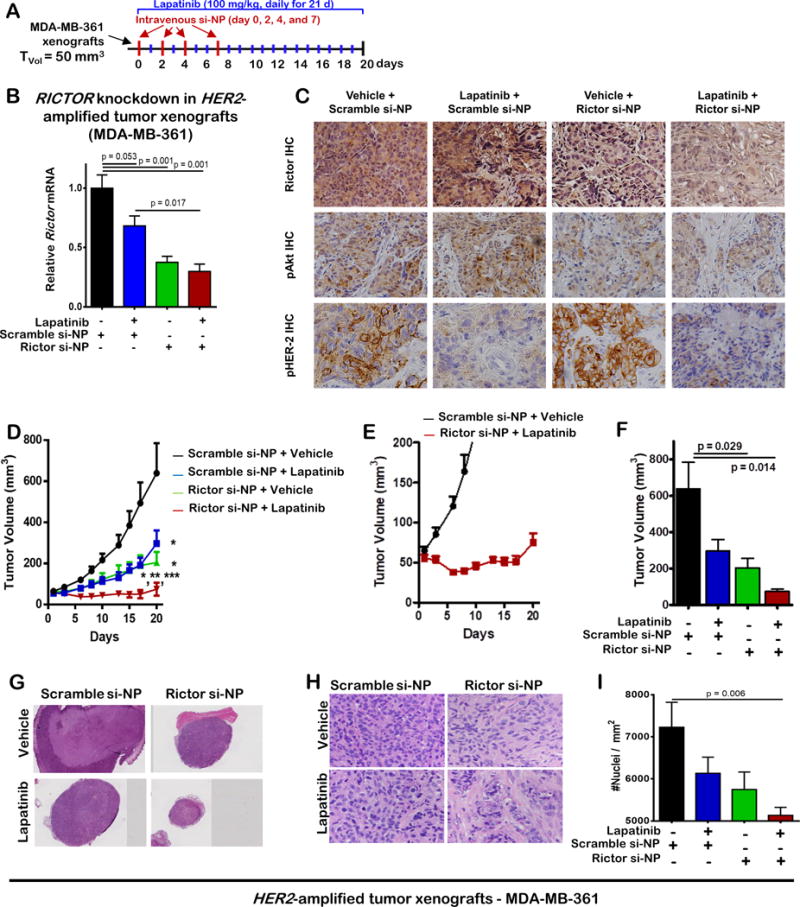
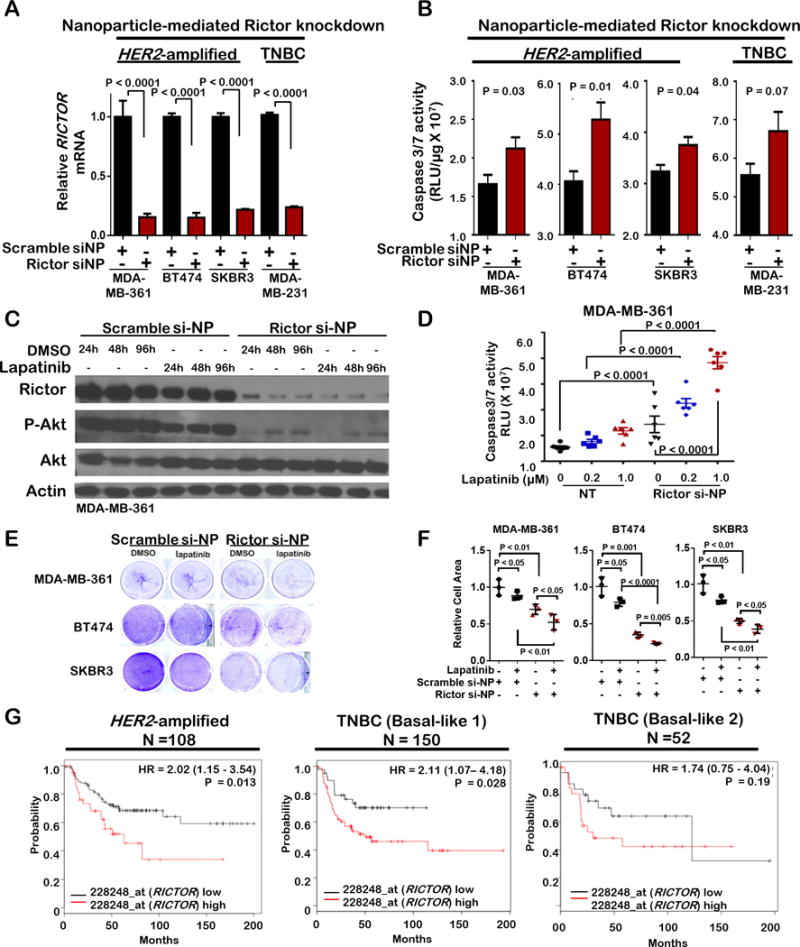
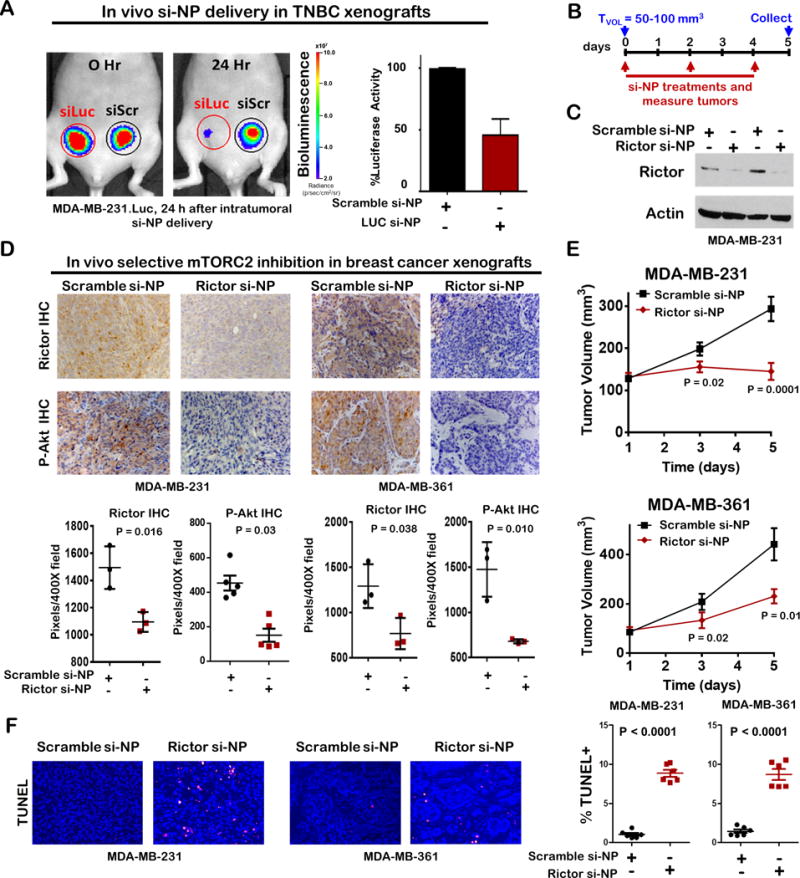
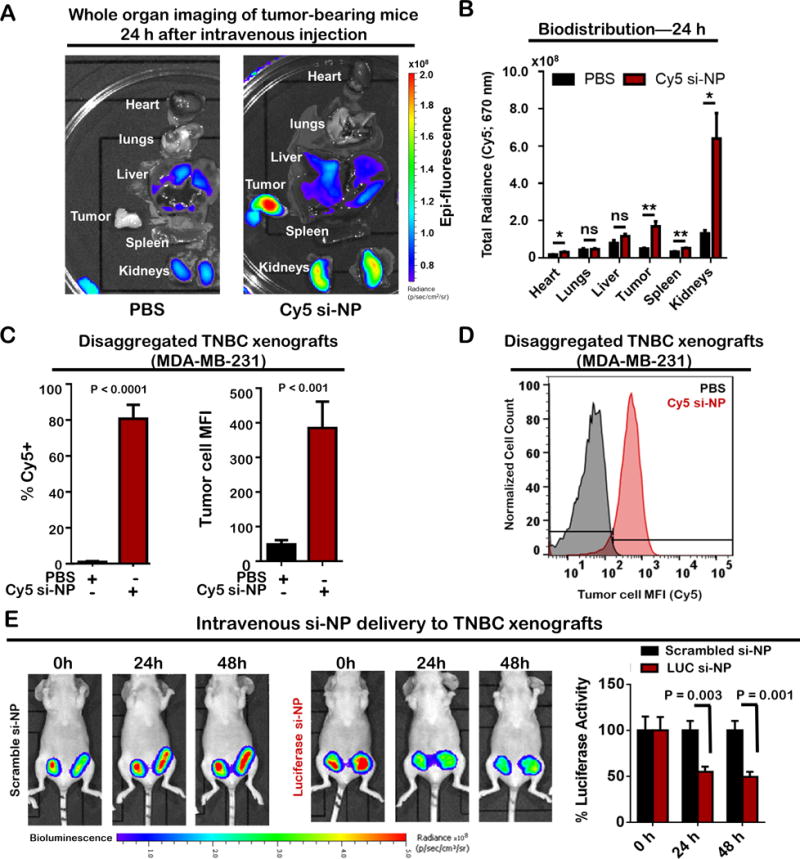
Small-molecule inhibitors of the mTORC2 kinase (torkinibs) have shown efficacy in early clinical trials. However, the torkinibs under study also inhibit the other mTOR-containing complex mTORC1. While mTORC1/mTORC2 combined inhibition may be beneficial in cancer cells, recent reports describe compensatory cell survival upon mTORC1 inhibition due to loss of negative feedback on PI3K, increased autophagy, and increased macropinocytosis. Genetic models suggest that selective mTORC2 inhibition would be effective in breast cancers, but the lack of selective small-molecule inhibitors of mTORC2 have precluded testing of this hypothesis to date. Here we report the engineering of a nanoparticle-based RNAi therapeutic that can effectively silence the mTORC2 obligate cofactor Rictor. Nanoparticle-based Rictor ablation in HER2-amplified breast tumors was achieved following intratumoral and intravenous delivery, decreasing Akt phosphorylation and increasing tumor cell killing. Selective mTORC2 inhibition , combined with the HER2 inhibitor lapatinib, decreased the growth of HER2-amplified breast cancers to a greater extent than either agent alone, suggesting that mTORC2 promotes lapatinib resistance, but is overcome by mTORC2 inhibition. Importantly, selective mTORC2 inhibition was effective in a triple-negative breast cancer (TNBC) model, decreasing Akt phosphorylation and tumor growth, consistent with our findings that RICTOR mRNA correlates with worse outcome in patients with basal-like TNBC. Together, our results offer preclinical validation of a novel RNAi delivery platform for therapeutic gene ablation in breast cancer, and they show that mTORC2-selective targeting is feasible and efficacious in this disease setting. This study describes a nanomedicine to effectively inhibit the growth regulatory kinase mTORC2 in a preclinical model of breast cancer, targeting an important pathogenic enzyme in that setting that has been undruggable to date. .
小分子 mTORC2 激酶抑制剂(tor 激酶抑制剂)在早期临床试验中显示出疗效。然而,研究中的 tor 激酶抑制剂也抑制了其他包含 mTOR 的复合物 mTORC1。虽然 mTORC1/mTORC2 联合抑制可能对癌细胞有益,但最近的报道描述了由于 PI3K 的负反馈丧失、自噬增加和巨胞饮增加,mTORC1 抑制后细胞存活的代偿。遗传模型表明,选择性 mTORC2 抑制将在乳腺癌中有效,但缺乏选择性 mTORC2 的小分子抑制剂迄今为止阻止了对这一假设的测试。在这里,我们报告了一种基于纳米颗粒的 RNAi 治疗的工程设计,该治疗可以有效地沉默 mTORC2 必需的辅助因子 Rictor。在荷瘤和静脉内给药后,基于纳米颗粒的 Rictor 消融可在 HER2 扩增的乳腺肿瘤中实现,降低 Akt 磷酸化并增加肿瘤细胞杀伤。与单独使用任何一种药物相比,选择性 mTORC2 抑制与 HER2 抑制剂拉帕替尼联合使用可更大程度地降低 HER2 扩增乳腺癌的生长,表明 mTORC2 促进拉帕替尼耐药,但可被 mTORC2 抑制克服。重要的是,选择性 mTORC2 抑制在三阴性乳腺癌(TNBC)模型中有效,降低 Akt 磷酸化和肿瘤生长,与我们的研究结果一致,即 RICTOR mRNA 与基底样 TNBC 患者的预后不良相关。总之,我们的研究结果为乳腺癌治疗性基因消融的新型 RNAi 递送平台提供了临床前验证,并表明在这种疾病环境中靶向 mTORC2 是可行且有效的。这项研究描述了一种纳米医学,可在乳腺癌的临床前模型中有效抑制生长调节激酶 mTORC2,针对该治疗环境中迄今为止无法成药的重要致病酶。