Budischak Sarah A, Hansen Christina B, Caudron Quentin, Garnier Romain, Kartzinel Tyler R, Pelczer István, Cressler Clayton E, van Leeuwen Anieke, Graham Andrea L
Department of Ecology and Evolutionary Biology, Princeton University, Princeton, NJ, United States.
Department of Veterinary Medicine, University of Cambridge, Cambridge, United Kingdom.
Front Immunol. 2018 Jan 8;8:1914. doi: 10.3389/fimmu.2017.01914. eCollection 2017.
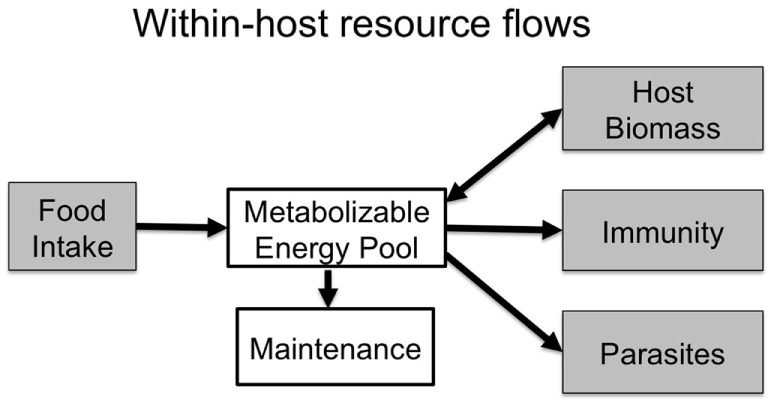
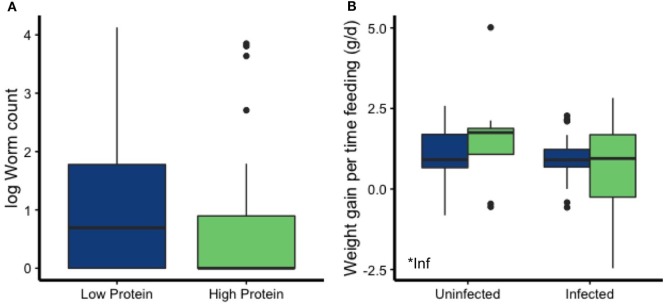
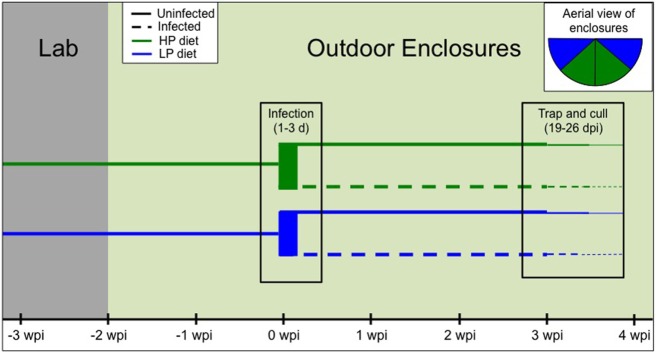
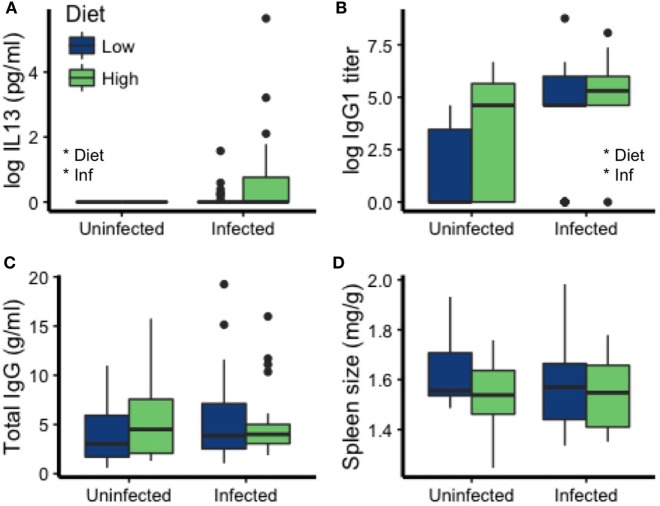
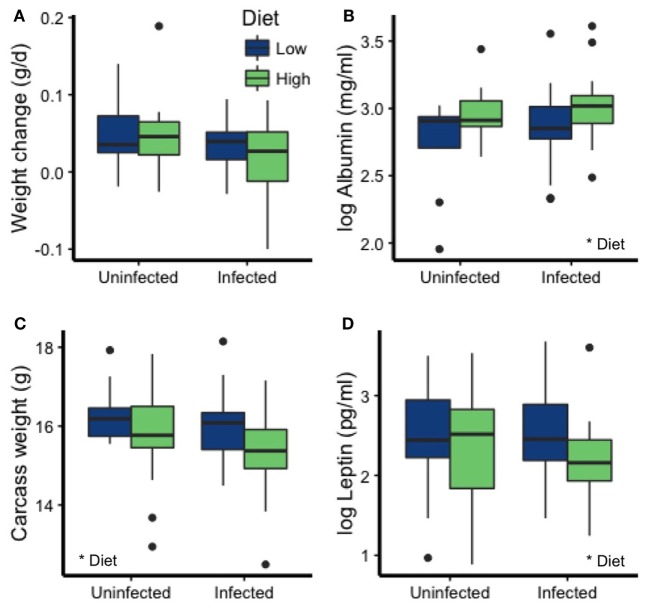
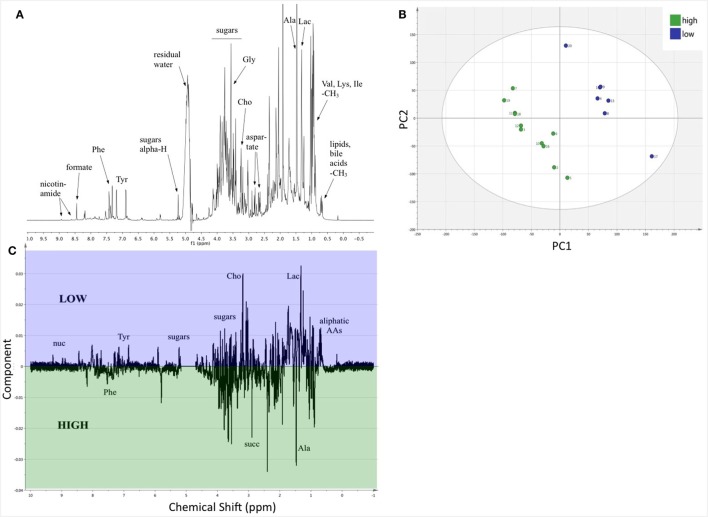
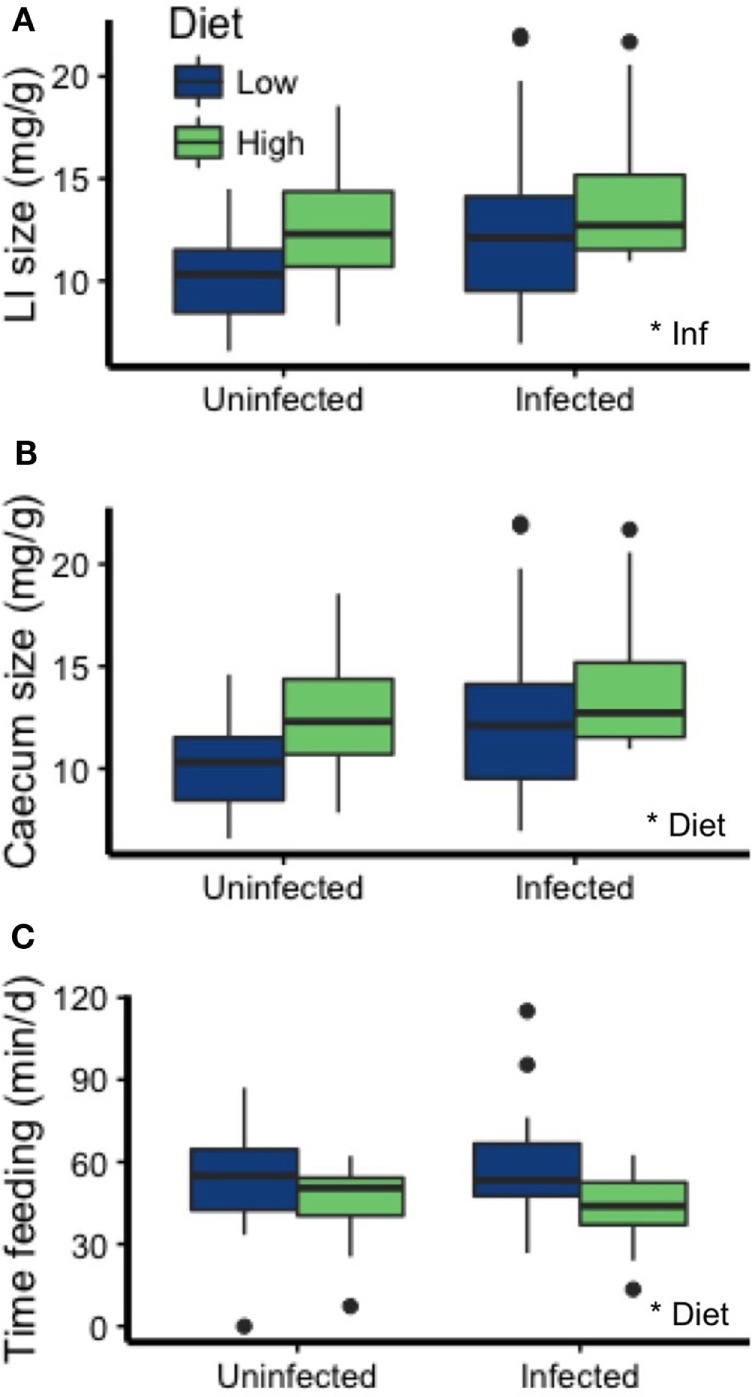
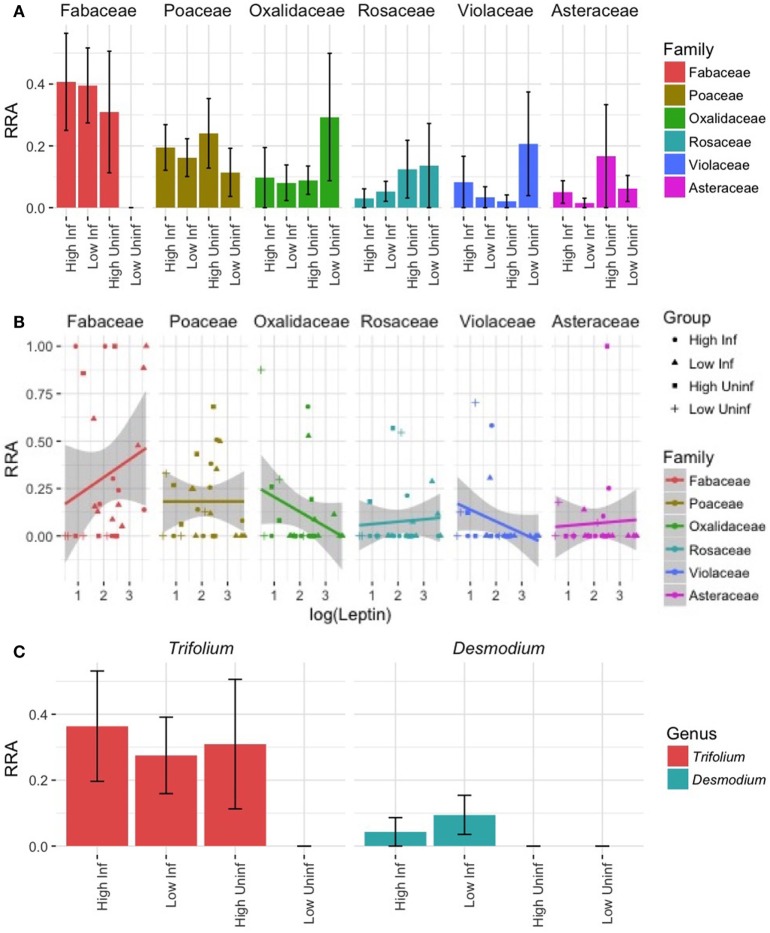
Resources are a core currency of species interactions and ecology in general (e.g., think of food webs or competition). Within parasite-infected hosts, resources are divided among the competing demands of host immunity and growth as well as parasite reproduction and growth. Effects of resources on immune responses are increasingly understood at the cellular level (e.g., metabolic predictors of effector function), but there has been limited consideration of how these effects scale up to affect individual energetic regimes (e.g., allocation trade-offs), susceptibility to infection, and feeding behavior (e.g., responses to local resource quality and quantity). We experimentally rewilded laboratory mice (strain C57BL/6) in semi-natural enclosures to investigate the effects of dietary protein and gastrointestinal nematode () infection on individual-level immunity, activity, and behavior. The scale and realism of this field experiment, as well as the multiple physiological assays developed for laboratory mice, enabled us to detect costs, trade-offs, and potential compensatory mechanisms that mice employ to battle infection under different resource conditions. We found that mice on a low-protein diet spent more time feeding, which led to higher body fat stores (i.e., concentration of a satiety hormone, leptin) and altered metabolite profiles, but which did not fully compensate for the effects of poor nutrition on albumin or immune defenses. Specifically, immune defenses measured as interleukin 13 (IL13) (a primary cytokine coordinating defense against ) and as -specific IgG1 titers were lower in mice on the low-protein diet. However, these reduced defenses did not result in higher worm counts in mice with poorer diets. The lab mice, living outside for the first time in thousands of generations, also consumed at least 26 wild plant species occurring in the enclosures, and DNA metabarcoding revealed that the consumption of different wild foods may be associated with differences in leptin concentrations. When individual foraging behavior was accounted for, worm infection significantly reduced rates of host weight gain. Housing laboratory mice in outdoor enclosures provided new insights into the resource costs of immune defense to helminth infection and how hosts modify their behavior to compensate for those costs.
资源是物种相互作用乃至生态学的核心货币(例如,想想食物网或竞争)。在受寄生虫感染的宿主体内,资源在宿主免疫与生长以及寄生虫繁殖与生长的相互竞争需求之间进行分配。资源对免疫反应的影响在细胞水平上越来越为人所知(例如,效应功能的代谢预测指标),但对于这些影响如何扩大到影响个体能量状态(例如,分配权衡)、感染易感性和摄食行为(例如,对当地资源质量和数量的反应)的考虑却很有限。我们通过在半自然围栏中对实验室小鼠(C57BL/6品系)进行实验性野化,来研究膳食蛋白质和胃肠道线虫感染对个体水平的免疫、活动和行为的影响。该野外实验的规模和现实性,以及为实验室小鼠开发的多种生理检测方法,使我们能够检测到小鼠在不同资源条件下对抗感染所采用的成本、权衡和潜在的补偿机制。我们发现,低蛋白饮食的小鼠花费更多时间进食,这导致更高的体脂储存(即饱腹感激素瘦素的浓度)并改变了代谢物谱,但这并未完全补偿营养不良对白蛋白或免疫防御的影响。具体而言,以白细胞介素13(IL13)(一种协调对抗线虫防御的主要细胞因子)和线虫特异性IgG1滴度衡量的免疫防御在低蛋白饮食的小鼠中较低。然而,这些降低的防御并没有导致饮食较差的小鼠体内线虫数量增加。这些在数千代中首次在户外生活的实验室小鼠还食用了围栏中出现的至少26种野生植物物种,DNA宏条形码分析表明,食用不同的野生食物可能与瘦素浓度的差异有关。当考虑个体觅食行为时,线虫感染显著降低了宿主的体重增加率。将实验室小鼠饲养在户外围栏中,为蠕虫感染的免疫防御资源成本以及宿主如何改变其行为以补偿这些成本提供了新的见解。