Wei Peng, Ning Zhi, Ye Sheng, Sun Li, Yang Fenhuan, Wong Ka Chun, Westerdahl Dane, Louie Peter K K
School of Energy and Environment, City University of Hong Kong, Tat Avenue, Kowloon, Hong Kong, China.
Environmental Protection Department, the Government of the Hong Kong Special Administration Region, 33/F Revenue Tower, 5 Gloucester Road, Wan Chai, Hong Kong, China.
Sensors (Basel). 2018 Jan 23;18(2):59. doi: 10.3390/s18020059.
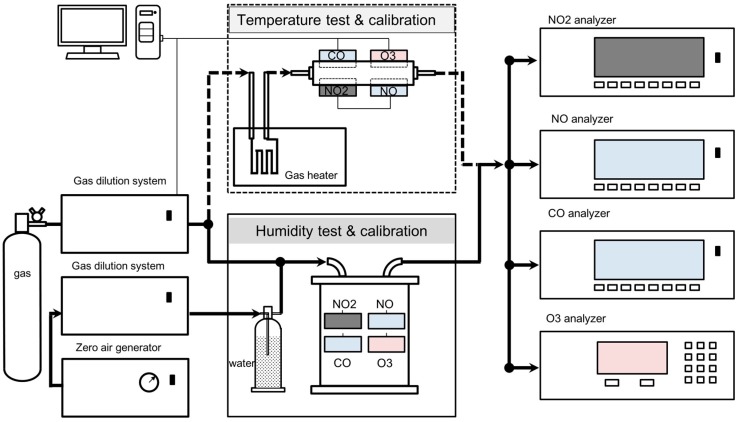
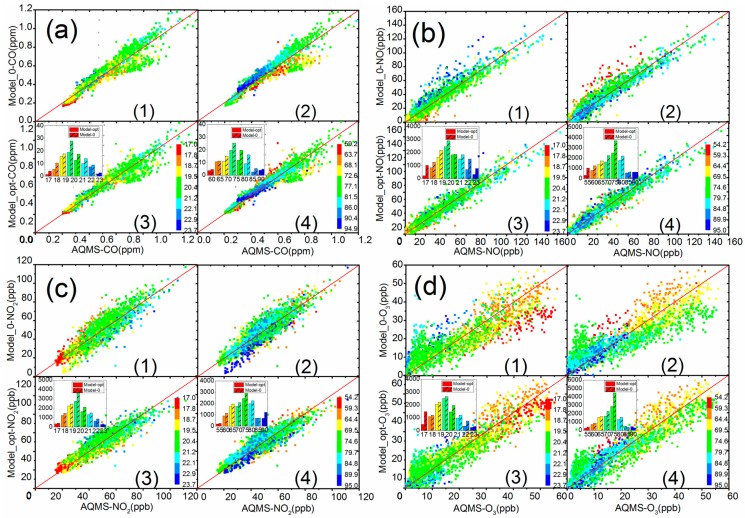
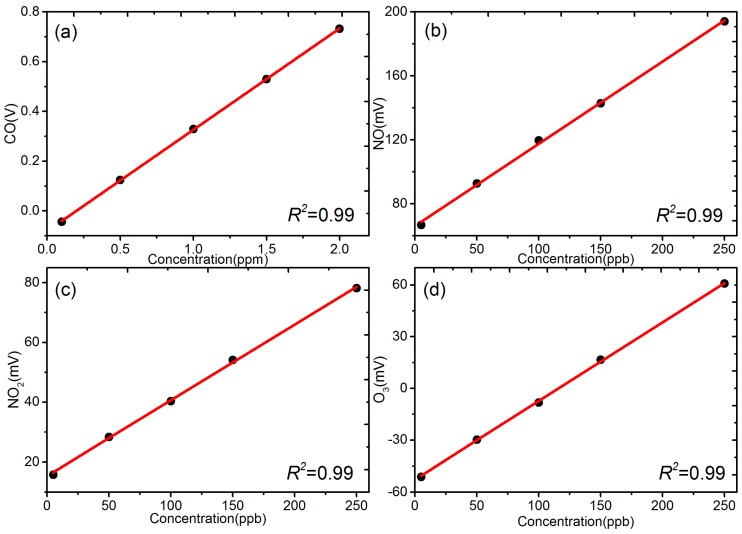
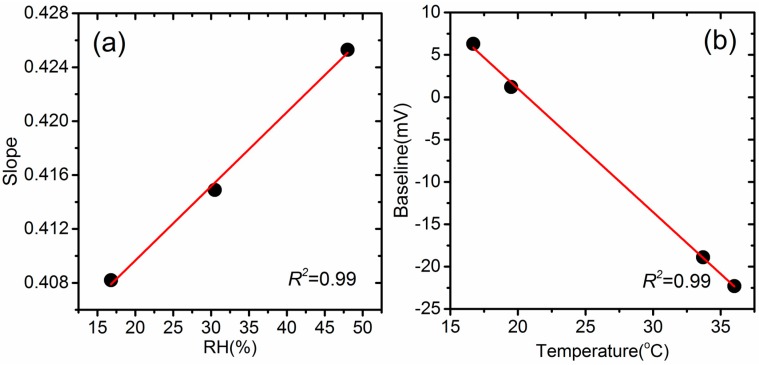
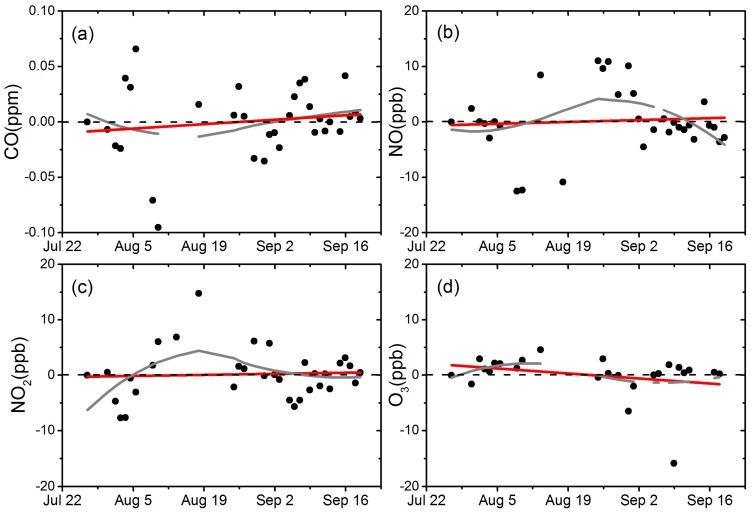
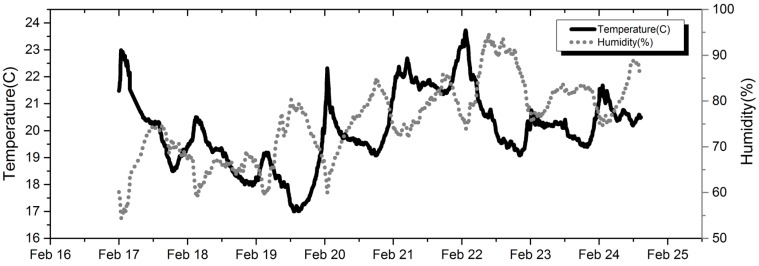
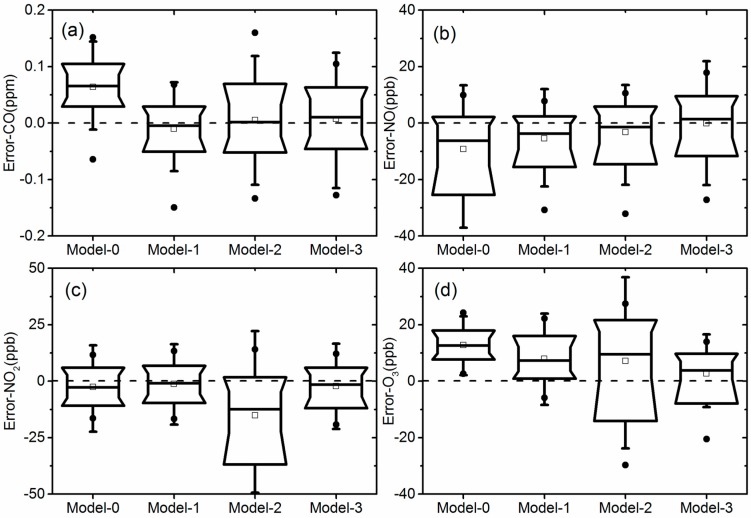
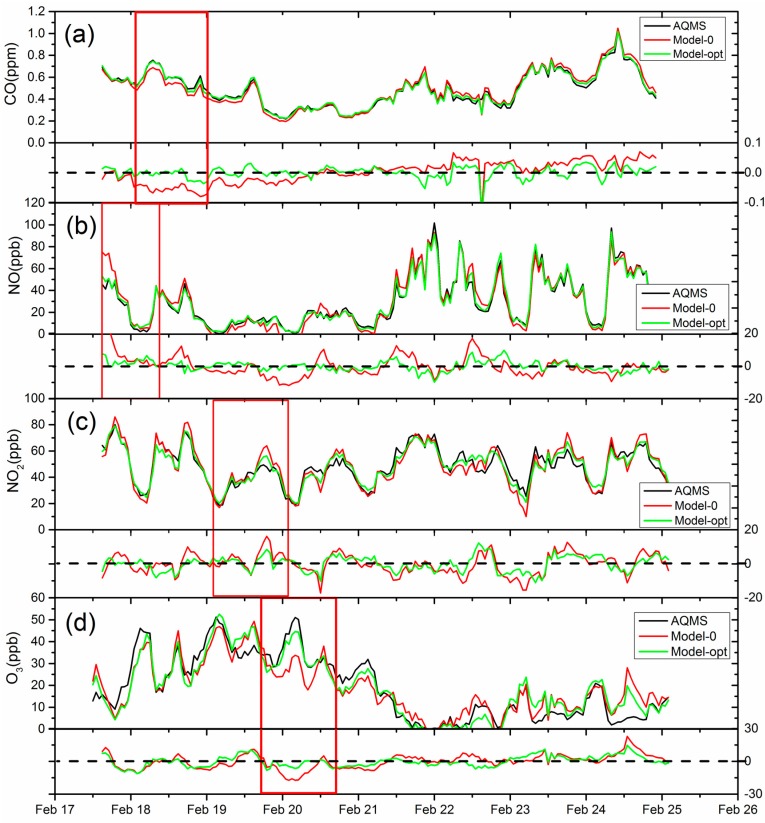
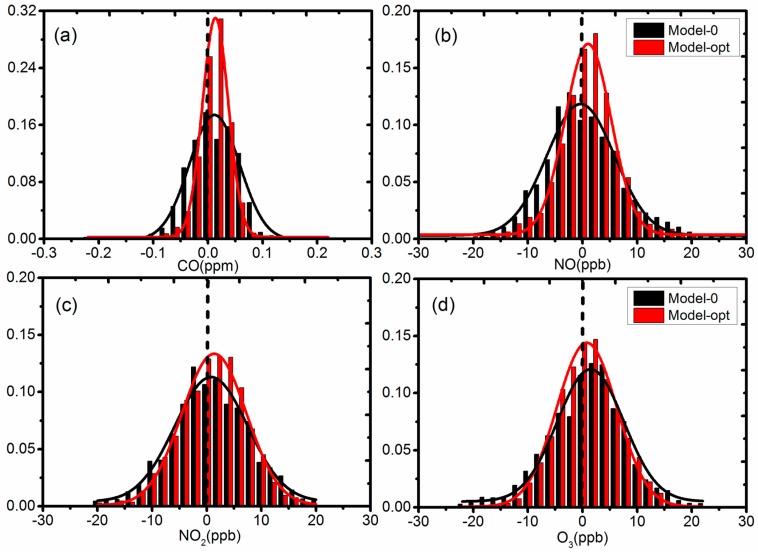
The increasing applications of low-cost air sensors promises more convenient and cost-effective systems for air monitoring in many places and under many conditions. However, the data quality from such systems has not been fully characterized and may not meet user expectations in research and regulatory uses, or for use in citizen science. In our study, electrochemical sensors (Alphasense B4 series) for carbon monoxide (CO), nitric oxide (NO), nitrogen dioxide (NO₂), and oxidants (O) were evaluated under controlled laboratory conditions to identify the influencing factors and quantify their relation with sensor outputs. Based on the laboratory tests, we developed different correction methods to compensate for the impact of ambient conditions. Further, the sensors were assembled into a monitoring system and tested in ambient conditions in Hong Kong side-by-side with regulatory reference monitors, and data from these tests were used to evaluate the performance of the models, to refine them, and validate their applicability in variable ambient conditions in the field. The more comprehensive correction models demonstrated enhanced performance when compared with uncorrected data. One over-arching observation of this study is that the low-cost sensors may promise excellent sensitivity and performance, but it is essential for users to understand and account for several key factors that may strongly affect the nature of sensor data. In this paper, we also evaluated factors of multi-month stability, temperature, and humidity, and considered the interaction of oxidant gases NO₂ and ozone on a newly introduced oxidant sensor.
低成本空气传感器应用的不断增加,有望在许多场所和多种条件下实现更便捷且具成本效益的空气监测系统。然而,此类系统的数据质量尚未得到充分表征,在研究、监管用途或公民科学应用中可能无法满足用户期望。在我们的研究中,对用于一氧化碳(CO)、一氧化氮(NO)、二氧化氮(NO₂)和氧化剂(O)的电化学传感器(Alphasense B4系列)在可控实验室条件下进行了评估,以确定影响因素并量化它们与传感器输出的关系。基于实验室测试,我们开发了不同的校正方法来补偿环境条件的影响。此外,将这些传感器组装成一个监测系统,并在香港的环境条件下与监管参考监测仪并排进行测试,这些测试数据用于评估模型的性能、对其进行优化并验证它们在野外可变环境条件下的适用性。与未校正数据相比,更全面的校正模型表现出了更高的性能。这项研究的一个总体观察结果是,低成本传感器可能具有出色的灵敏度和性能,但用户必须了解并考虑可能强烈影响传感器数据性质的几个关键因素。在本文中,我们还评估了多月稳定性、温度和湿度等因素,并考虑了氧化剂气体NO₂和臭氧对新引入的氧化剂传感器的相互作用。