• 文献检索
  • 文档翻译
  • 深度研究
  • 学术资讯
  • Suppr Zotero 插件Zotero 插件
  • 邀请有礼
  • 套餐&价格
  • 历史记录
应用&插件
Suppr Zotero 插件Zotero 插件浏览器插件Mac 客户端Windows 客户端微信小程序
定价
高级版会员购买积分包购买API积分包
服务
文献检索文档翻译深度研究API 文档MCP 服务
关于我们
关于 Suppr公司介绍联系我们用户协议隐私条款
关注我们

Suppr 超能文献

核心技术专利:CN118964589B侵权必究
粤ICP备2023148730 号-1Suppr @ 2026

文献检索

告别复杂PubMed语法,用中文像聊天一样搜索,搜遍4000万医学文献。AI智能推荐,让科研检索更轻松。

立即免费搜索

文件翻译

保留排版,准确专业,支持PDF/Word/PPT等文件格式,支持 12+语言互译。

免费翻译文档

深度研究

AI帮你快速写综述,25分钟生成高质量综述,智能提取关键信息,辅助科研写作。

立即免费体验

基于稳态视觉诱发电位(SSVEP)的脑机接口(BCI)在不同干扰下的性能。

Steady state visual evoked potential (SSVEP) based brain-computer interface (BCI) performance under different perturbations.

作者信息

İşcan Zafer, Nikulin Vadim V

机构信息

Centre for Cognition and Decision Making, National Research University Higher School of Economics, Moscow, Russian Federation.

Cognitive Neuroimaging Unit, CEA DRF/Joliot Institute, INSERM, Université Paris-Sud, Université Paris-Saclay, NeuroSpin center, Gif-sur-Yvette, France.

出版信息

PLoS One. 2018 Jan 23;13(1):e0191673. doi: 10.1371/journal.pone.0191673. eCollection 2018.

DOI:10.1371/journal.pone.0191673
PMID:29360843
原文链接:https://pmc.ncbi.nlm.nih.gov/articles/PMC5779700/
Abstract

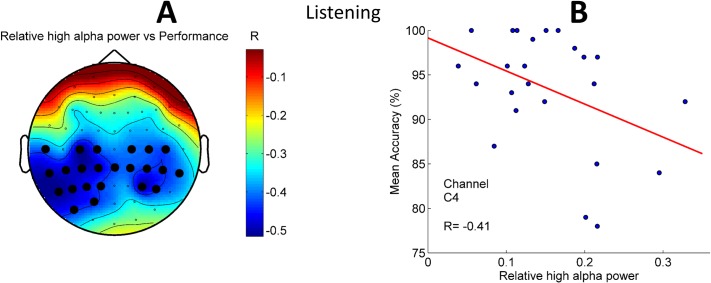
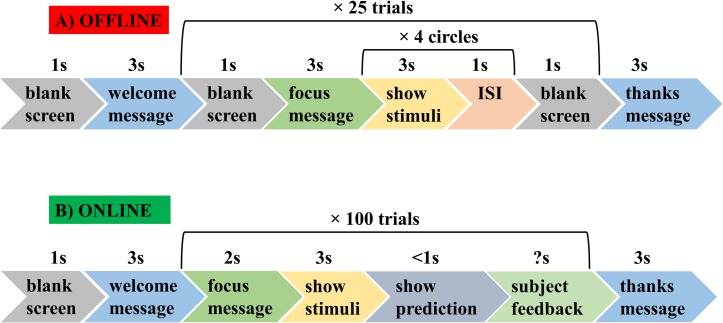
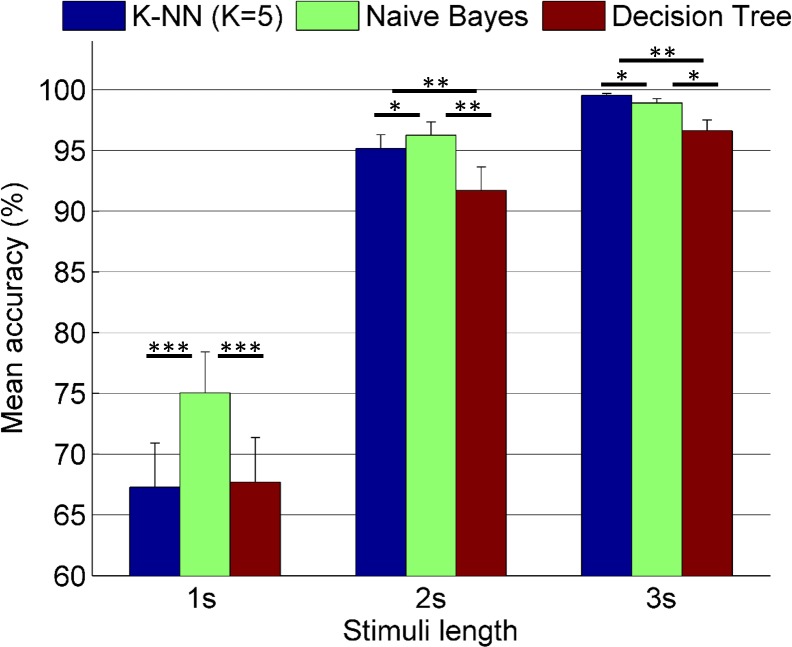
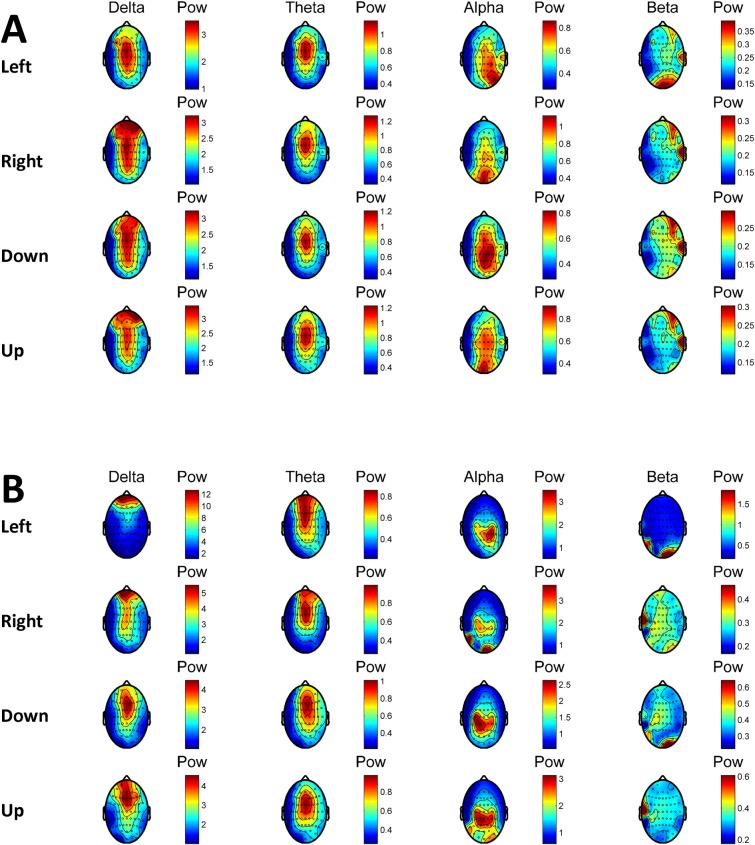
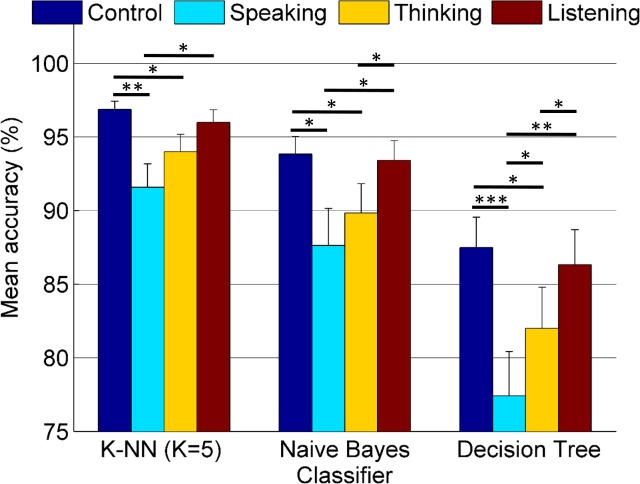
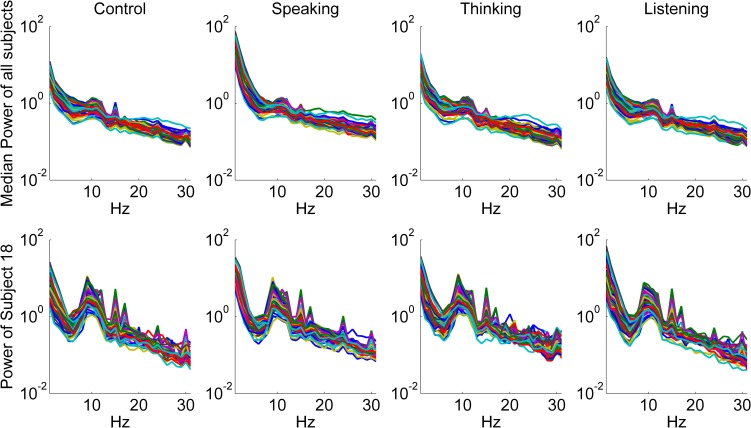
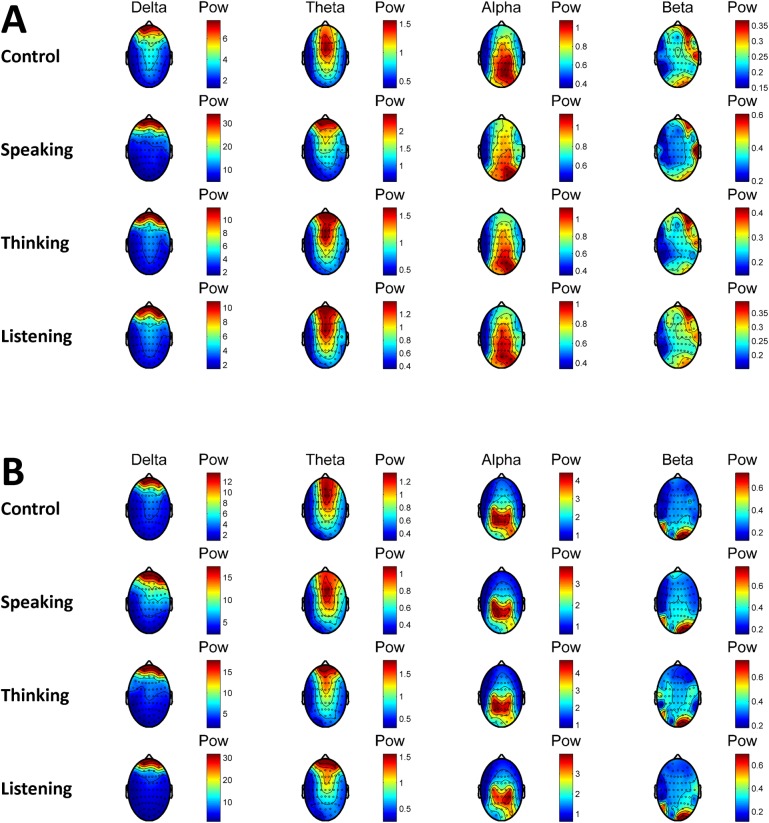
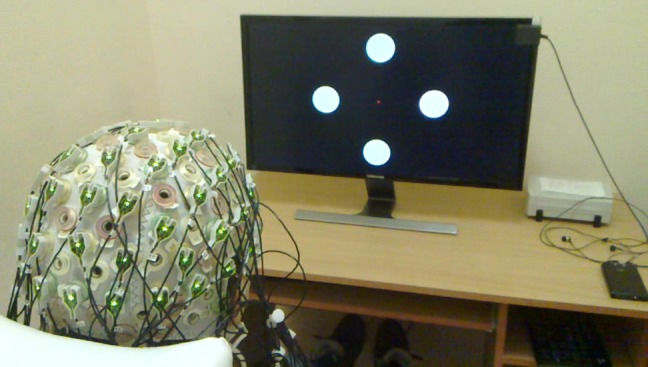
Brain-computer interface (BCI) paradigms are usually tested when environmental and biological artifacts are intentionally avoided. In this study, we deliberately introduced different perturbations in order to test the robustness of a steady state visual evoked potential (SSVEP) based BCI. Specifically we investigated to what extent a drop in performance is related to the degraded quality of EEG signals or rather due to increased cognitive load. In the online tasks, subjects focused on one of the four circles and gave feedback on the correctness of the classification under four conditions randomized across subjects: Control (no perturbation), Speaking (counting loudly and repeatedly from one to ten), Thinking (mentally counting repeatedly from one to ten), and Listening (listening to verbal counting from one to ten). Decision tree, Naïve Bayes and K-Nearest Neighbor classifiers were used to evaluate the classification performance using features generated by canonical correlation analysis. During the online condition, Speaking and Thinking decreased moderately the mean classification accuracy compared to Control condition whereas there was no significant difference between Listening and Control conditions across subjects. The performances were sensitive to the classification method and to the perturbation conditions. We have not observed significant artifacts in EEG during perturbations in the frequency range of interest except in theta band. Therefore we concluded that the drop in the performance is likely to have a cognitive origin. During the Listening condition relative alpha power in a broad area including central and temporal regions primarily over the left hemisphere correlated negatively with the performance thus most likely indicating active suppression of the distracting presentation of the playback. This is the first study that systematically evaluates the effects of natural artifacts (i.e. mental, verbal and audio perturbations) on SSVEP-based BCIs. The results can be used to improve individual classification performance taking into account effects of perturbations.

摘要

脑机接口(BCI)范式通常是在刻意避免环境和生物伪迹的情况下进行测试的。在本研究中,我们故意引入不同的干扰因素,以测试基于稳态视觉诱发电位(SSVEP)的BCI的鲁棒性。具体而言,我们研究了性能下降在多大程度上与脑电图信号质量下降有关,还是由于认知负荷增加所致。在在线任务中,受试者专注于四个圆圈中的一个,并在四种随机分配给受试者的条件下对分类的正确性给出反馈:对照(无干扰)、说话(大声反复从一到十计数)、思考(在心里反复从一到十计数)和倾听(听从一到十的口头计数)。使用决策树、朴素贝叶斯和K近邻分类器,利用典型相关分析生成的特征来评估分类性能。在在线状态下,与对照条件相比,说话和思考适度降低了平均分类准确率,而在所有受试者中,倾听和对照条件之间没有显著差异。这些性能对分类方法和干扰条件敏感。除了在θ频段外,我们在感兴趣的频率范围内的干扰期间未在脑电图中观察到明显的伪迹。因此,我们得出结论,性能下降可能源于认知因素。在倾听条件下,包括主要位于左半球的中央和颞区在内的广泛区域的相对α功率与性能呈负相关,因此很可能表明对回放的干扰性呈现进行了主动抑制。这是第一项系统评估自然伪迹(即心理、言语和音频干扰)对基于SSVEP的BCI影响的研究。考虑到干扰的影响,这些结果可用于提高个体分类性能。
https://cdn.ncbi.nlm.nih.gov/pmc/blobs/643b/5779700/64e8ec3363fe/pone.0191673.g009.jpg
https://cdn.ncbi.nlm.nih.gov/pmc/blobs/643b/5779700/9265d4e1e32f/pone.0191673.g001.jpg
https://cdn.ncbi.nlm.nih.gov/pmc/blobs/643b/5779700/31023f406905/pone.0191673.g002.jpg
https://cdn.ncbi.nlm.nih.gov/pmc/blobs/643b/5779700/2ff36730397b/pone.0191673.g003.jpg
https://cdn.ncbi.nlm.nih.gov/pmc/blobs/643b/5779700/8b523cde6ad2/pone.0191673.g004.jpg
https://cdn.ncbi.nlm.nih.gov/pmc/blobs/643b/5779700/2eae8ada64d3/pone.0191673.g005.jpg
https://cdn.ncbi.nlm.nih.gov/pmc/blobs/643b/5779700/75cdb0a17b2e/pone.0191673.g006.jpg
https://cdn.ncbi.nlm.nih.gov/pmc/blobs/643b/5779700/1beab2b5ea96/pone.0191673.g007.jpg
https://cdn.ncbi.nlm.nih.gov/pmc/blobs/643b/5779700/43702450d05a/pone.0191673.g008.jpg
https://cdn.ncbi.nlm.nih.gov/pmc/blobs/643b/5779700/64e8ec3363fe/pone.0191673.g009.jpg
https://cdn.ncbi.nlm.nih.gov/pmc/blobs/643b/5779700/9265d4e1e32f/pone.0191673.g001.jpg
https://cdn.ncbi.nlm.nih.gov/pmc/blobs/643b/5779700/31023f406905/pone.0191673.g002.jpg
https://cdn.ncbi.nlm.nih.gov/pmc/blobs/643b/5779700/2ff36730397b/pone.0191673.g003.jpg
https://cdn.ncbi.nlm.nih.gov/pmc/blobs/643b/5779700/8b523cde6ad2/pone.0191673.g004.jpg
https://cdn.ncbi.nlm.nih.gov/pmc/blobs/643b/5779700/2eae8ada64d3/pone.0191673.g005.jpg
https://cdn.ncbi.nlm.nih.gov/pmc/blobs/643b/5779700/75cdb0a17b2e/pone.0191673.g006.jpg
https://cdn.ncbi.nlm.nih.gov/pmc/blobs/643b/5779700/1beab2b5ea96/pone.0191673.g007.jpg
https://cdn.ncbi.nlm.nih.gov/pmc/blobs/643b/5779700/43702450d05a/pone.0191673.g008.jpg
https://cdn.ncbi.nlm.nih.gov/pmc/blobs/643b/5779700/64e8ec3363fe/pone.0191673.g009.jpg

相似文献

1
Steady state visual evoked potential (SSVEP) based brain-computer interface (BCI) performance under different perturbations.基于稳态视觉诱发电位(SSVEP)的脑机接口(BCI)在不同干扰下的性能。
PLoS One. 2018 Jan 23;13(1):e0191673. doi: 10.1371/journal.pone.0191673. eCollection 2018.
2
A comparison of three brain-computer interfaces based on event-related desynchronization, steady state visual evoked potentials, or a hybrid approach using both signals.三种基于事件相关去同步化、稳态视觉诱发电位或同时使用两种信号的混合方法的脑机接口比较。
J Neural Eng. 2011 Apr;8(2):025010. doi: 10.1088/1741-2560/8/2/025010. Epub 2011 Mar 24.
3
Exploration of User's Mental State Changes during Performing Brain-Computer Interface.探索用户在执行脑机接口时的心理状态变化。
Sensors (Basel). 2020 Jun 3;20(11):3169. doi: 10.3390/s20113169.
4
An Idle-State Detection Algorithm for SSVEP-Based Brain-Computer Interfaces Using a Maximum Evoked Response Spatial Filter.基于最大诱发响应空间滤波器的 SSVEP 脑-机接口的空闲状态检测算法。
Int J Neural Syst. 2015 Nov;25(7):1550030. doi: 10.1142/S0129065715500306. Epub 2015 Jul 5.
5
Alpha neurofeedback training improves SSVEP-based BCI performance.阿尔法神经反馈训练可改善基于稳态视觉诱发电位的脑机接口性能。
J Neural Eng. 2016 Jun;13(3):036019. doi: 10.1088/1741-2560/13/3/036019. Epub 2016 May 6.
6
The Role of Visual Noise in Influencing Mental Load and Fatigue in a Steady-State Motion Visual Evoked Potential-Based Brain-Computer Interface.视觉噪声在稳态运动视觉诱发电位脑-机接口中影响心理负荷和疲劳的作用。
Sensors (Basel). 2017 Aug 14;17(8):1873. doi: 10.3390/s17081873.
7
Clinical feasibility of brain-computer interface based on steady-state visual evoked potential in patients with locked-in syndrome: Case studies.基于稳态视觉诱发电位的脑机接口在闭锁综合征患者中的临床可行性:病例研究
Psychophysiology. 2017 Mar;54(3):444-451. doi: 10.1111/psyp.12793. Epub 2016 Dec 3.
8
Stress-Induced Effects in Resting EEG Spectra Predict the Performance of SSVEP-Based BCI.应激对静息 EEG 谱的影响可预测基于 SSVEP 的脑-机接口的性能。
IEEE Trans Neural Syst Rehabil Eng. 2020 Aug;28(8):1771-1780. doi: 10.1109/TNSRE.2020.3005771. Epub 2020 Jun 29.
9
Eliciting dual-frequency SSVEP using a hybrid SSVEP-P300 BCI.使用混合稳态视觉诱发电位- P300脑机接口引出双频稳态视觉诱发电位。
J Neurosci Methods. 2016 Jan 30;258:104-13. doi: 10.1016/j.jneumeth.2015.11.001. Epub 2015 Nov 10.
10
Filter bank canonical correlation analysis for implementing a high-speed SSVEP-based brain-computer interface.用于实现基于稳态视觉诱发电位的高速脑机接口的滤波器组典型相关分析。
J Neural Eng. 2015 Aug;12(4):046008. doi: 10.1088/1741-2560/12/4/046008. Epub 2015 Jun 2.

引用本文的文献

1
An investigation into the comfort and neural response of textured visual stimuli in pediatric SSVEP-based BCI.基于小儿稳态视觉诱发电位的脑机接口中纹理视觉刺激的舒适度和神经反应研究。
Sci Rep. 2025 Jul 18;15(1):26168. doi: 10.1038/s41598-025-09540-8.
2
A review on the performance of brain-computer interface systems used for patients with locked-in and completely locked-in syndrome.用于闭锁综合征和完全闭锁综合征患者的脑机接口系统性能综述。
Cogn Neurodyn. 2024 Aug;18(4):1419-1443. doi: 10.1007/s11571-023-09995-3. Epub 2023 Aug 19.
3
Review of Performance Improvement of a Noninvasive Brain-computer Interface in Communication and Motor Control for Clinical Applications.

本文引用的文献

1
Robust frequency recognition for SSVEP-based BCI with temporally local multivariate synchronization index.基于时间局部多变量同步指数的基于稳态视觉诱发电位的脑机接口的稳健频率识别。
Cogn Neurodyn. 2016 Dec;10(6):505-511. doi: 10.1007/s11571-016-9398-9. Epub 2016 Jul 19.
2
Effects of Mental Load and Fatigue on Steady-State Evoked Potential Based Brain Computer Interface Tasks: A Comparison of Periodic Flickering and Motion-Reversal Based Visual Attention.心理负荷和疲劳对基于稳态诱发电位的脑机接口任务的影响:基于周期性闪烁和运动反转的视觉注意比较
PLoS One. 2016 Sep 22;11(9):e0163426. doi: 10.1371/journal.pone.0163426. eCollection 2016.
3
用于临床应用的非侵入性脑机接口在通信和运动控制方面的性能改进综述。
Juntendo Iji Zasshi. 2023 Aug 25;69(4):319-326. doi: 10.14789/jmj.JMJ23-0011-R. eCollection 2023.
4
Assessment of visual fatigue in SSVEP-based brain-computer interface: a comprehensive study.基于 SSVEP 的脑-机接口中视觉疲劳的评估:一项综合研究。
Med Biol Eng Comput. 2024 May;62(5):1475-1490. doi: 10.1007/s11517-023-03000-z. Epub 2024 Jan 25.
5
SSVEP detection assessment by combining visual stimuli paradigms and no-training detection methods.通过结合视觉刺激范式和无训练检测方法进行稳态视觉诱发电位检测评估
Front Neurosci. 2023 May 18;17:1142892. doi: 10.3389/fnins.2023.1142892. eCollection 2023.
6
A Methodology for Enhancing SSVEP Features Using Adaptive Filtering Based on the Spatial Distribution of EEG Signals.一种基于脑电信号空间分布的自适应滤波增强稳态视觉诱发电位特征的方法。
Micromachines (Basel). 2023 Apr 29;14(5):976. doi: 10.3390/mi14050976.
7
The steady state visual evoked potential (SSVEP) tracks "sticky" thinking, but not more general mind-wandering.稳态视觉诱发电位(SSVEP)追踪“固执”思维,但不追踪更普遍的走神。
Front Hum Neurosci. 2022 Aug 11;16:892863. doi: 10.3389/fnhum.2022.892863. eCollection 2022.
8
Cross-Platform Implementation of an SSVEP-Based BCI for the Control of a 6-DOF Robotic Arm.基于 SSVEP 的脑机接口在 6 自由度机器人手臂控制中的跨平台实现。
Sensors (Basel). 2022 Jul 2;22(13):5000. doi: 10.3390/s22135000.
9
eldBETA: A Large Eldercare-oriented Benchmark Database of SSVEP-BCI for the Aging Population.eldBETA:面向老龄化人口的 SSVEP-BCI 的大型老年护理基准数据库。
Sci Data. 2022 May 31;9(1):252. doi: 10.1038/s41597-022-01372-9.
10
Poststroke Cognitive Impairment Research Progress on Application of Brain-Computer Interface.脑卒中后认知障碍脑-机接口应用研究进展。
Biomed Res Int. 2022 Feb 7;2022:9935192. doi: 10.1155/2022/9935192. eCollection 2022.
Brain-computer interfacing under distraction: an evaluation study.
分心状态下的脑机接口:一项评估研究。
J Neural Eng. 2016 Oct;13(5):056012. doi: 10.1088/1741-2560/13/5/056012. Epub 2016 Aug 31.
4
Physical connections between different SSVEP neural networks.不同稳态视觉诱发电位神经网络之间的物理连接。
Sci Rep. 2016 Mar 8;6:22801. doi: 10.1038/srep22801.
5
Differential effects of white noise in cognitive and perceptual tasks.白噪声在认知和感知任务中的差异效应。
Front Psychol. 2015 Nov 3;6:1639. doi: 10.3389/fpsyg.2015.01639. eCollection 2015.
6
A Comparison Study of Canonical Correlation Analysis Based Methods for Detecting Steady-State Visual Evoked Potentials.基于典型相关分析的稳态视觉诱发电位检测方法的比较研究
PLoS One. 2015 Oct 19;10(10):e0140703. doi: 10.1371/journal.pone.0140703. eCollection 2015.
7
A lower limb exoskeleton control system based on steady state visual evoked potentials.一种基于稳态视觉诱发电位的下肢外骨骼控制系统。
J Neural Eng. 2015 Oct;12(5):056009. doi: 10.1088/1741-2560/12/5/056009. Epub 2015 Aug 17.
8
Attentional switches and dual-task interference.注意力转换与双任务干扰。
PLoS One. 2015 Mar 2;10(3):e0118216. doi: 10.1371/journal.pone.0118216. eCollection 2015.
9
Addition of visual noise boosts evoked potential-based brain-computer interface.添加视觉噪声可增强基于诱发电位的脑机接口。
Sci Rep. 2014 May 14;4:4953. doi: 10.1038/srep04953.
10
Brain-computer interfaces using sensorimotor rhythms: current state and future perspectives.利用感觉运动节律的脑机接口:现状与未来展望。
IEEE Trans Biomed Eng. 2014 May;61(5):1425-35. doi: 10.1109/TBME.2014.2312397.