Xu Stacey X, Leontyev Danila, Kaul Rupert, Gray-Owen Scott D
Department of Molecular Genetics, University of Toronto, Toronto, Ontario, Canada.
Department of Medicine, University of Toronto, Toronto, Ontario, Canada.
PLoS One. 2018 Jan 23;13(1):e0191672. doi: 10.1371/journal.pone.0191672. eCollection 2018.
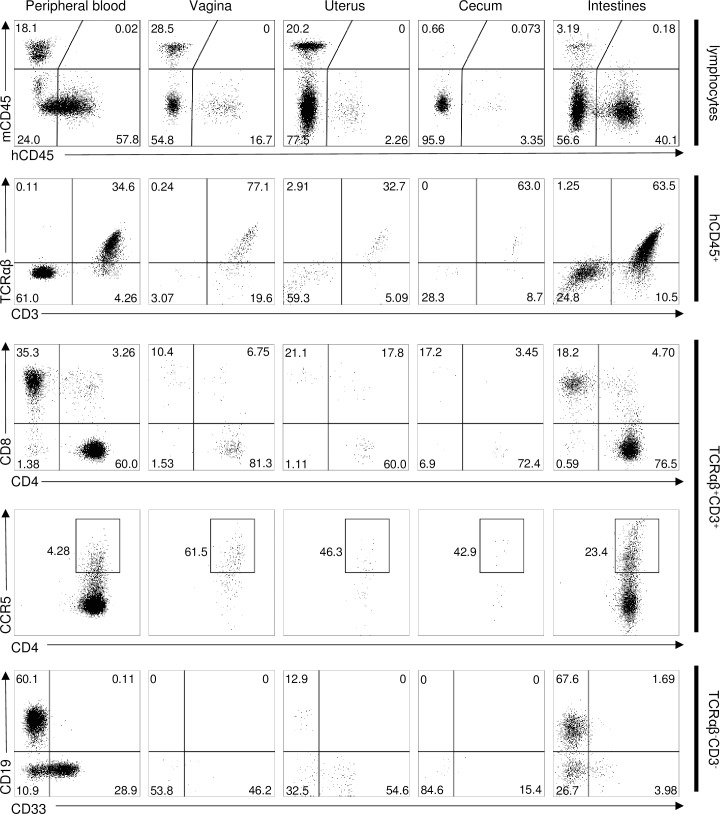
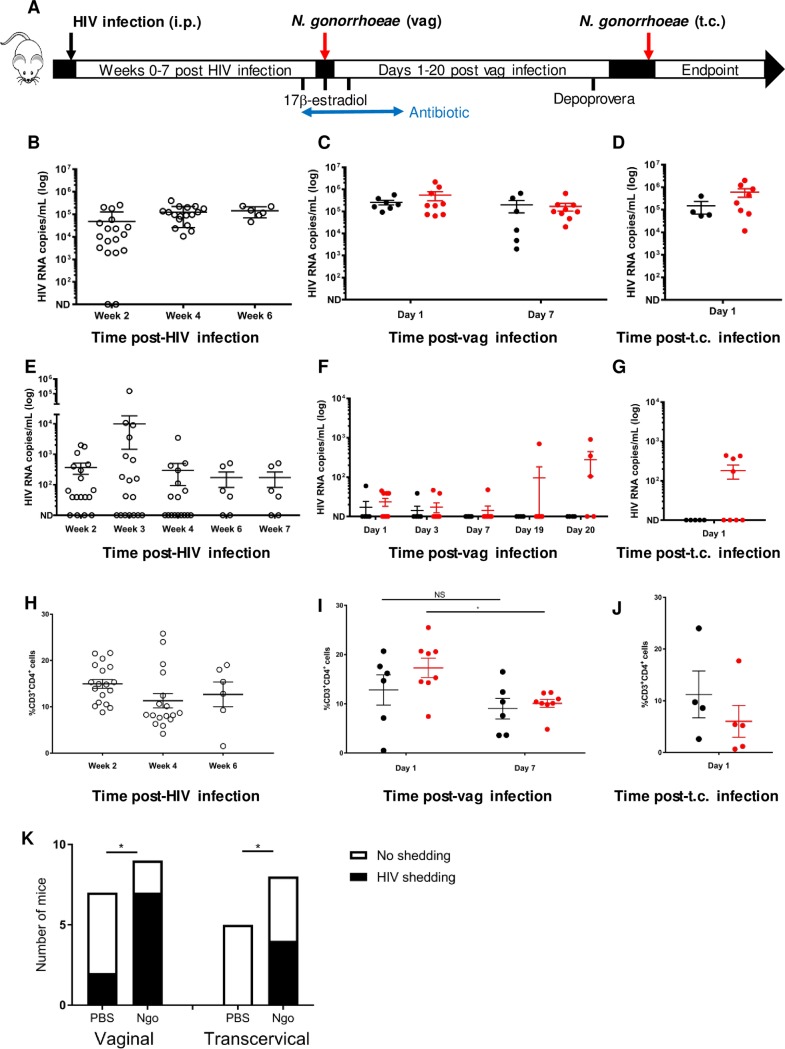
HIV synergy with sexually transmitted co-infections is well-documented in the clinic. Co-infection with Neisseria gonorrhoeae in particular, increases genital HIV shedding and mucosal transmission. However, no animal model of co-infection currently exists to directly explore this relationship or to bridge the gap in understanding between clinical and in vitro studies of this interaction. This study aims to test the feasibility of using a humanized mouse model to overcome this barrier. Combining recent in vivo modelling advancements in both HIV and gonococcal research, we developed a co-infection model by engrafting immunodeficient NSG mice with human CD34+ hematopoietic stem cells to generate humanized mice that permit both systemic HIV infection and genital N. gonorrhoeae infection. Systemic plasma and vaginal lavage titres of HIV were measured in order to assess the impact of gonococcal challenge on viral plasma titres and genital shedding. Engrafted mice showed human CD45+ leukocyte repopulation in blood and mucosal tissues. Systemic HIV challenge resulted in 104-105 copies/mL of viral RNA in blood by week 4 post-infection, as well as vaginal shedding of virus. Subsequent gonococcal challenge resulted in unchanged plasma HIV levels but higher viral shedding in the genital tract, which reflects published clinical observations. Thus, human CD34+ stem cell-transplanted NSG mice represent an experimentally tractable animal model in which to study HIV shedding during gonococcal co-infection, allowing dissection of molecular and immunological interactions between these pathogens, and providing a platform to assess future therapeutics aimed at reducing HIV transmission.
在临床上,HIV与性传播合并感染之间的协同作用已有充分记录。特别是与淋病奈瑟菌合并感染,会增加生殖器HIV脱落和黏膜传播。然而,目前尚无合并感染的动物模型来直接探究这种关系,或弥合对此相互作用的临床研究与体外研究之间的认知差距。本研究旨在测试使用人源化小鼠模型克服这一障碍的可行性。结合HIV和淋球菌研究中最新的体内建模进展,我们通过将免疫缺陷的NSG小鼠植入人CD34+造血干细胞来开发一种合并感染模型,以生成既能全身性感染HIV又能生殖器感染淋病奈瑟菌的人源化小鼠。测量HIV的全身血浆和阴道灌洗滴度,以评估淋球菌攻击对病毒血浆滴度和生殖器脱落的影响。移植后的小鼠在血液和黏膜组织中出现了人CD45+白细胞再填充。全身性HIV攻击在感染后第4周导致血液中病毒RNA达到104 - 105拷贝/毫升,同时出现病毒的阴道脱落。随后的淋球菌攻击导致血浆HIV水平不变,但生殖道中的病毒脱落增加,这与已发表的临床观察结果相符。因此,人CD34+干细胞移植的NSG小鼠代表了一种易于实验操作的动物模型,可用于研究淋病奈瑟菌合并感染期间的HIV脱落,有助于剖析这些病原体之间的分子和免疫相互作用,并提供一个平台来评估旨在减少HIV传播的未来治疗方法。