Laboratory of Experimental Thrombosis, Institute of Experimental Medicine, CONICET-National Academy of Medicine, Buenos Aires, Argentina.
Division Experimental Pathology, National Academy of Medicine, Buenos Aires, Argentina.
Sci Rep. 2018 Jan 24;8(1):1513. doi: 10.1038/s41598-018-19419-6.
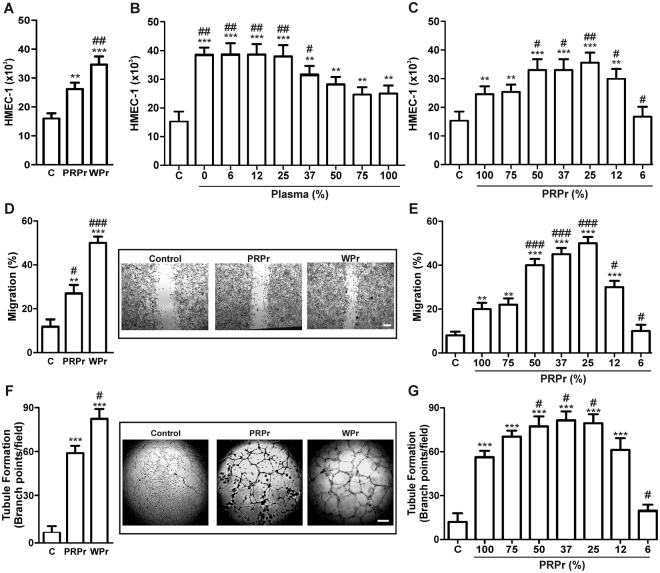
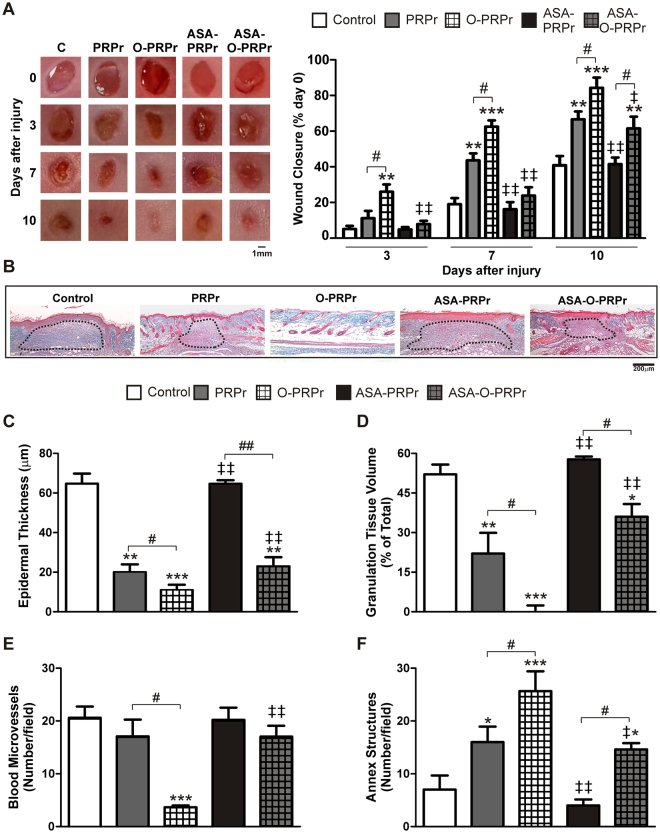
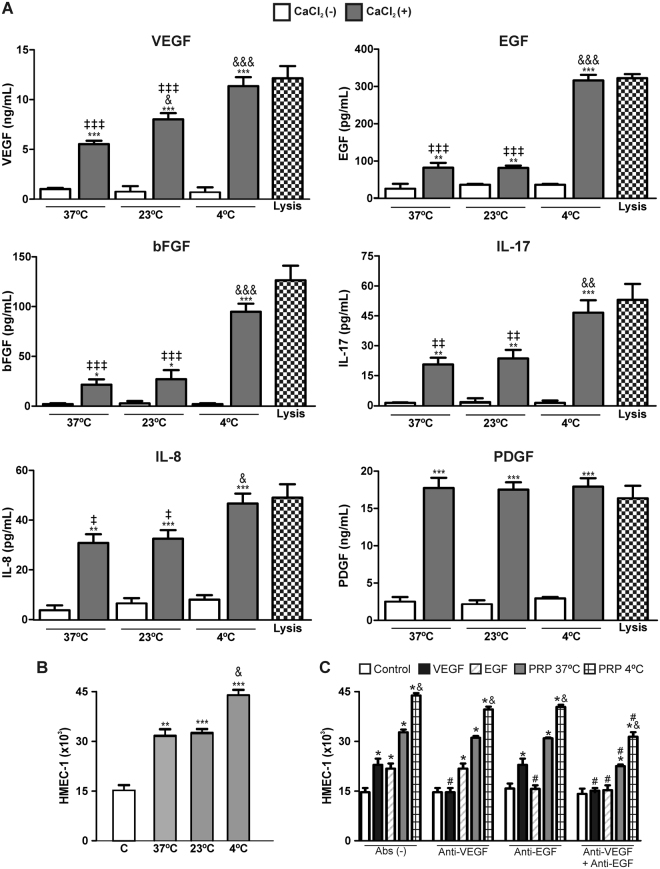
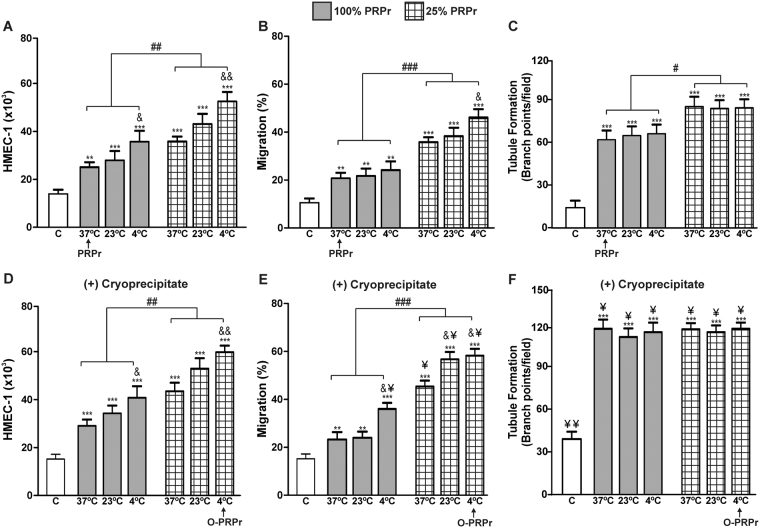
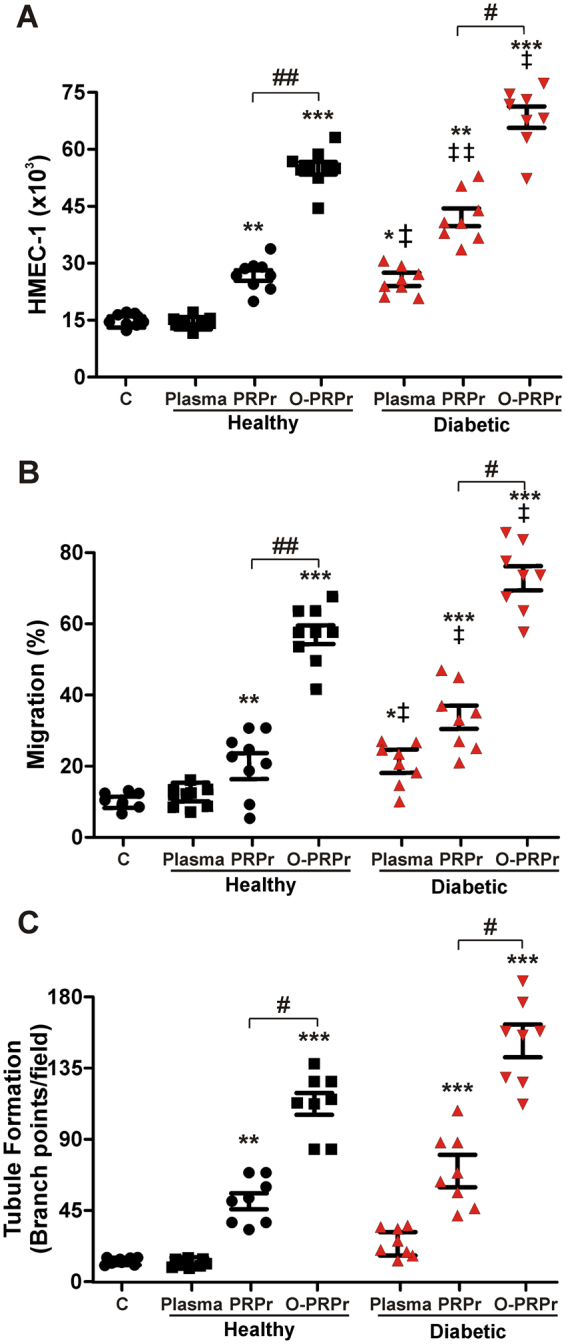
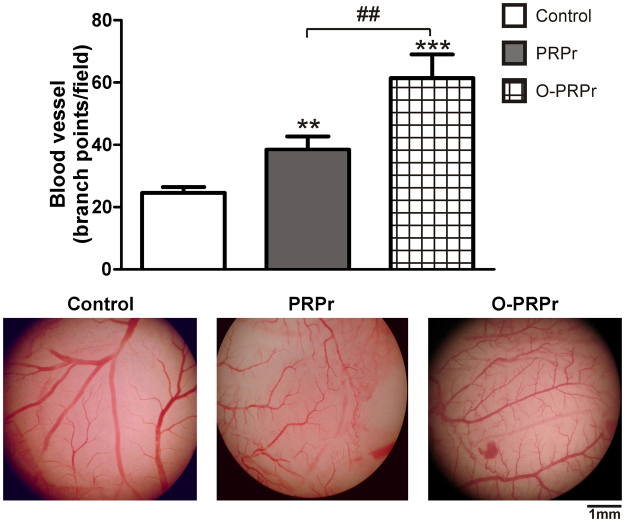
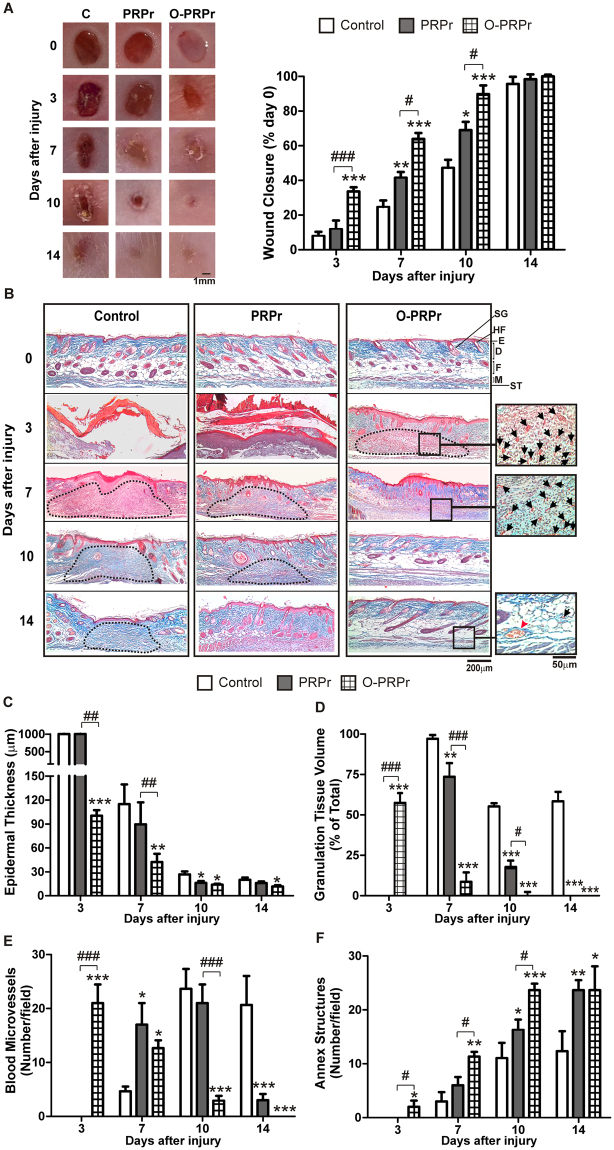
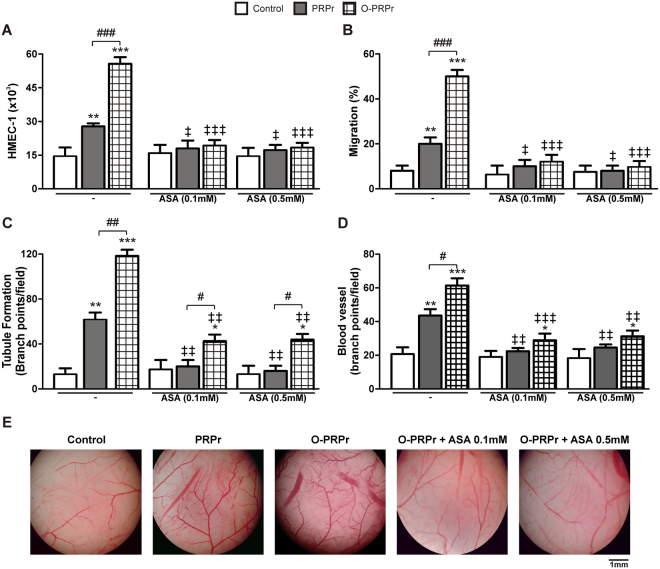
Although platelet-rich plasma (PRP) is used as a source of growth factors in regenerative medicine, its effectiveness remains controversial, partially due to the absence of PRP preparation protocols based on the regenerative role of platelets. Here, we aimed to optimise the protocol by analysing PRP angiogenic and regenerative properties. Three optimising strategies were evaluated: dilution, 4 °C pre-incubation, and plasma cryoprecipitate supplementation. Following coagulation, PRP releasates (PRPr) were used to induce angiogenesis in vitro (HMEC-1 proliferation, migration, and tubule formation) and in vivo (chorioallantoic membrane), as well as regeneration of excisional wounds on mouse skin. Washed platelet releasates induced greater angiogenesis than PRPr due to the anti-angiogenic effect of plasma, which was decreased by diluting PRPr with saline. Angiogenesis was also improved by both PRP pre-incubation at 4 °C and cryoprecipitate supplementation. A combination of optimising variables exerted an additive effect, thereby increasing the angiogenic activity of PRPr from healthy donors and diabetic patients. Optimised PRPr induced faster and more efficient mouse skin wound repair compared to that induced by non-optimised PRPr. Acetylsalicylic acid inhibited angiogenesis and tissue regeneration mediated by PRPr; this inhibition was reversed following optimisation. Our findings indicate that PRP pre-incubation at 4 °C, PRPr dilution, and cryoprecipitate supplementation improve the angiogenic and regenerative properties of PRP compared to the obtained by current methods.
尽管富含血小板的血浆 (PRP) 被用作再生医学中生长因子的来源,但由于缺乏基于血小板再生作用的 PRP 制备方案,其有效性仍存在争议。在这里,我们旨在通过分析 PRP 的血管生成和再生特性来优化该方案。评估了三种优化策略:稀释、4°C 预孵育和血浆冷沉淀补充。凝血后,将 PRP 释放物 (PRPr) 用于体外诱导血管生成(HMEC-1 增殖、迁移和管腔形成)和体内(绒毛尿囊膜),以及小鼠皮肤切除伤口的再生。由于血浆的抗血管生成作用,洗涤后的血小板释放物比 PRPr 诱导更强的血管生成,而 PRPr 用生理盐水稀释可降低其血管生成作用。PRP 在 4°C 预孵育和冷沉淀补充也改善了血管生成。优化变量的组合具有相加作用,从而增加了来自健康供体和糖尿病患者的 PRPr 的血管生成活性。与非优化 PRPr 相比,优化后的 PRPr 可更快、更有效地修复小鼠皮肤伤口。乙酰水杨酸抑制 PRPr 介导的血管生成和组织再生;这种抑制在优化后得到逆转。我们的研究结果表明,与目前的方法相比,4°C 预孵育、PRPr 稀释和冷沉淀补充可改善 PRP 的血管生成和再生特性。