Graduate School of Medical Science and Engineering, Korea Advanced Institute of Science and Technology, Daejeon, 34141, Korea.
Center for Synaptic Brain Dysfunctions, Institute for Basic Science, Daejeon, 34141, Korea.
Nat Commun. 2018 Jan 26;9(1):404. doi: 10.1038/s41467-017-02817-1.
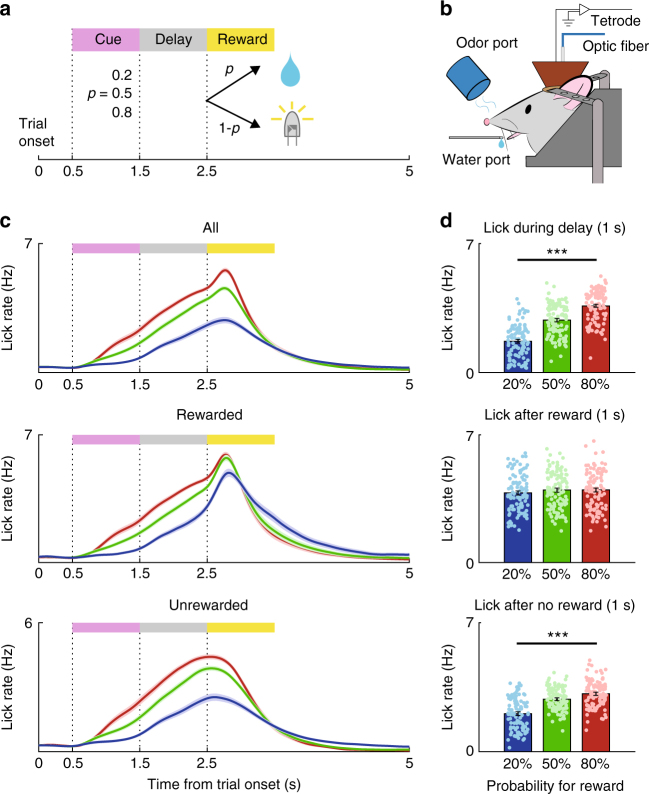
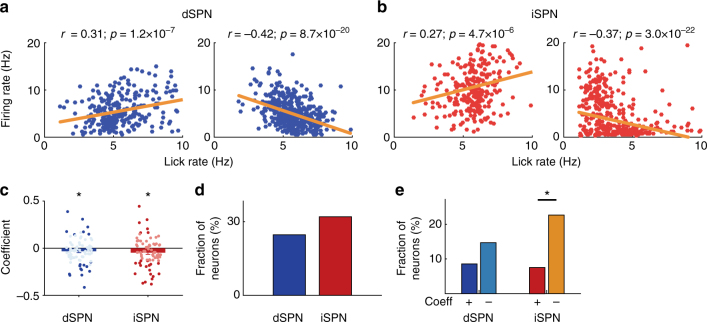
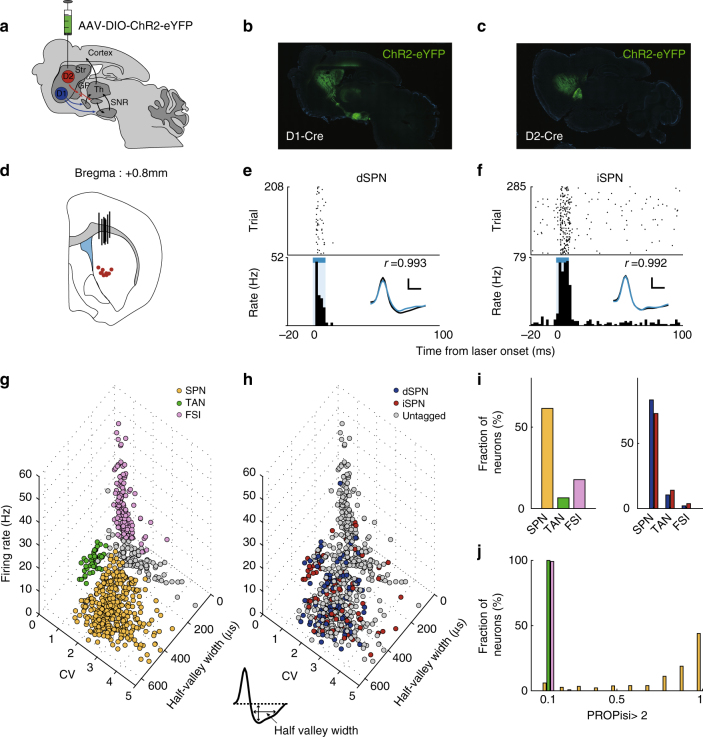
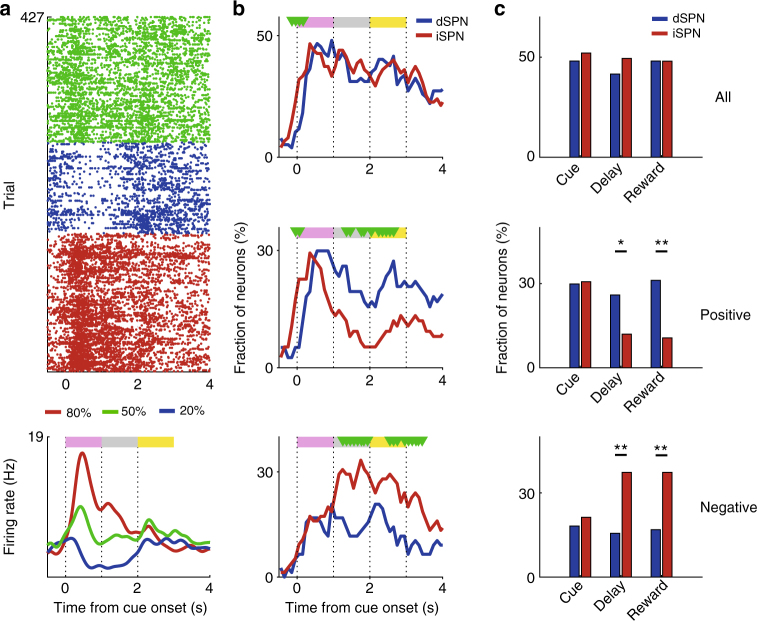
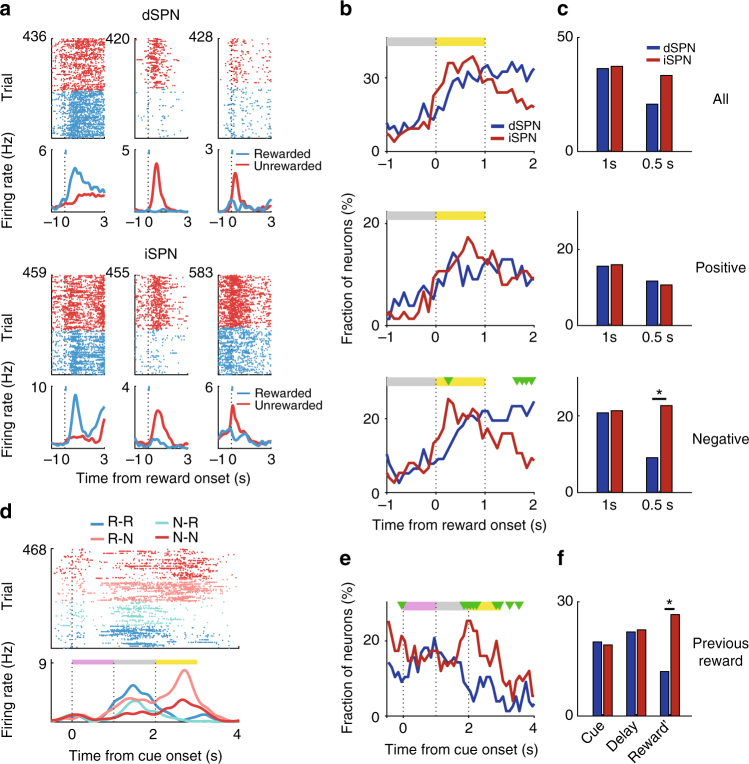
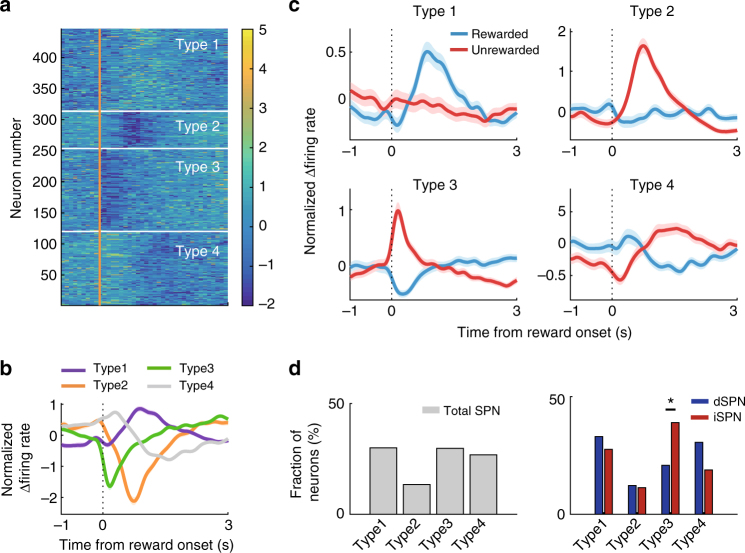
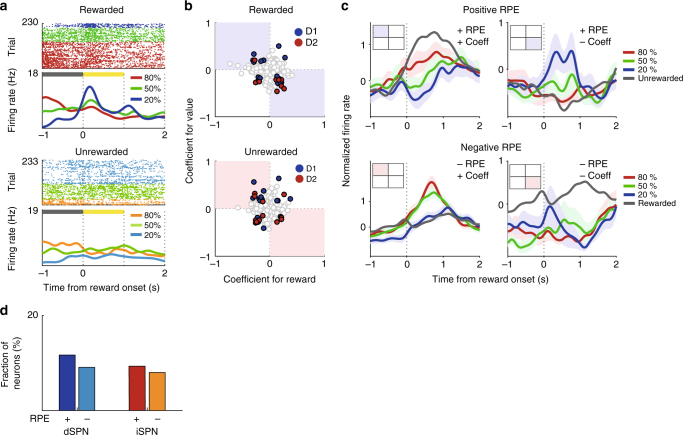
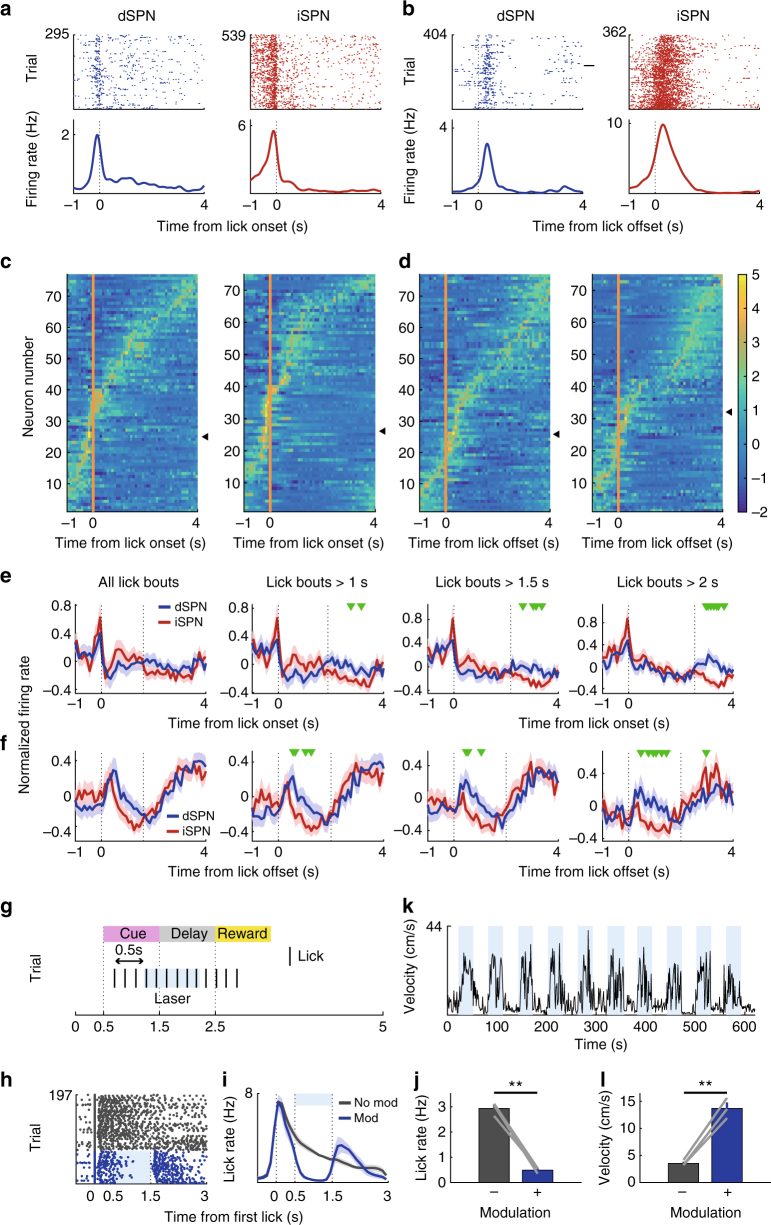
The direct and indirect pathways of the basal ganglia have long been thought to mediate behavioral promotion and inhibition, respectively. However, this classic dichotomous model has been recently challenged. To better understand neural processes underlying reward-based learning and movement control, we recorded from direct (dSPNs) and indirect (iSPNs) pathway spiny projection neurons in the dorsomedial striatum of D1-Cre and D2-Cre mice performing a probabilistic Pavlovian conditioning task. dSPNs tend to increase activity while iSPNs decrease activity as a function of reward value, suggesting the striatum represents value in the relative activity levels of dSPNs versus iSPNs. Lick offset-related activity increase is largely dSPN selective, suggesting dSPN involvement in suppressing ongoing licking behavior. Rapid responses to negative outcome and previous reward-related responses are more frequent among iSPNs than dSPNs, suggesting stronger contributions of iSPNs to outcome-dependent behavioral adjustment. These findings provide new insights into striatal neural circuit operations.
基底神经节的直接和间接通路长期以来被认为分别介导行为的促进和抑制。然而,这种经典的二分模型最近受到了挑战。为了更好地理解基于奖励的学习和运动控制的神经过程,我们在 D1-Cre 和 D2-Cre 小鼠的背内侧纹状体中记录了直接(dSPN)和间接(iSPN)通路棘突投射神经元,这些小鼠执行概率性巴甫洛夫条件反射任务。dSPN 的活动随着奖励价值的增加而增加,而 iSPN 的活动则随着奖励价值的减少而减少,这表明纹状体通过 dSPN 与 iSPN 的相对活动水平来表示价值。与舔舐结束相关的活动增加主要是 dSPN 选择性的,这表明 dSPN 参与抑制正在进行的舔舐行为。与 dSPN 相比,iSPN 中快速响应负结果和先前与奖励相关的反应更为频繁,这表明 iSPN 对基于结果的行为调整有更强的贡献。这些发现为纹状体神经回路的运作提供了新的见解。