Decision Neuroscience Lab, School of Psychology, UNSW Sydney, Sydney, Australia.
Elife. 2020 Nov 20;9:e58544. doi: 10.7554/eLife.58544.
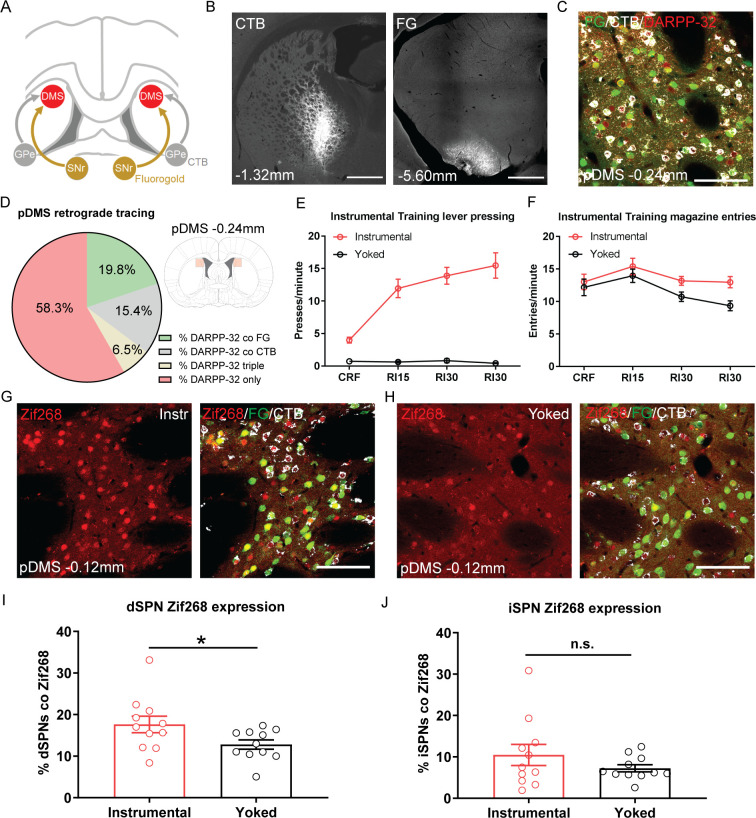
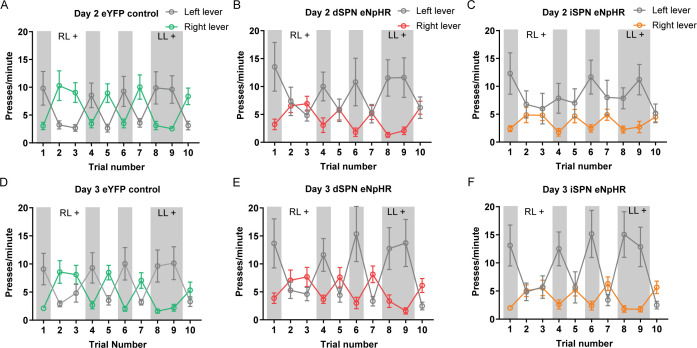
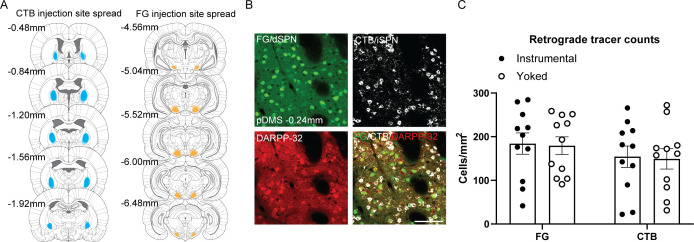
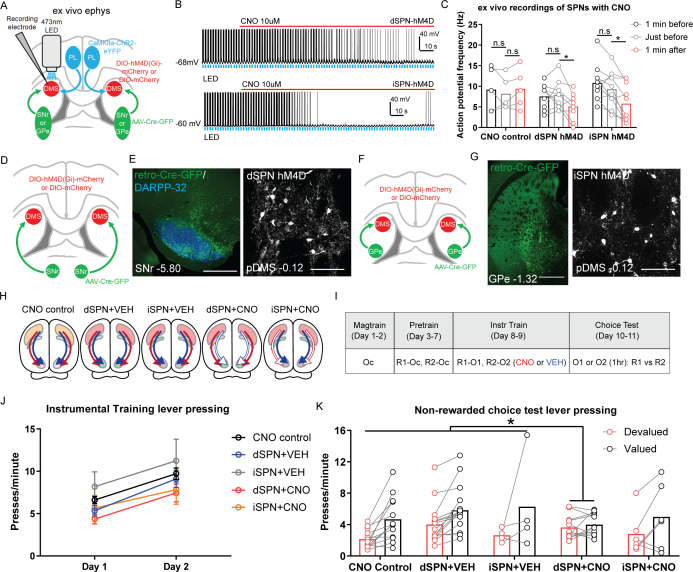
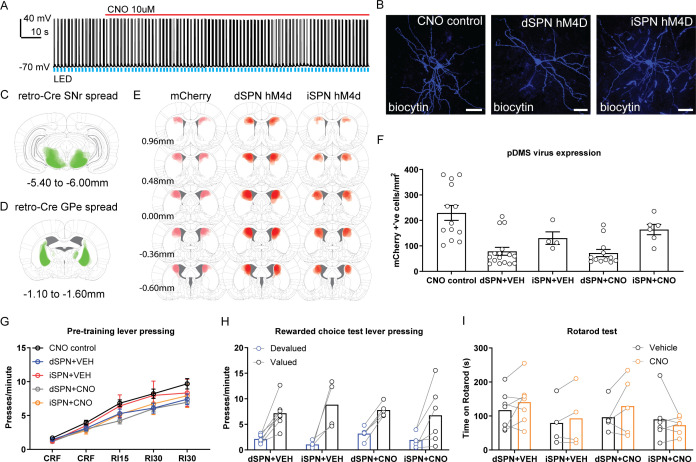
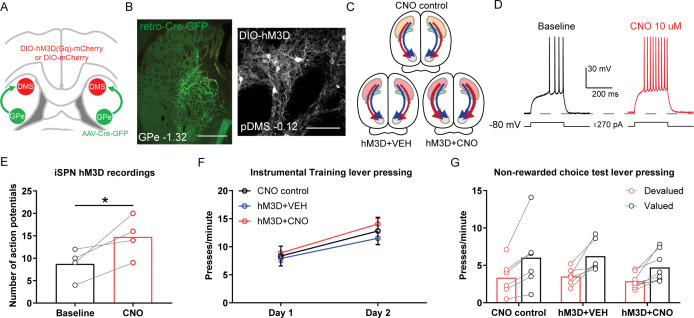
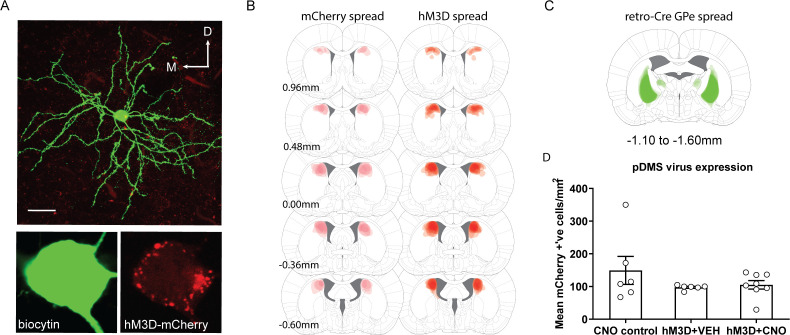
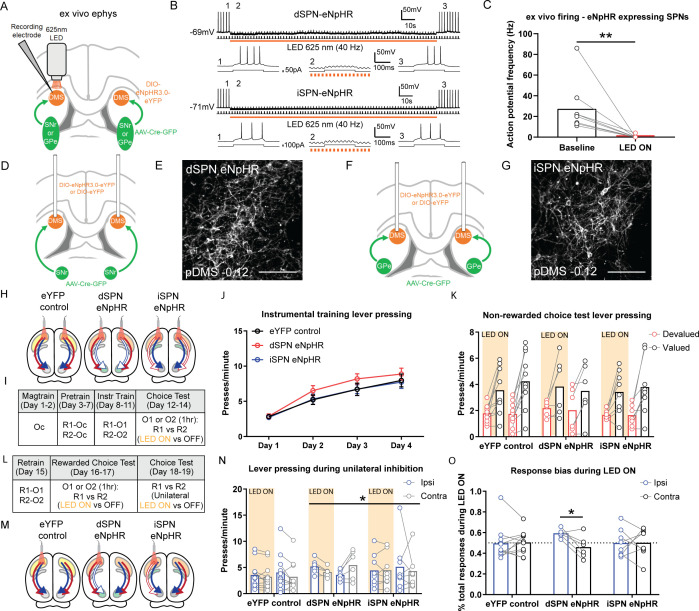
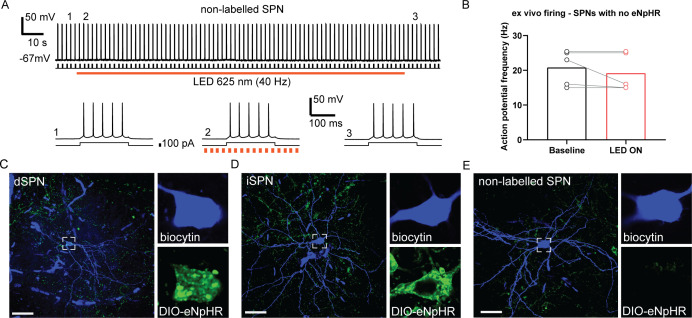
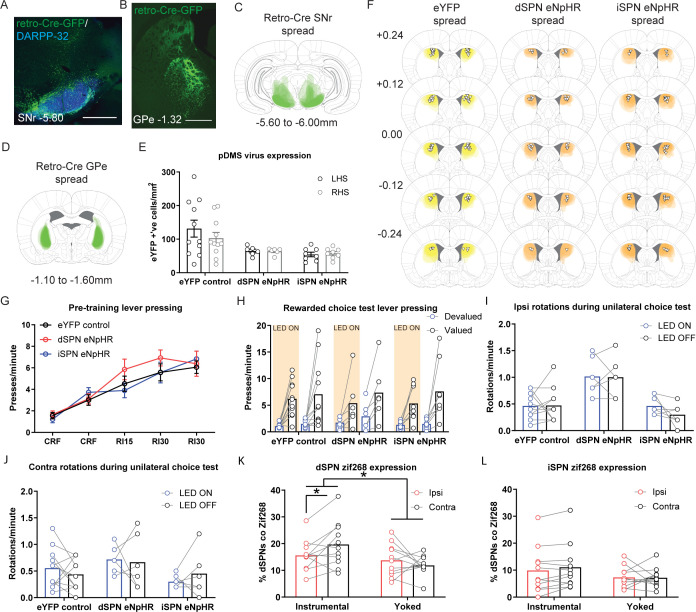
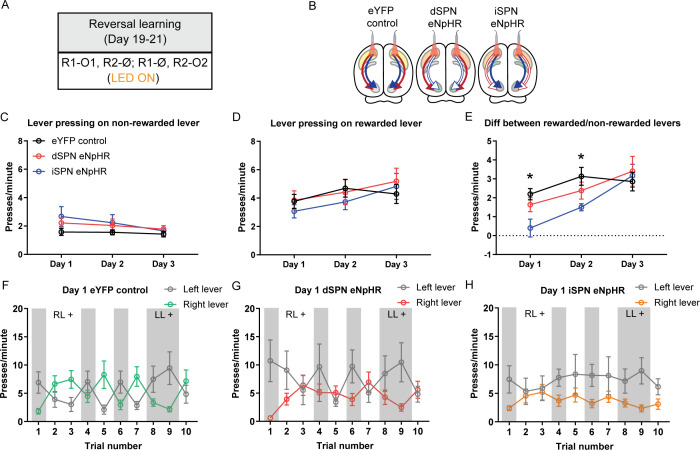
The posterior dorsomedial striatum (pDMS) is necessary for goal-directed action; however, the role of the direct (dSPN) and indirect (iSPN) spiny projection neurons in the pDMS in such actions remains unclear. In this series of experiments, we examined the role of pDMS SPNs in goal-directed action in rats and found that whereas dSPNs were critical for goal-directed learning and for energizing the learned response, iSPNs were involved in updating that learning to support response flexibility. Instrumental training elevated expression of the plasticity marker Zif268 in dSPNs only, and chemogenetic suppression of dSPN activity during training prevented goal-directed learning. Unilateral optogenetic inhibition of dSPNs induced an ipsilateral response bias in goal-directed action performance. In contrast, although initial goal-directed learning was unaffected by iSPN manipulations, optogenetic inhibition of iSPNs, but not dSPNs, impaired the updating of this learning and attenuated response flexibility after changes in the action-outcome contingency.
后背侧纹状体腹内侧部(pDMS)对于目标导向行为是必需的;然而,在这种行为中,pDMS 中的直接(dSPN)和间接(iSPN)棘突投射神经元的作用尚不清楚。在这一系列实验中,我们研究了 pDMS SPN 在大鼠目标导向行为中的作用,发现 dSPN 对于目标导向学习和激发习得反应至关重要,而 iSPN 则参与更新学习以支持反应灵活性。工具训练仅使 dSPN 中可塑性标志物 Zif268 的表达升高,并且在训练期间化学遗传抑制 dSPN 活性可防止目标导向学习。单侧光遗传学抑制 dSPN 会在目标导向行为表现中诱导同侧反应偏向。相比之下,尽管 iSPN 操作对初始目标导向学习没有影响,但光遗传学抑制 iSPN 而不是 dSPN 会损害这种学习的更新,并在动作-结果关联发生变化后削弱反应灵活性。