Division of Infectious Diseases and Applied Immunology, Research Hospital, The Institute of Medical Science, The University of Tokyo, Tokyo, Japan.
National Center for Global Health and Medicine, Tokyo, Japan.
Retrovirology. 2018 Jan 27;15(1):12. doi: 10.1186/s12977-018-0401-x.
HIV-associated neurocognitive disorder (HAND) remains an important and yet potentially underdiagnosed manifestation despite the fact that the modern combination antiretroviral therapy (cART) has achieved effective viral suppression and greatly reduced the incidence of life-threatening events. Although HIV neurotoxicity is thought to play a central role, the potential of viral genetic signature as diagnostic and/or prognostic biomarker has yet to be fully explored.
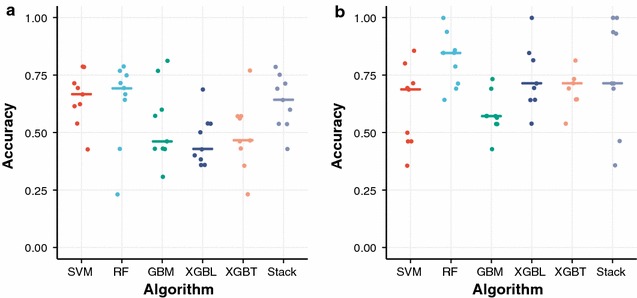
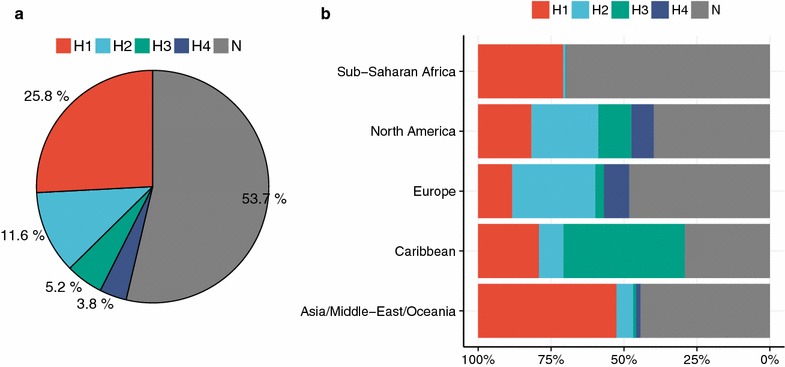
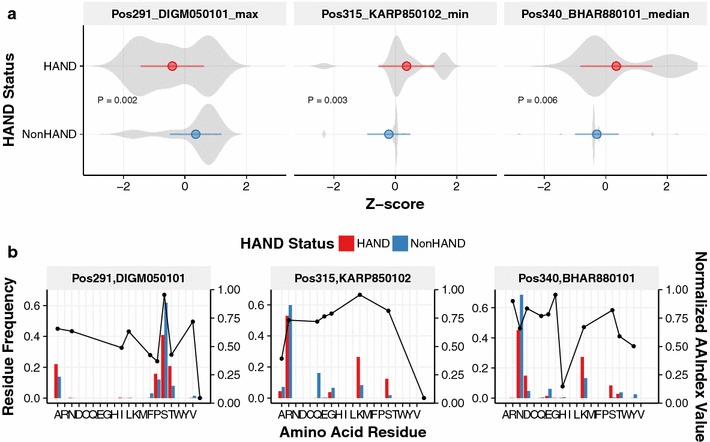
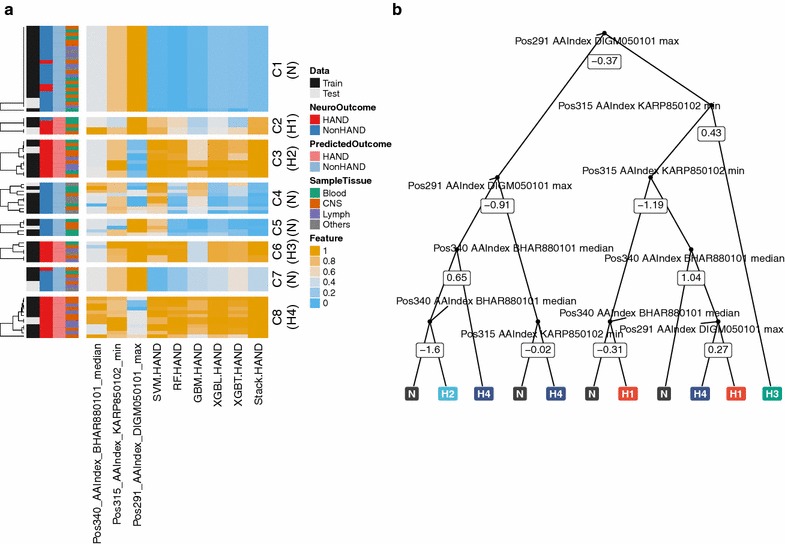
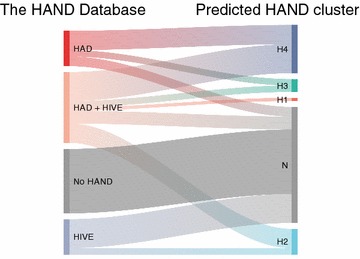
Using a manually curated sequence metadataset (80 specimens, 2349 sequences), we demonstrated that only three genetic features are sufficient to predict HAND status regardless of sampling tissues; the accuracy reached 100 and 94% in the hold-out testing subdataset and the entire dataset, respectively. The three genetic features stratified HAND into four distinct clusters. Extrapolating the classification to the 1619 specimens registered in the Los Alamos HIV Sequence Database, the global HAND prevalence was estimated to be 46%, with significant regional variations (30-71%). The R package HANDPrediction was implemented to ensure public availability of key codes.
Our analysis revealed three amino acid positions in gp120 glycoprotein, providing the basis of the development of novel cART regimens specifically optimized for HAND-associated quasispecies. Moreover, the classifier can readily be translated into a diagnostic biomarker, warranting prospective validation.
尽管现代联合抗逆转录病毒疗法(cART)已实现了有效的病毒抑制,大大降低了危及生命事件的发生率,但艾滋病毒相关神经认知障碍(HAND)仍然是一种重要且潜在未被诊断的表现。尽管人们认为 HIV 神经毒性起核心作用,但病毒遗传特征作为诊断和/或预后生物标志物的潜力尚未得到充分探索。
使用手动策展的序列元数据集(80 个样本,2349 个序列),我们证明了仅需三个遗传特征即可预测 HAND 状态,而与采样组织无关;在保留测试子数据集和整个数据集中,准确率分别达到 100%和 94%。这三个遗传特征将 HAND 分为四个不同的簇。将分类法外推到 Los Alamos HIV 序列数据库中注册的 1619 个样本,全球 HAND 患病率估计为 46%,存在显著的区域差异(30-71%)。实施了 HANDPrediction R 包,以确保关键代码的公开可用性。
我们的分析揭示了 gp120 糖蛋白中的三个氨基酸位置,为专门针对 HAND 相关准种的新型 cART 方案的开发提供了基础。此外,该分类器可以很容易地转化为诊断生物标志物,需要进行前瞻性验证。