Department of Infectious Diseases, Southwest Hospital, Third Military Medical University (Army Medical University), Chongqing 400037, China.
World J Gastroenterol. 2018 Jan 14;24(2):226-236. doi: 10.3748/wjg.v24.i2.226.
To investigate the mechanism by which hepatitis C virus (HCV) core protein-induced miR-93-5p up-regulation regulates the interferon (IFN) signaling pathway.
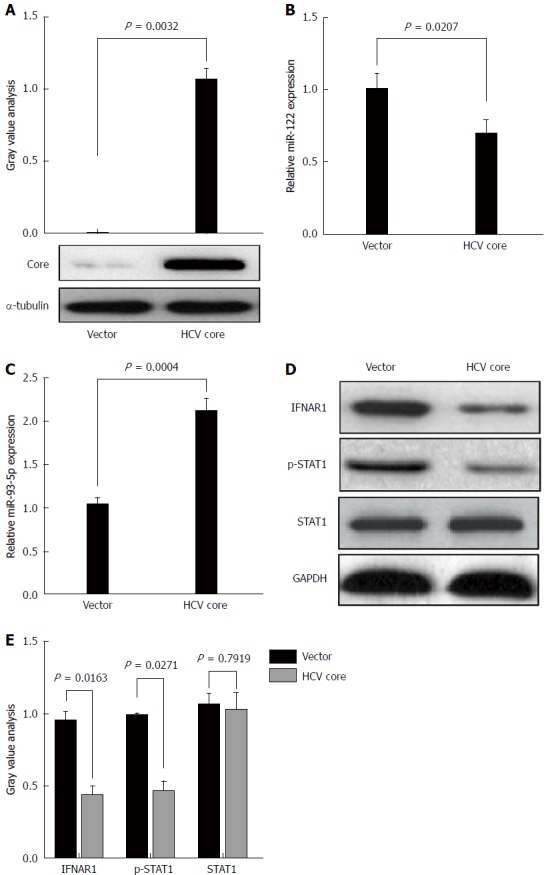
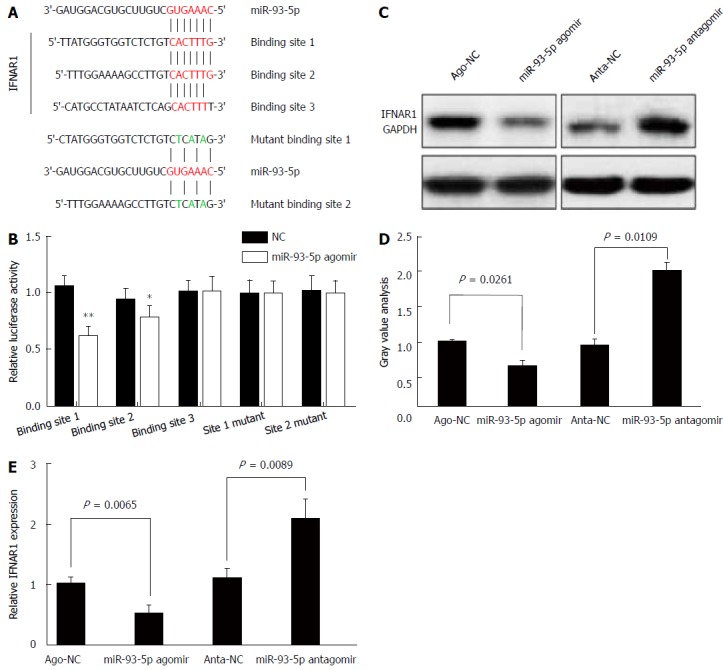
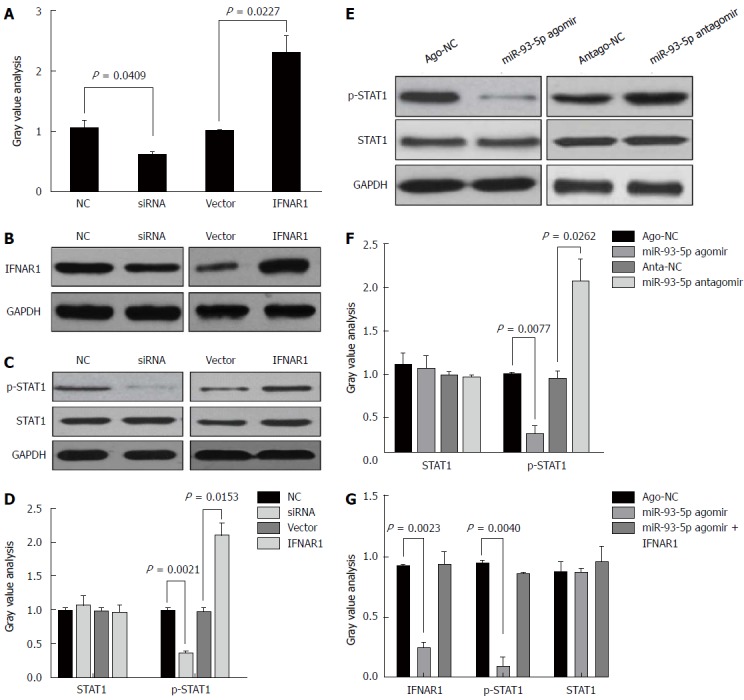
HCV-1b core protein was exogenously expressed in Huh7 cells using pcDNA3.1 (+) vector. The expression of miR-93-5p and interferon receptor 1 (IFNAR1) was measured using quantitative reverse transcription-polymerase chain reaction and Western blot. The protein expression and phosphorylation level of STAT1 were evaluated by Western blot. The overexpression and silencing of miR-93-5p and IFNAR1 were performed using miR-93-5p agomir and antagomir, and pcDNA3.1-IFNAR1 and IFNAR1 siRNA, respectively. Luciferase assay was used to identify whether IFNAR1 is a target of miR-93-5p. Cellular experiments were also conducted.
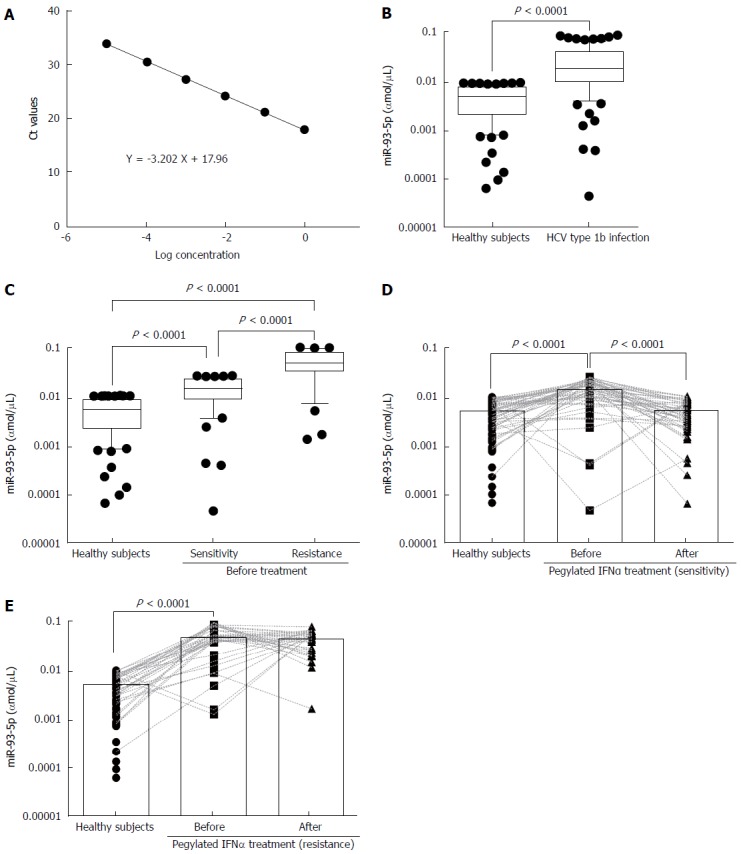
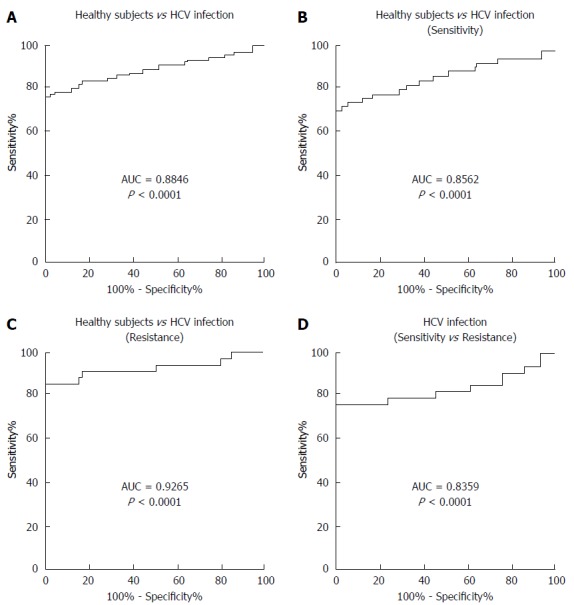
Serum miR-93-5p level was increased in patients with HCV-1b infection and decreased to normal level after HCV-1b clearance, but persistently increased in those with pegylated interferon-α resistance, compared with healthy subjects. Serum miR-93-5p expression had an AUC value of 0.8359 in distinguishing patients with pegylated interferon-α resistance from those with pegylated interferon-α sensitivity. HCV-1b core protein increased miR-93-5p expression and induced inactivation of the IFN signaling pathway in Huh7 cells. Furthermore, IFNAR1 was identified as a direct target of miR-93-5p, and IFNAR1 restore could rescue miR-93-5p-reduced STAT1 phosphorylation, suggesting that the miR-93-5p-IFNAR1 axis regulates the IFN signaling pathway.
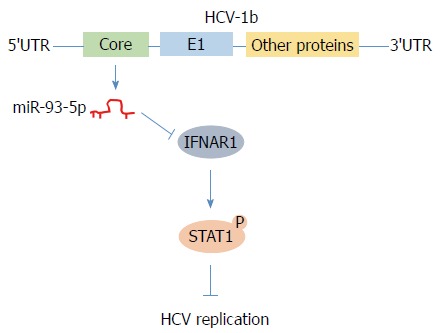
HCV-1b core protein-induced miR-93-5p up-regulation inhibits the IFN signaling pathway by directly targeting IFNAR1, and the miR-93-5p-IFNAR1 axis regulates STAT1 phosphorylation. This axis may be a potential therapeutic target for HCV-1b infection.
研究丙型肝炎病毒(HCV)核心蛋白诱导 miR-93-5p 上调调控干扰素(IFN)信号通路的机制。
使用 pcDNA3.1(+)载体在 Huh7 细胞中外源性表达 HCV-1b 核心蛋白。采用定量逆转录聚合酶链反应和 Western blot 检测 miR-93-5p 和干扰素受体 1(IFNAR1)的表达。Western blot 评估 STAT1 的蛋白表达和磷酸化水平。使用 miR-93-5p 激动剂和拮抗剂以及 pcDNA3.1-IFNAR1 和 IFNAR1 siRNA 分别过表达和沉默 miR-93-5p 和 IFNAR1。荧光素酶测定用于鉴定 IFNAR1 是否为 miR-93-5p 的靶标。还进行了细胞实验。
HCV-1b 感染患者血清 miR-93-5p 水平升高,HCV-1b 清除后降至正常水平,但对聚乙二醇干扰素-α耐药患者持续升高,与健康受试者相比。血清 miR-93-5p 表达在区分聚乙二醇干扰素-α耐药和聚乙二醇干扰素-α敏感患者方面具有 0.8359 的 AUC 值。HCV-1b 核心蛋白增加 miR-93-5p 的表达并诱导 Huh7 细胞中 IFN 信号通路失活。此外,IFNAR1 被鉴定为 miR-93-5p 的直接靶标,IFNAR1 恢复可挽救 miR-93-5p 降低的 STAT1 磷酸化,表明 miR-93-5p-IFNAR1 轴调节 IFN 信号通路。
HCV-1b 核心蛋白诱导的 miR-93-5p 上调通过直接靶向 IFNAR1 抑制 IFN 信号通路,miR-93-5p-IFNAR1 轴调节 STAT1 磷酸化。该轴可能是 HCV-1b 感染的潜在治疗靶点。