Cope Kathryn, Vandelanotte Corneel, Short Camille E, Conroy David E, Rhodes Ryan E, Jackson Ben, Dimmock James A, Rebar Amanda L
Physical Activity Research Group, School of Health, Medical and Applied Sciences, Central Queensland University, Rockhampton, QLD, Australia.
Freemasons Foundation Centre for Men's Health, School of Medicine, The University of Adelaide, Adelaide, SA, Australia.
Front Psychol. 2018 Jan 11;8:2272. doi: 10.3389/fpsyg.2017.02272. eCollection 2017.
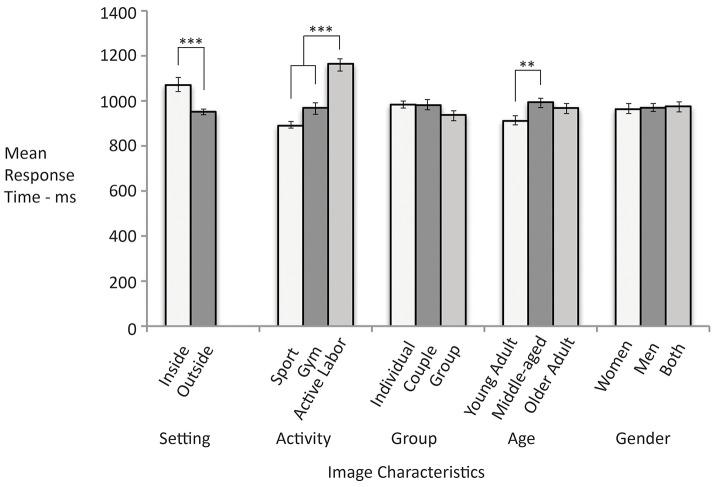
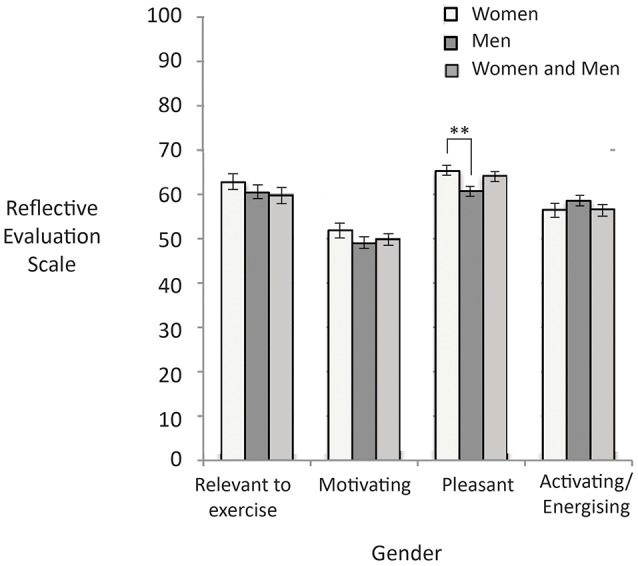
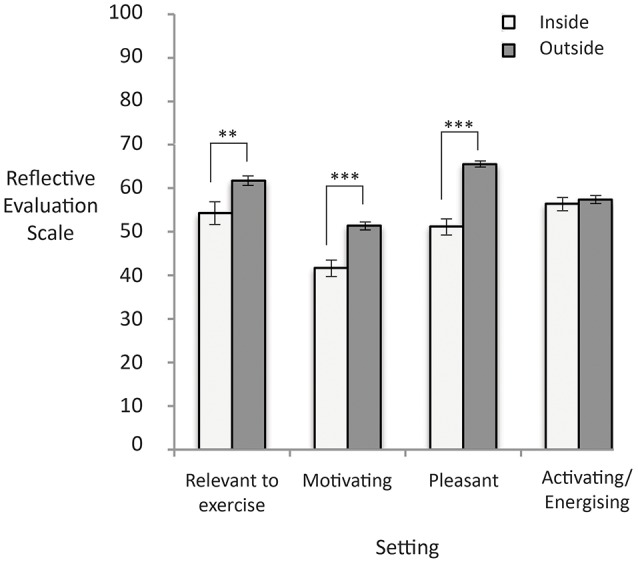
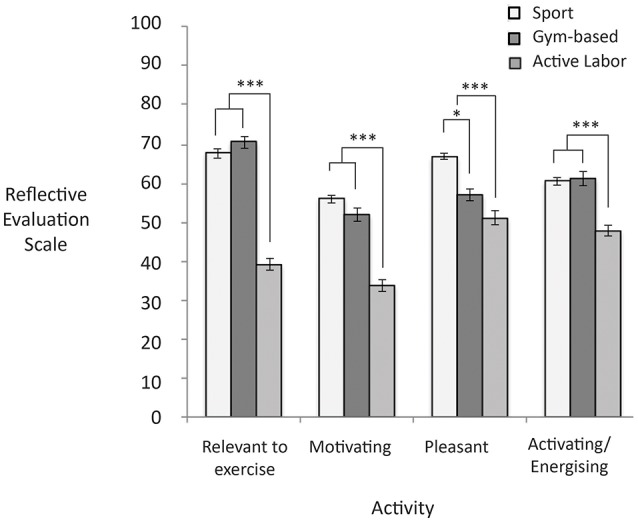
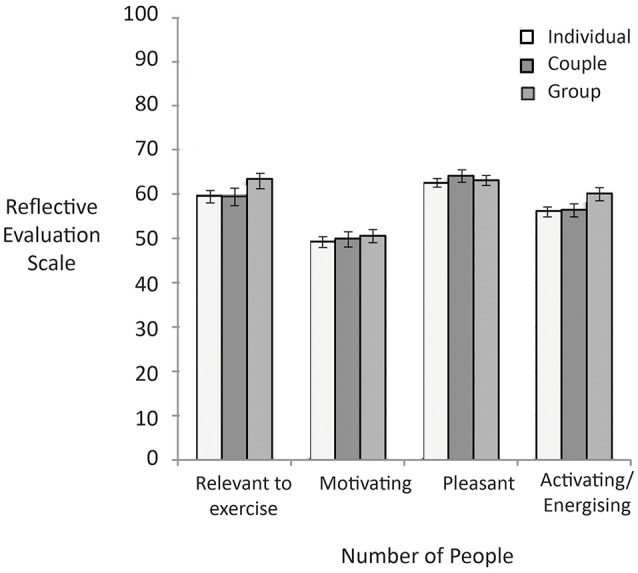
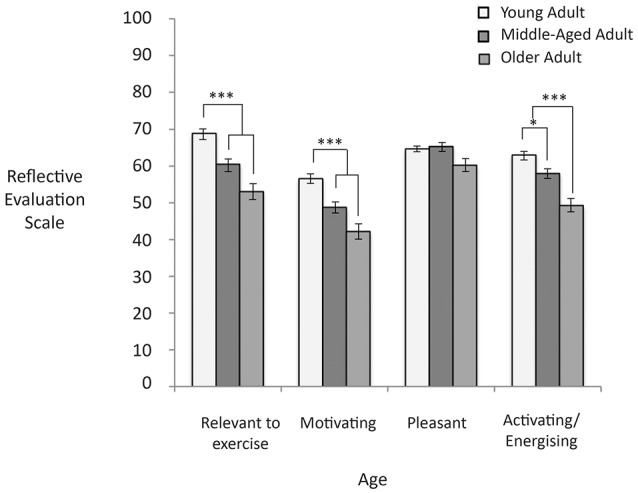
Images portraying exercise are commonly used to promote exercise behavior and to measure automatic associations of exercise (e.g., via implicit association tests). The effectiveness of these promotion efforts and the validity of measurement techniques partially rely on the untested assumption that the images being used are perceived by the general public as portrayals of exercise that is pleasant and motivating. The aim of this study was to investigate how content of images impacted people's automatic and reflective evaluations of exercise images. Participants ( = 90) completed a response time categorization task (similar to the implicit association test) to capture how automatically people perceived each image as relevant to or . Participants also self-reported their evaluations of the images using visual analog scales with the anchors: ///, and . People tended to more strongly automatically associate images with exercise if the images were of an outdoor setting, presented sport (as opposed to active labor or gym-based) activities, and included young (as opposed to middle-aged) adults. People tended to reflectively find images of young adults more motivating and relevant to exercise than images of older adults. The content of exercise images is an often overlooked source of systematic variability that may impact measurement validity and intervention effectiveness.
描绘运动的图像通常用于促进运动行为,并测量对运动的自动联想(例如,通过内隐联想测验)。这些推广努力的有效性和测量技术的有效性部分依赖于一个未经检验的假设,即所使用的图像被公众视为对令人愉悦且有激励作用的运动的描绘。本研究的目的是调查图像内容如何影响人们对运动图像的自动和反思性评价。参与者(n = 90)完成了一项反应时间分类任务(类似于内隐联想测验),以了解人们将每张图像自动视为与运动或非运动相关的程度。参与者还使用带有“///”“ ”和“ ”锚点的视觉模拟量表自我报告了他们对图像的评价。如果图像是户外场景、呈现的是体育(而非体力劳动或健身房活动)活动且包含年轻人(而非中年人),人们往往会更强烈地将图像与运动自动关联起来。与老年人的图像相比,人们往往会反思性地发现年轻人的图像对运动更具激励作用且与运动更相关。运动图像的内容是一个常常被忽视的系统变异性来源,可能会影响测量效度和干预效果。