Qin Chubin, Zhang Zhen, Wang Yibing, Li Shuning, Ran Chao, Hu Jun, Xie Yadong, Li Weifen, Zhou Zhigang
Key Laboratory of Molecular Animal Nutrition, Ministry of Education, College of Animal Science, Zhejiang University, Hangzhou, China.
Key Laboratory for Feed Biotechnology of the Ministry of Agriculture, Feed Research Institute, Chinese Academy of Agricultural Sciences, Beijing, China.
Front Microbiol. 2017 Dec 8;8:2406. doi: 10.3389/fmicb.2017.02406. eCollection 2017.
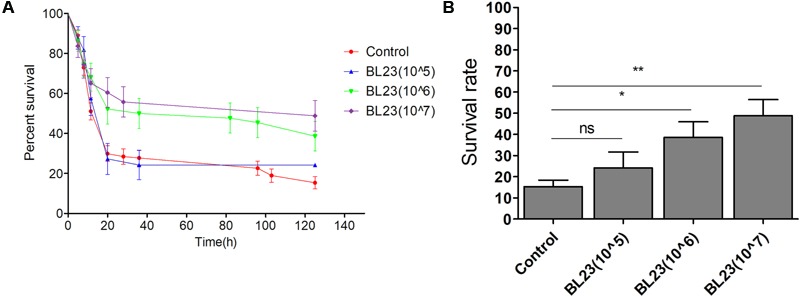
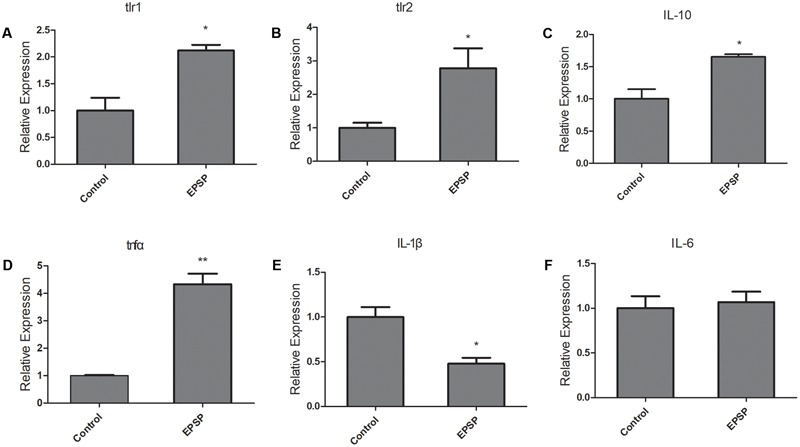
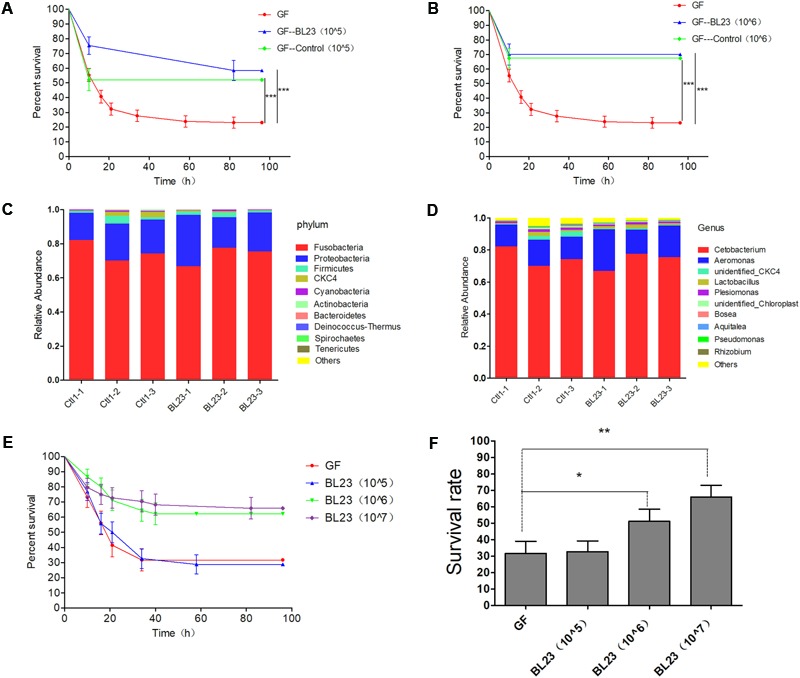
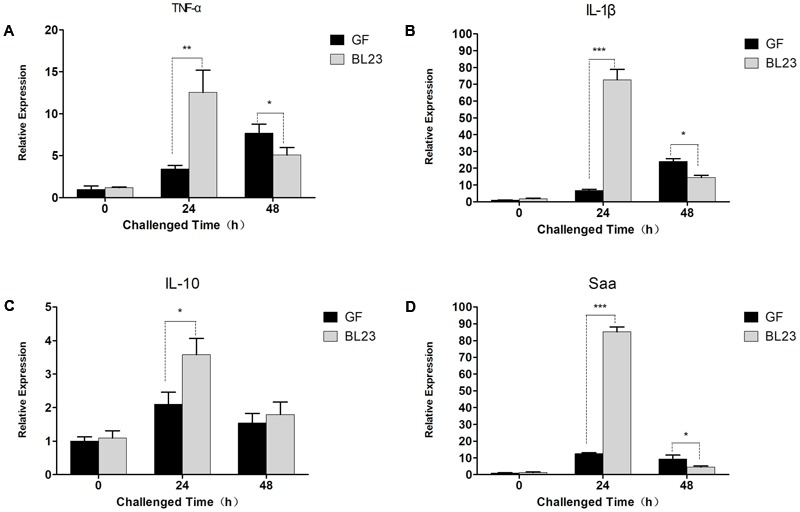
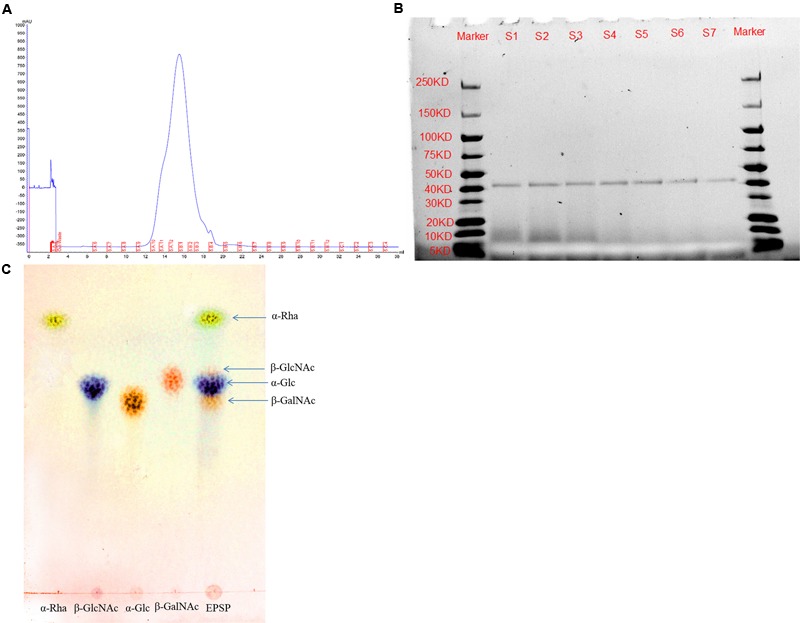
Aquaculture is the fastest-growing food production sector in the world, and it supplies nearly 50% of the global food fish supply. However, disease outbreaks have become a major problem in the fish farming industry. The beneficial contribution of probiotic bacteria to aquatic animals' health has been widely described, and they have been widely used in aquaculture for disease control and growth promotion. However, the action of probiotic bacterial components and mechanisms underlying protection against pathogens afforded by probiotic bacteria remain poorly understood. In the present study, we pre-colonized zebrafish larvae (before hatching) with 17 potential probiotic bacterial strains and screened for those possessing anti-infective effects against . We found that BL23 significantly increased the survival of zebrafish larvae upon infection. Using a germ-free (GF) zebrafish model and gut microbiota transplant experiment, we showed that BL23 has anti-infective effects in zebrafish larvae, which does not involve microbiota. Furthermore, we identified an exopolysaccharide-protein complex (EPSP) extracted from BL23 cells, which consisted of a 40-45 KD size protein and an exopolysaccharide composed of α-Rha, α-Glc, β-GlcNAc, and β-GalNAc. EPSP significantly increased the survival rate of GF zebrafish at a dose of 10-20 μg/ml after infection ( < 0.01). In addition, the EPSP induced a higher expression of TLR1 and TLR2, and modulated the expression profile of pro-inflammatory and anti-inflammatory cytokines in zebrafish liver (ZFL) cells. Our data indicated that the anti-infective effect of EPSP from BL23 was mediated by enhancement of immune responses in zebrafish, which might involve the TLR1/TLR2 signal pathway.
水产养殖是世界上增长最快的粮食生产部门,它提供了全球近50%的食用鱼供应。然而,疾病爆发已成为养鱼业的一个主要问题。益生菌对水生动物健康的有益作用已被广泛描述,并且它们已在水产养殖中广泛用于疾病控制和促进生长。然而,益生菌的细菌成分的作用以及益生菌对病原体的保护机制仍知之甚少。在本研究中,我们用17种潜在的益生菌菌株对斑马鱼幼体(孵化前)进行预定植,并筛选出对……具有抗感染作用的菌株。我们发现,BL23在……感染后显著提高了斑马鱼幼体的存活率。使用无菌(GF)斑马鱼模型和肠道微生物群移植实验,我们表明BL23在斑马鱼幼体中具有抗感染作用,这与微生物群无关。此外,我们从BL23细胞中鉴定出一种胞外多糖-蛋白质复合物(EPSP),它由一种40-45 KD大小的蛋白质和一种由α-Rha、α-Glc、β-GlcNAc和β-GalNAc组成的胞外多糖组成。EPSP在感染后以10-20 μg/ml的剂量显著提高了GF斑马鱼的存活率(<0.01)。此外,EPSP诱导了TLR1和TLR2的更高表达,并调节了斑马鱼肝脏(ZFL)细胞中促炎和抗炎细胞因子的表达谱。我们的数据表明,BL23的EPSP的抗感染作用是通过增强斑马鱼的免疫反应介导的,这可能涉及TLR1/TLR2信号通路。