Institute for Science and Technology in Medicine (ISTM), School of Medicine, Keele University, Staffordshire, United Kingdom.
Research Institute for Sport and Exercise Sciences, Liverpool John Moores University, Liverpool, United Kingdom.
Sci Rep. 2018 Jan 30;8(1):1898. doi: 10.1038/s41598-018-20287-3.
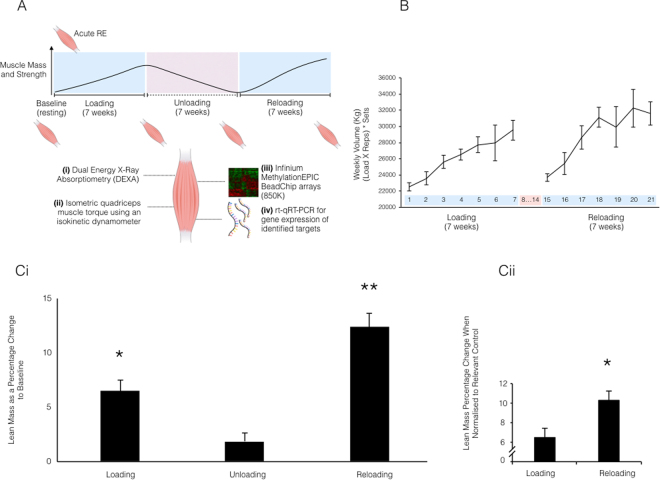
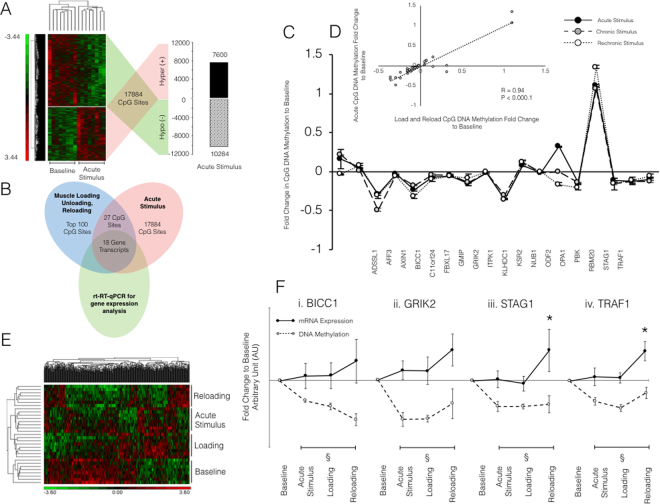
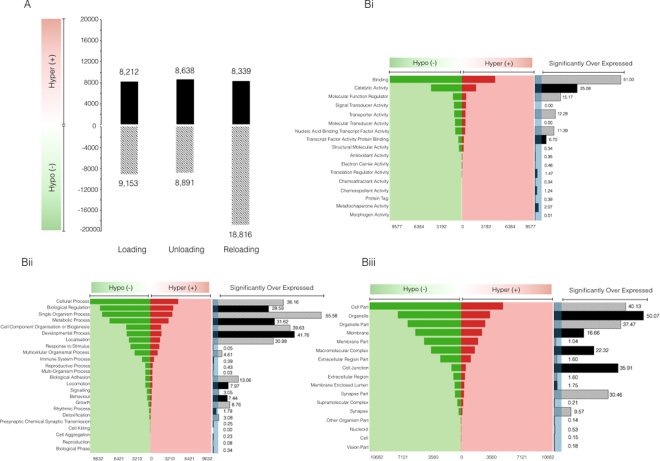
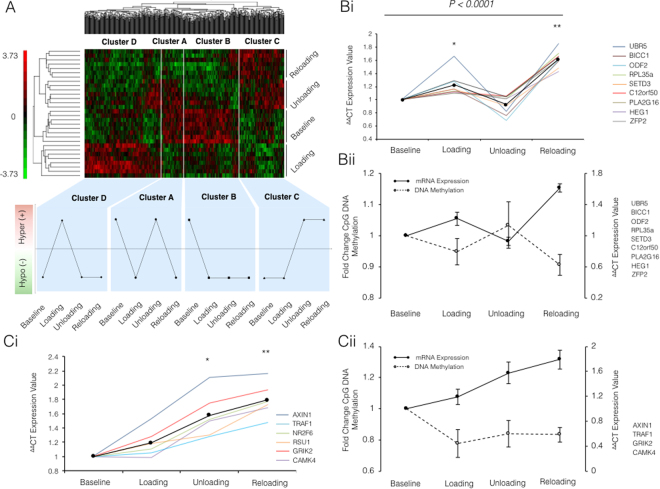
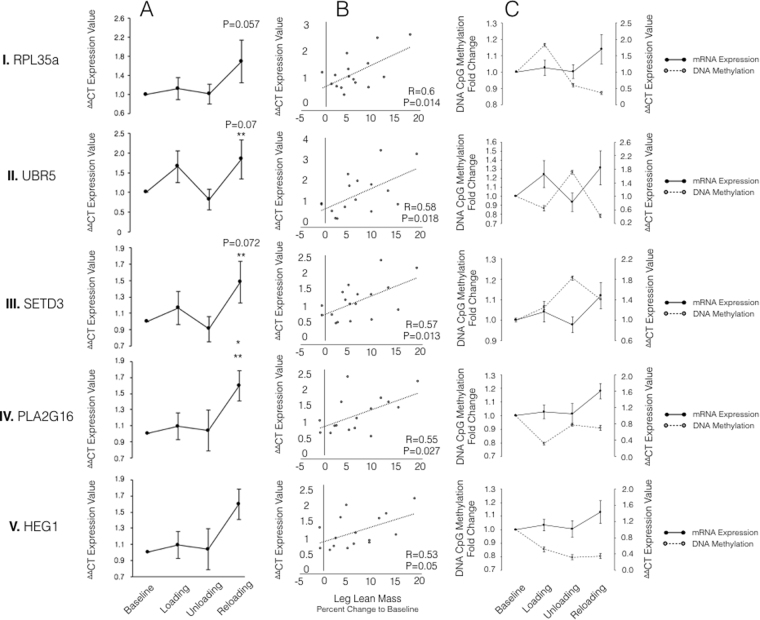
It is unknown if adult human skeletal muscle has an epigenetic memory of earlier encounters with growth. We report, for the first time in humans, genome-wide DNA methylation (850,000 CpGs) and gene expression analysis after muscle hypertrophy (loading), return of muscle mass to baseline (unloading), followed by later hypertrophy (reloading). We discovered increased frequency of hypomethylation across the genome after reloading (18,816 CpGs) versus earlier loading (9,153 CpG sites). We also identified AXIN1, GRIK2, CAMK4, TRAF1 as hypomethylated genes with enhanced expression after loading that maintained their hypomethylated status even during unloading where muscle mass returned to control levels, indicating a memory of these genes methylation signatures following earlier hypertrophy. Further, UBR5, RPL35a, HEG1, PLA2G16, SETD3 displayed hypomethylation and enhanced gene expression following loading, and demonstrated the largest increases in hypomethylation, gene expression and muscle mass after later reloading, indicating an epigenetic memory in these genes. Finally, genes; GRIK2, TRAF1, BICC1, STAG1 were epigenetically sensitive to acute exercise demonstrating hypomethylation after a single bout of resistance exercise that was maintained 22 weeks later with the largest increase in gene expression and muscle mass after reloading. Overall, we identify an important epigenetic role for a number of largely unstudied genes in muscle hypertrophy/memory.
目前尚不清楚成人骨骼肌是否对早期生长接触有表观遗传学记忆。我们首次在人类中报告了肌肉肥大(加载)、肌肉质量恢复到基线(卸载)后再肥大(再加载)后的全基因组 DNA 甲基化(850,000 个 CpG)和基因表达分析。我们发现再加载后(18,816 个 CpG 位点)全基因组的低甲基化频率增加(18,816 个 CpG 位点),而早期加载时(9,153 个 CpG 位点)的低甲基化频率增加。我们还鉴定了 AXIN1、GRIK2、CAMK4、TRAF1 作为低甲基化基因,这些基因在加载后表达增强,即使在肌肉质量恢复到对照水平的卸载期间,其低甲基化状态仍然保持,表明这些基因的甲基化特征在早期肥大后具有记忆性。此外,UBR5、RPL35a、HEG1、PLA2G16、SETD3 在加载后表现出低甲基化和增强的基因表达,并且在后来的再加载后表现出最大的低甲基化、基因表达和肌肉质量增加,表明这些基因存在表观遗传记忆。最后,基因 GRIK2、TRAF1、BICC1、STAG1 对急性运动表现出表观遗传敏感性,在单次抗阻运动后出现低甲基化,在 22 周后仍保持不变,再加载后基因表达和肌肉质量增加最大。总之,我们确定了许多尚未被充分研究的基因在肌肉肥大/记忆中具有重要的表观遗传作用。