Women's Global Health Imperative, RTI International, 351 California Street, Suite 500, San Francisco, CA, 94104, USA.
Department of Global Health and Population, Harvard University, Boston, MA, USA.
AIDS Behav. 2018 Nov;22(11):3468-3479. doi: 10.1007/s10461-018-2044-2.
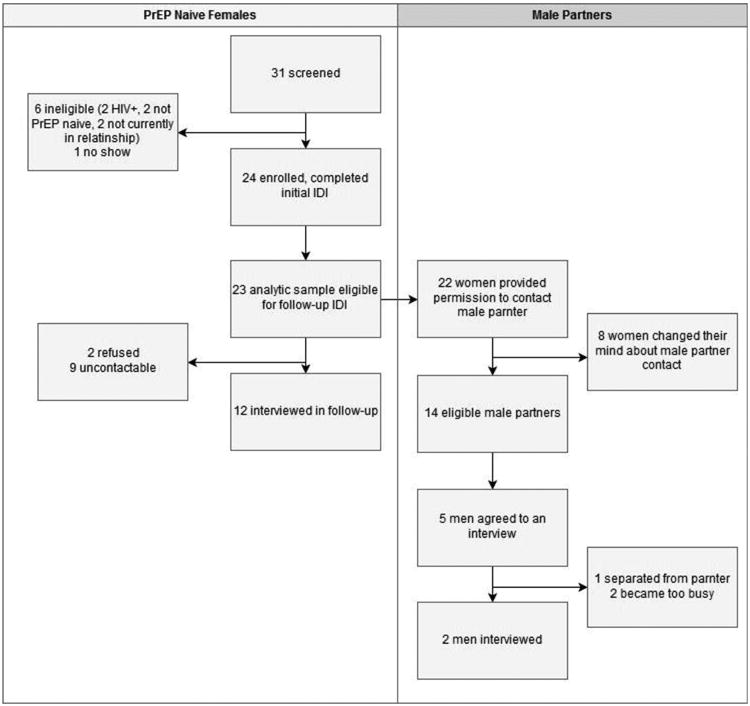
In high prevalence environments relationship characteristics are likely to be associated with HIV risk, yet evidence indicates general underestimation of risk. Furthermore uncertainty about partner's risk may challenge PrEP demand among young African women. We conducted quantitative and qualitative interviews with women before and after HIV discussions with partners, to explore how partner's behavior affected risk perceptions and interest in PrEP. Twenty-three women were interviewed once; twelve had a follow-up interview after speaking to their partners. Fourteen women were willing to have their partner contacted; yet two men participated. Several themes related to relationships and risk were identified. These highlighted that young women's romantic feelings and expectations influenced their perceptions of risk within their relationships, consistent with the concept of motivated reasoning. Findings emphasize challenges in using risk to promote HIV prevention among young women. Framing PrEP in a positive empowering way that avoids linking it to relationship risk may ultimately encourage greater uptake.
在高流行环境中,伴侣关系特征可能与 HIV 风险相关,然而现有证据表明,人们普遍低估了这种风险。此外,对伴侣风险的不确定可能会影响非洲年轻女性对 PrEP 的需求。我们对与伴侣进行 HIV 讨论前后的女性进行了定量和定性访谈,以探讨伴侣行为如何影响风险认知和对 PrEP 的兴趣。23 名女性接受了一次访谈;12 名女性在与伴侣交谈后进行了后续访谈。14 名女性愿意让她们的伴侣接受采访;但只有两名男性参与。确定了与关系和风险相关的几个主题。这些主题强调了年轻女性的浪漫情感和期望会影响她们对关系中风险的认知,这与动机推理的概念一致。研究结果强调了在年轻女性中使用风险来促进 HIV 预防所面临的挑战。以积极赋权的方式构建 PrEP,避免将其与关系风险联系起来,最终可能会鼓励更多人使用 PrEP。