State Key Laboratory of Ophthalmology, Zhongshan Ophthalmic Center, Sun Yat-sen University, Guangzhou, 510060, China.
Cell Death Dis. 2018 Feb 7;9(2):164. doi: 10.1038/s41419-017-0203-4.
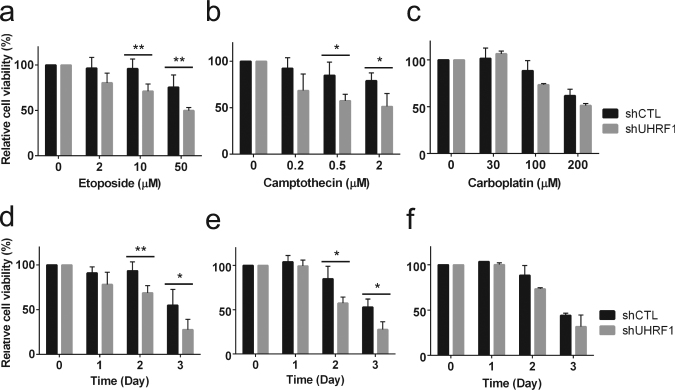
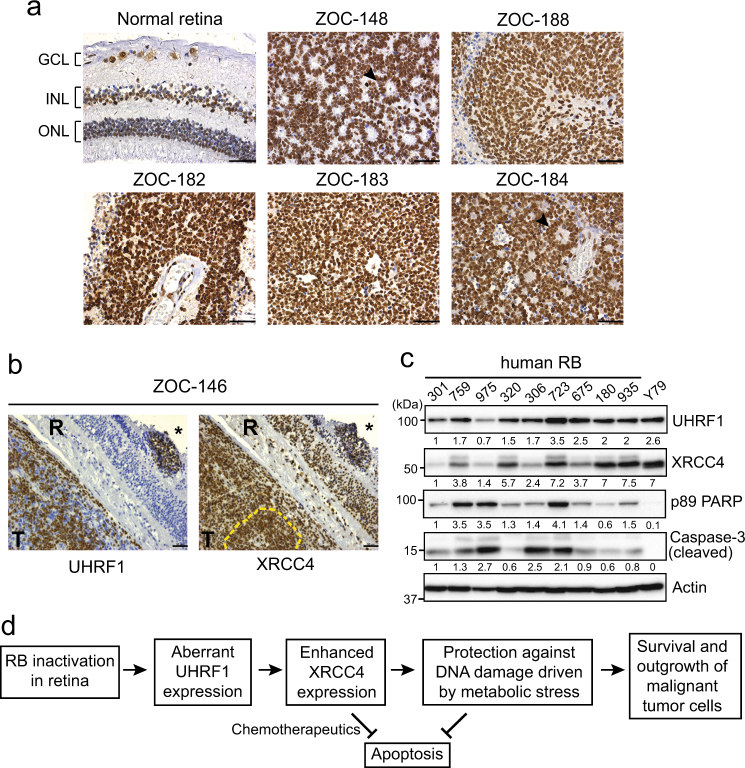
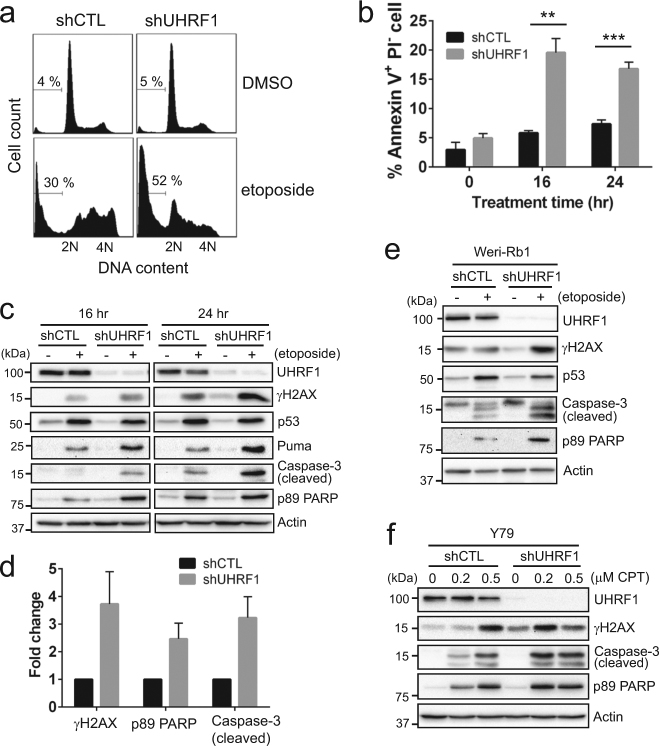
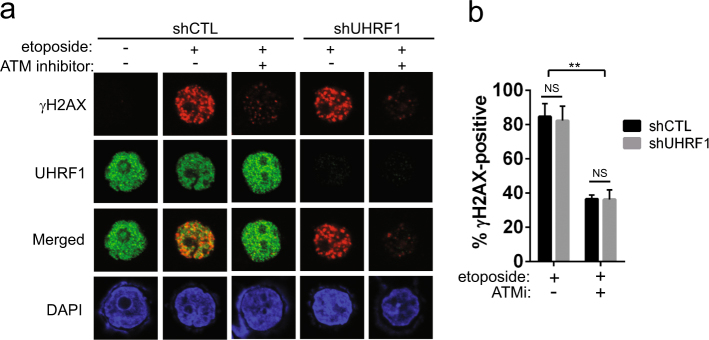
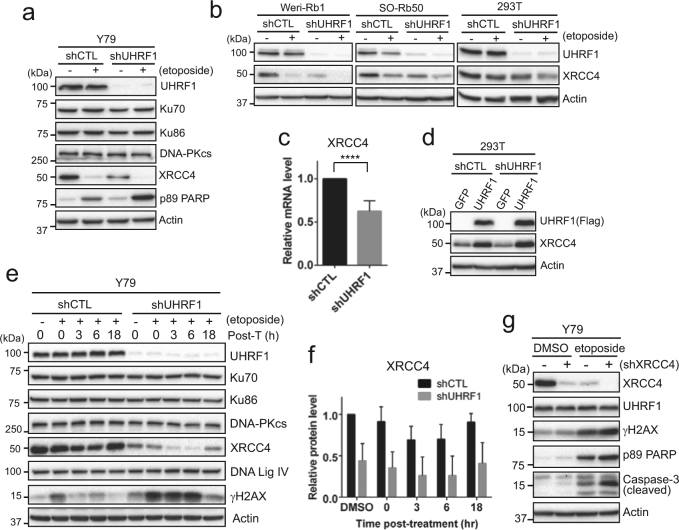
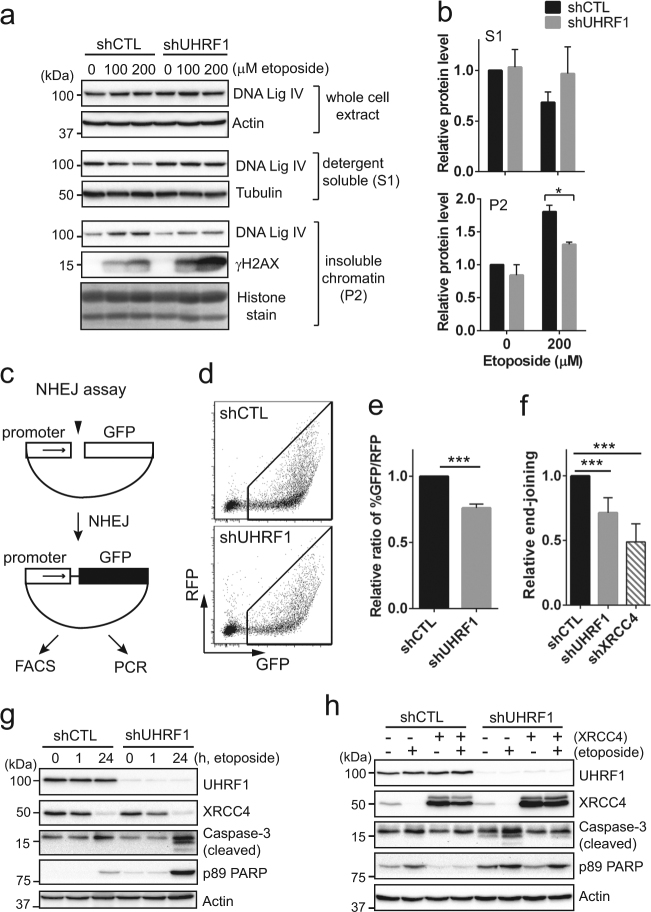
UHRF1 (ubiquitin-like with PHD and ring finger domains 1) is highly expressed in various human cancers including retinoblastoma, and associated with tumor-promoting effects such as inhibition of apoptosis and high proliferation. However, the molecular mechanisms underlying tumor-promoting functions of UHRF1 in retinoblastoma still remain elusive. Here, we show that stable knockdown of UHRF1 renders retinoblastoma cells sensitized to conventional chemotherapeutic drugs such as etoposide and camptothecin, resulting in enhanced DNA damage and apoptotic cell death. We found that UHRF1-depleted retinoblastoma cells can recognize DNA damages normally but have markedly low expression of XRCC4 (X-ray repair cross complementing 4) among the components of nonhomologous end-joining (NHEJ) repair complex. Conversely, overexpression of UHRF1 increased the XRCC4 expression and stable knockdown of XRCC4 sensitized retinoblastoma cells to etoposide treatment, suggesting that XRCC4 is a key mediator for the drug sensitivity upon UHRF1 depletion in retinoblastoma cells. Consistent with the findings, chromatin association of DNA ligase IV in response to acute DNA damage was found to be significantly reduced in UHRF1-depleted retinoblastoma cells and functional complementation for XRCC4 in UHRF1-depleted cells attenuated the drug sensitivity, demonstrating that XRCC4 downregulation in UHRF1-depleted cells impaired DNA repair and consequently induced robust apoptosis upon genotoxic drug treatment. In human primary retinoblastoma, high expression of UHRF1 and XRCC4 could be detected, and elevated XRCC4 expression correlated with reduced apoptosis markers, implying that UHRF1-mediated XRCC4 upregulation under pathophysiological conditions triggered by RB1 gene inactivation may confer protection against endogenous DNA damages that arise during retinoblastoma development. Taken together, these results present a new mechanistic insight into how UHRF1 mediates its tumor-promoting functions in retinoblastoma, and also provide a basis for UHRF1 targeting to improve the efficacy of current chemotherapy for retinoblastoma treatment.
UHRF1(泛素样含 PH 和环指域 1)在包括视网膜母细胞瘤在内的各种人类癌症中高度表达,与促进肿瘤的作用相关,如抑制细胞凋亡和高增殖。然而,UHRF1 在视网膜母细胞瘤中促进肿瘤的功能的分子机制仍不清楚。在这里,我们表明,UHRF1 的稳定敲低使视网膜母细胞瘤细胞对常规化疗药物如依托泊苷和喜树碱敏感,导致增强的 DNA 损伤和凋亡细胞死亡。我们发现,UHRF1 耗尽的视网膜母细胞瘤细胞可以正常识别 DNA 损伤,但在非同源末端连接(NHEJ)修复复合物的成分中,XRCC4(X 射线修复交叉互补蛋白 4)的表达明显降低。相反,UHRF1 的过表达增加了 XRCC4 的表达,并且 XRCC4 的稳定敲低使视网膜母细胞瘤细胞对依托泊苷处理敏感,表明 XRCC4 是 UHRF1 耗尽后视网膜母细胞瘤细胞对药物敏感性的关键介质。与这些发现一致,在 UHRF1 耗尽的视网膜母细胞瘤细胞中,急性 DNA 损伤时 DNA 连接酶 IV 的染色质关联明显减少,并且在 UHRF1 耗尽的细胞中 XRCC4 的功能互补减弱了药物敏感性,表明 XRCC4 在 UHRF1 耗尽的细胞中的下调削弱了 DNA 修复,并且在遗传毒性药物处理后诱导强烈的凋亡。在人原发性视网膜母细胞瘤中,可以检测到 UHRF1 和 XRCC4 的高表达,并且升高的 XRCC4 表达与减少的凋亡标志物相关,这意味着 RB1 基因失活引发的病理生理条件下 UHRF1 介导的 XRCC4 上调可能对视网膜母细胞瘤发育过程中产生的内源性 DNA 损伤提供保护。总之,这些结果提供了 UHRF1 在视网膜母细胞瘤中发挥其促进肿瘤的功能的新的机制见解,并且为针对 UHRF1 进行靶向治疗以提高当前用于治疗视网膜母细胞瘤的化疗药物的疗效提供了依据。