GReD Laboratory, Université Clermont Auvergne - CNRS UMR 6293- INSERM U1103, Clermont-Ferrand, France.
Elife. 2018 Feb 8;7:e32943. doi: 10.7554/eLife.32943.
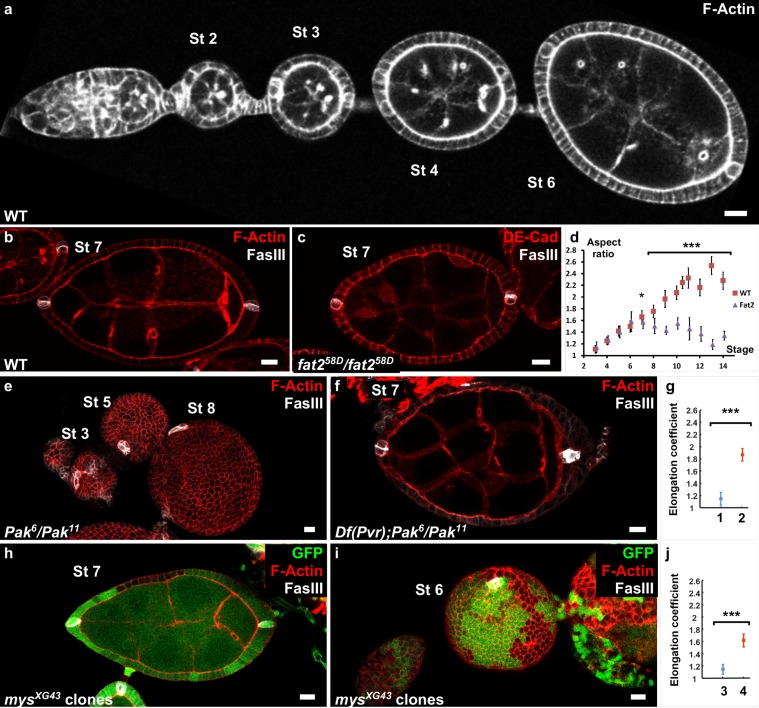
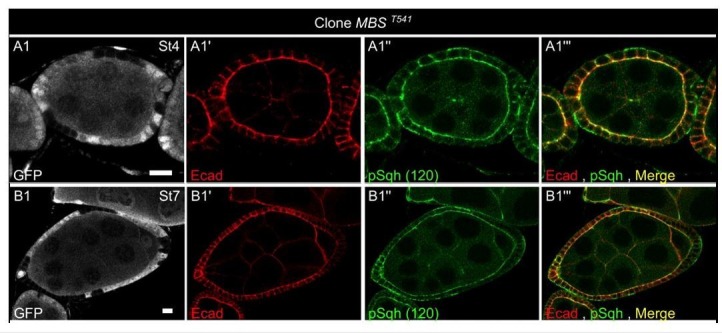
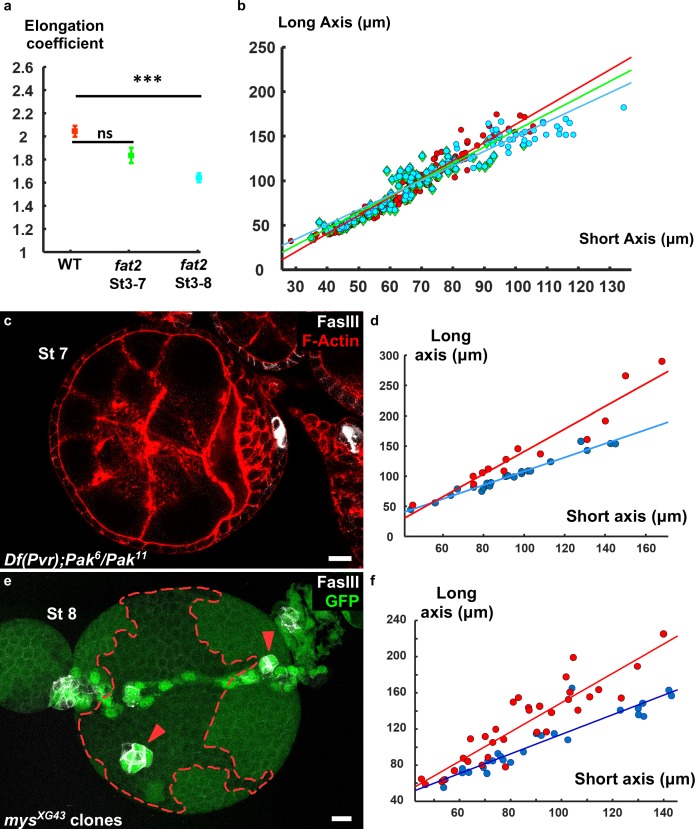
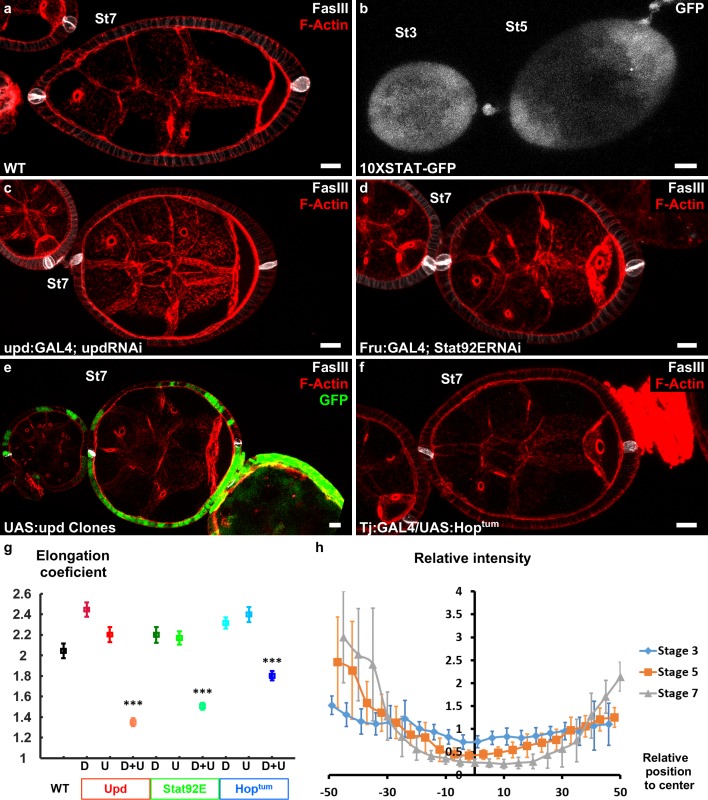
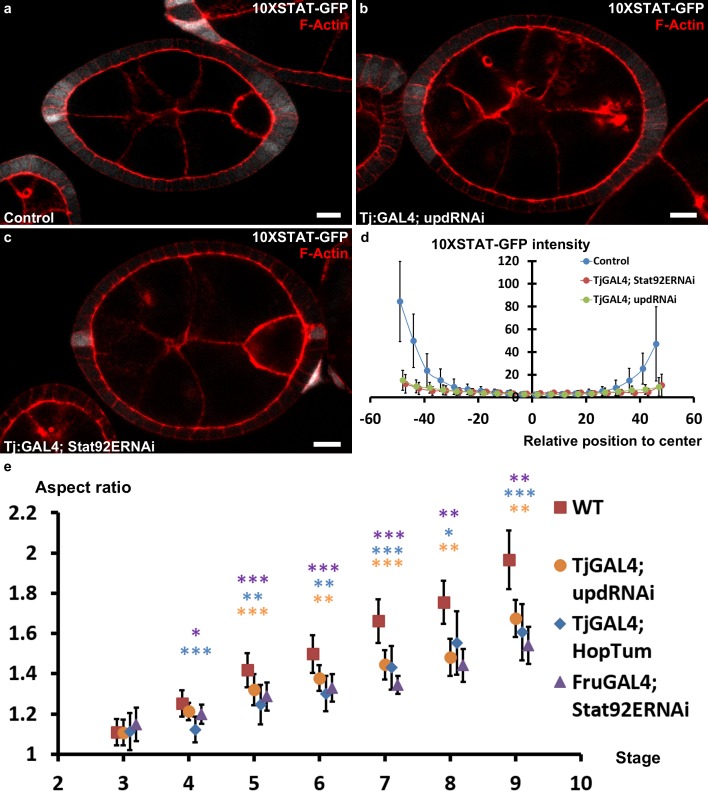
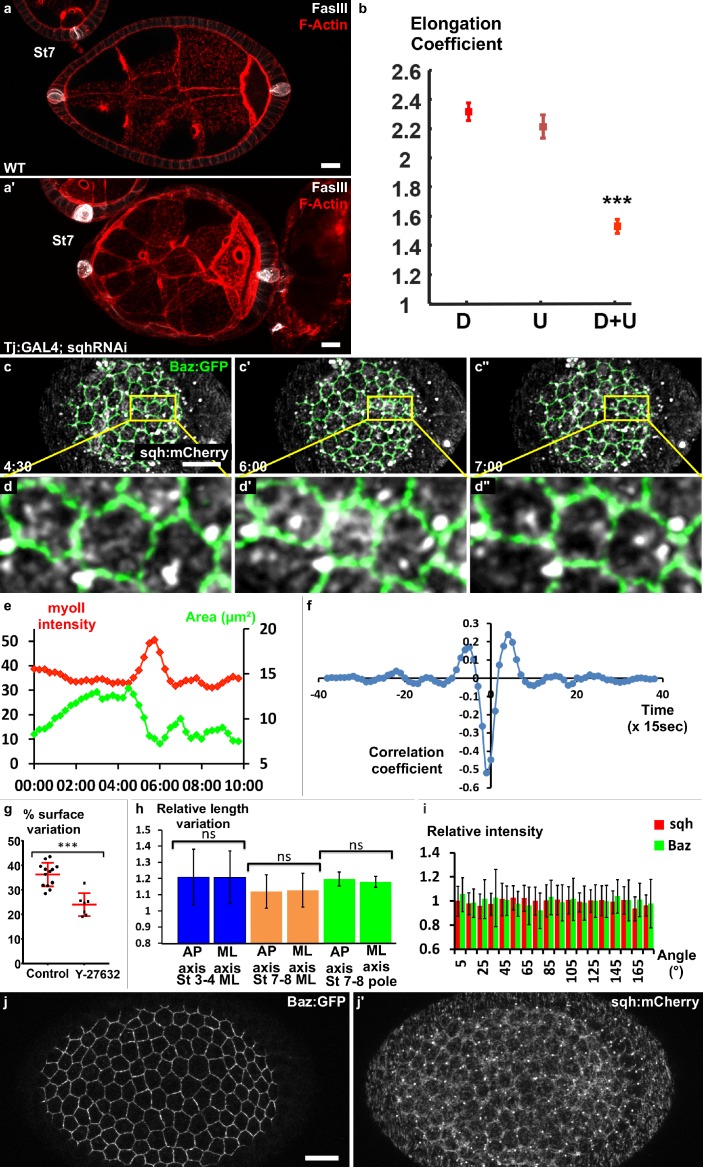
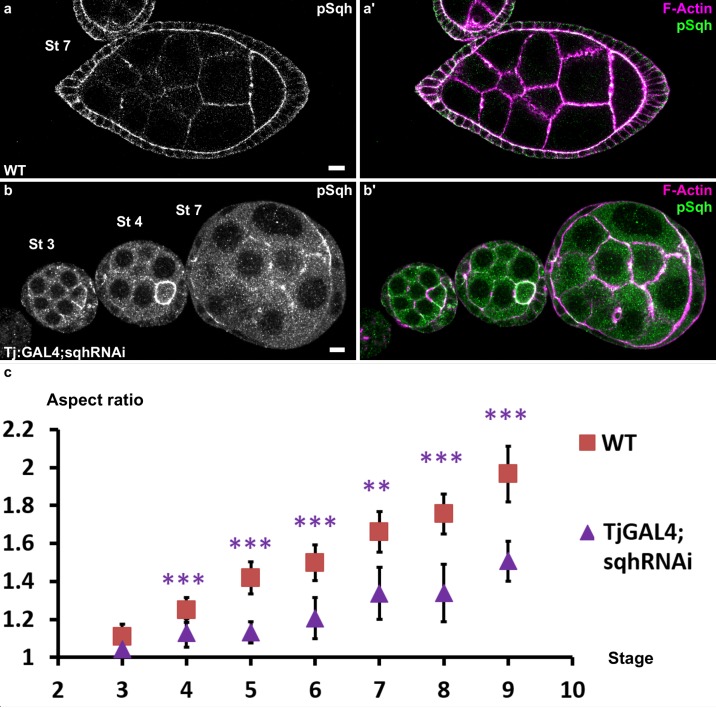
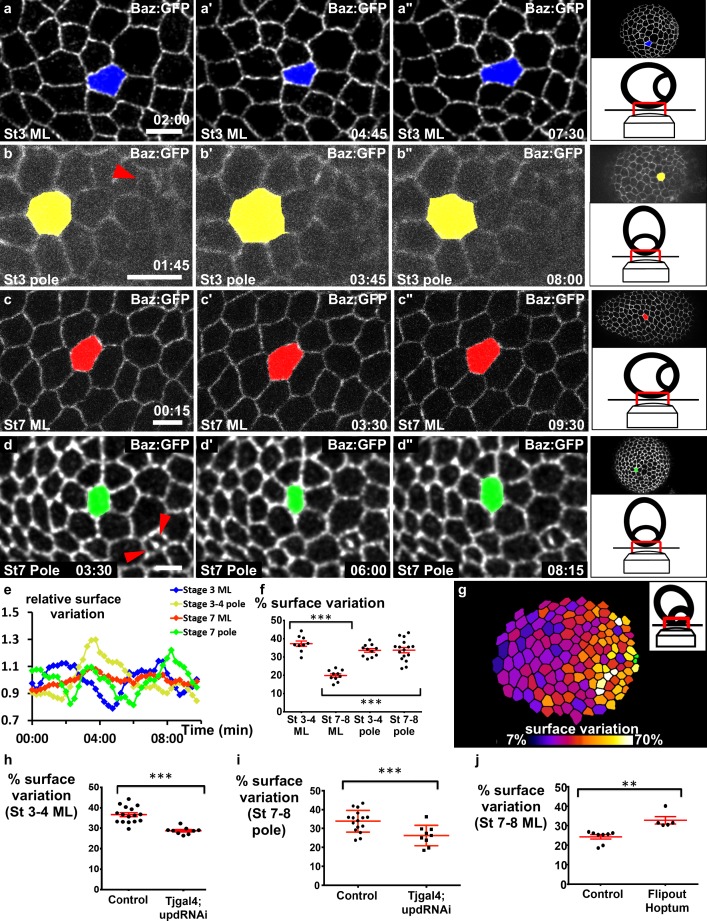
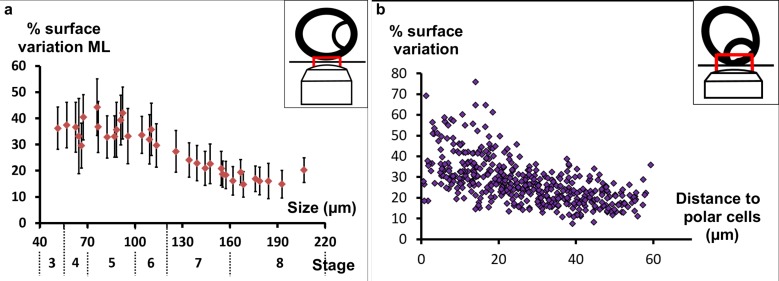
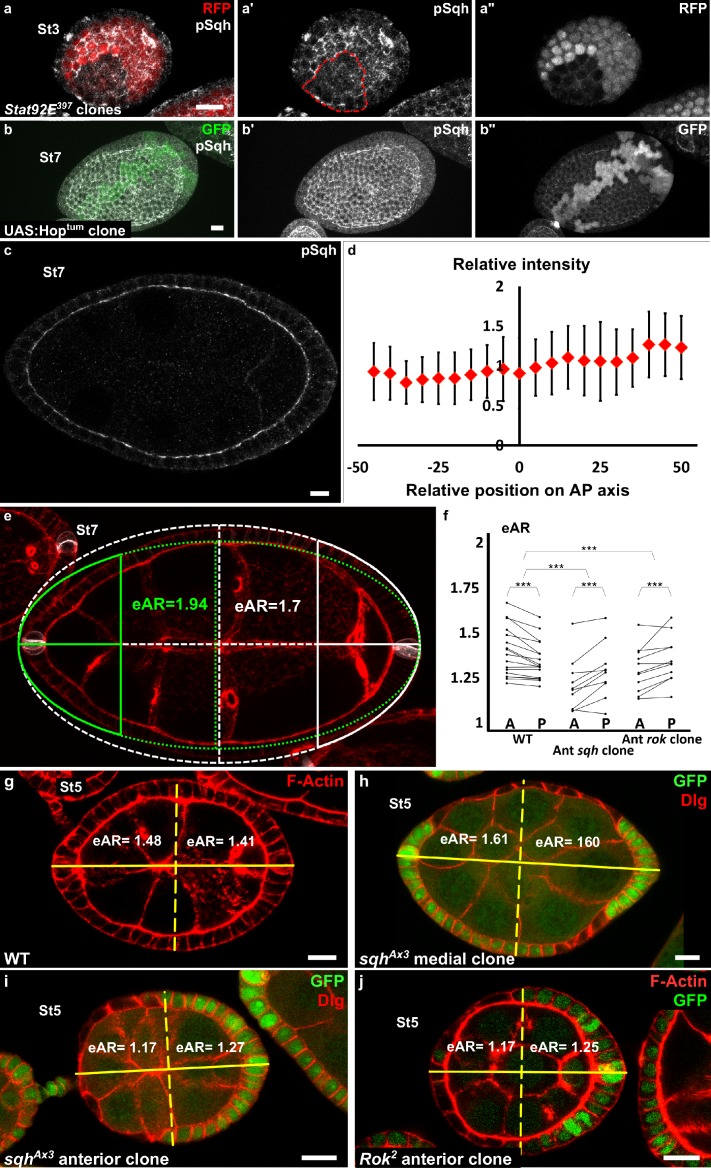
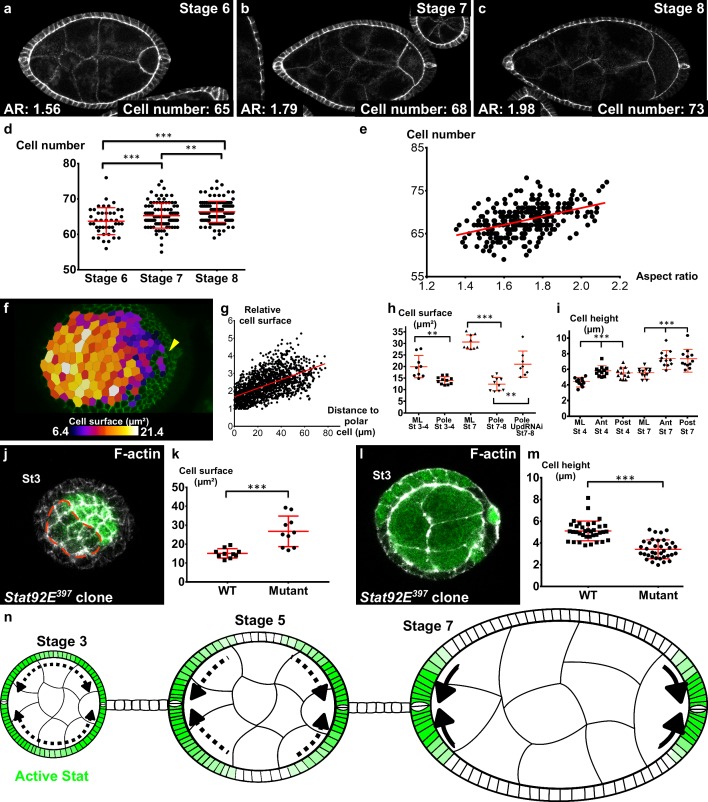
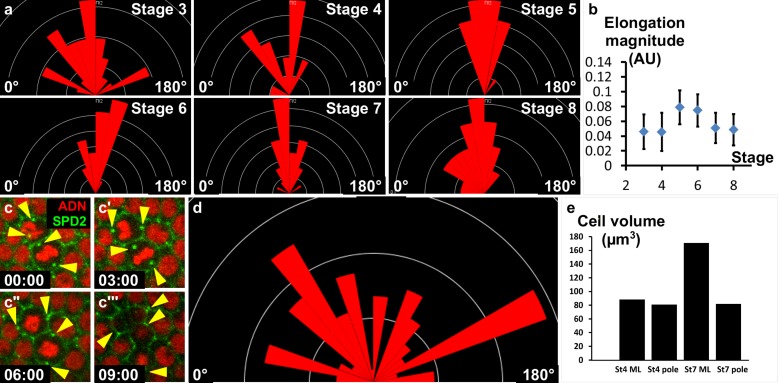
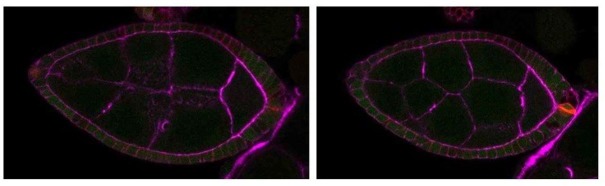
Tissue elongation and its control by spatiotemporal signals is a major developmental question. Currently, it is thought that ovarian follicular epithelium elongation requires the planar polarization of the basal domain cytoskeleton and of the extra-cellular matrix, associated with a dynamic process of rotation around the anteroposterior axis. Here we show, by careful kinetic analysis of mutants, that neither basal planar polarization nor rotation is required during a first phase of follicle elongation. Conversely, a JAK-STAT signaling gradient from each follicle pole orients early elongation. JAK-STAT controls apical pulsatile contractions, and Myosin II activity inhibition affects both pulses and early elongation. Early elongation is associated with apical constriction at the poles and with oriented cell rearrangements, but without any visible planar cell polarization of the apical domain. Thus, a morphogen gradient can trigger tissue elongation through a control of cell pulsing and without a planar cell polarity requirement.
组织伸长及其通过时空信号的控制是一个主要的发育问题。目前,人们认为卵巢滤泡上皮的伸长需要基底域细胞骨架和细胞外基质的平面极化,并与围绕前后轴的动态旋转过程相关。在这里,我们通过对突变体的仔细动力学分析表明,在滤泡伸长的第一阶段,基底平面极化或旋转都不是必需的。相反,来自每个滤泡极的 JAK-STAT 信号梯度定向早期伸长。JAK-STAT 控制顶端脉冲收缩,肌球蛋白 II 活性抑制影响脉冲和早期伸长。早期伸长与顶端的顶端收缩和定向的细胞重排相关,但顶端域没有任何可见的平面细胞极化。因此,形态发生梯度可以通过控制细胞脉冲而无需平面细胞极性要求来触发组织伸长。