Cappellano Giuseppe, Ploner Christian, Lobenwein Susanne, Sopper Sieghart, Hoertnagl Paul, Mayerl Christina, Wick Nikolaus, Pierer Gerhard, Wick Georg, Wolfram Dolores
Department of Plastic, Reconstructive and Aesthetic Surgery, Medical University of Innsbruck, Innsbruck, Austria.
Department of Internal Medicine V, Medical University of Innsbruck, Innsbruck, Austria.
PLoS One. 2018 Feb 8;13(2):e0192108. doi: 10.1371/journal.pone.0192108. eCollection 2018.
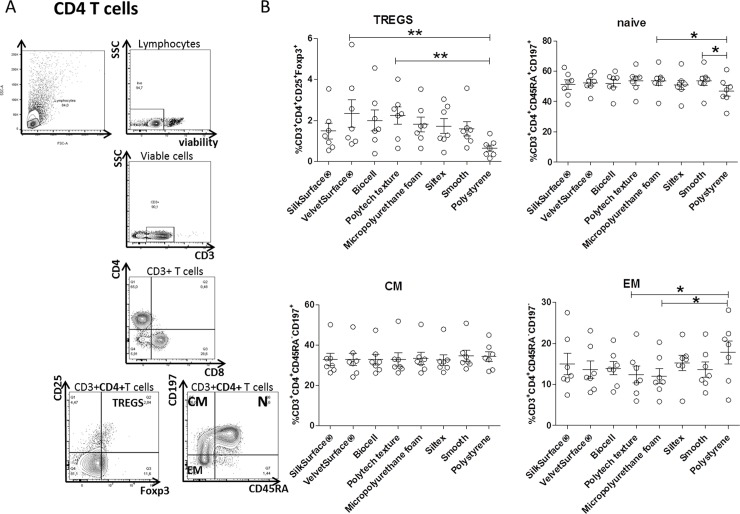
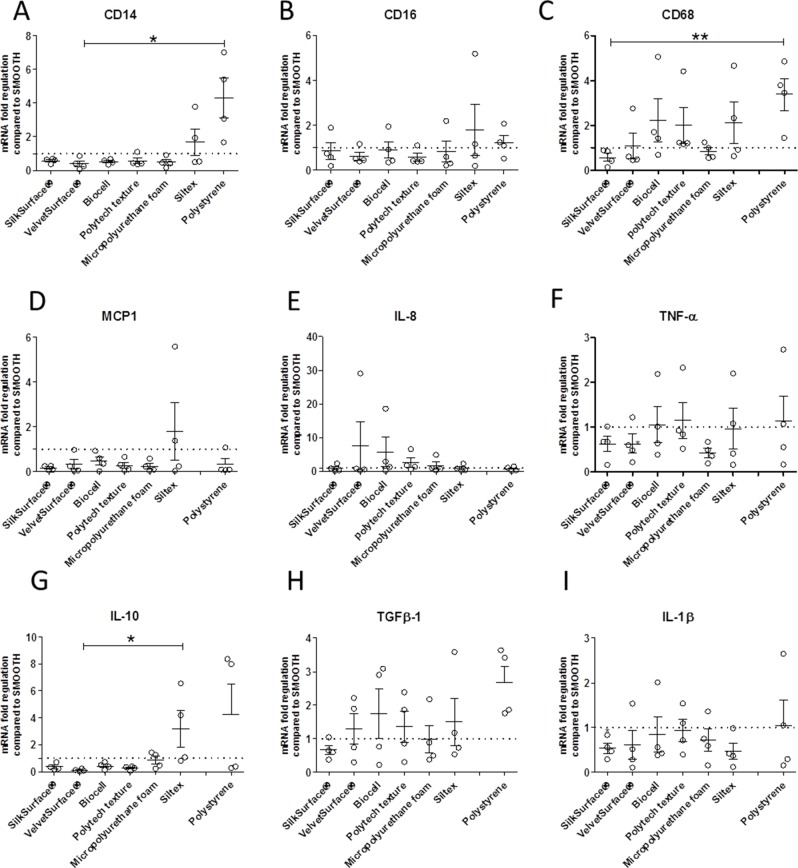
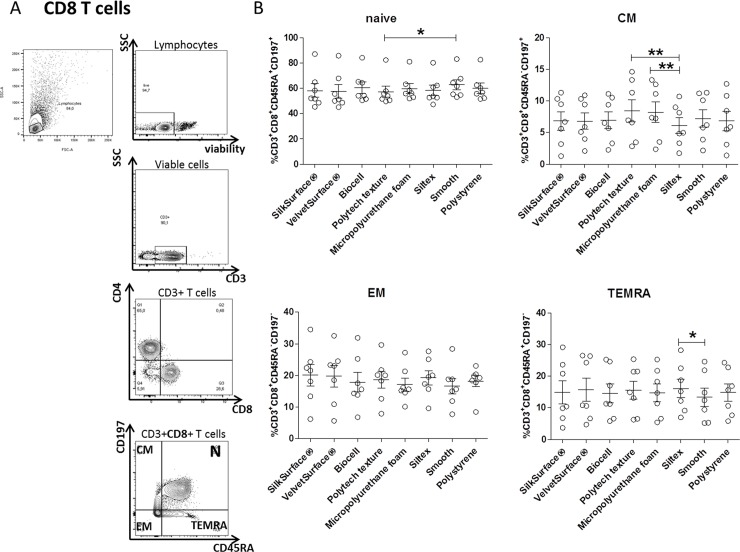
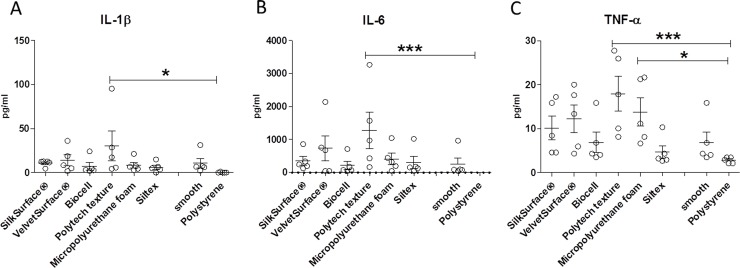
The most common complication of silicone breast implants is capsular contracture (massive scar formation around the implant). We postulate that capsular contracture is always a sequel to inflammatory processes, with both innate and adaptive immune mechanisms participating. In general, fibroblasts and macrophages have been used as cell types to evaluate in vitro the biocompatibility of breast implant surfaces. Moreover, also T cells have been found at the implant site at the initial stage of fibrous capsule formation. However, only few studies have addressed the influence of surfaces with different textures on T-cell responses. The aim of the present study was to investigate the immune response of human peripheral blood mononuclear cells (PBMC) to commercially available silicone breast implants in vitro. PBMC from healthy female blood donors were cultured on each silicone surface for 4 days. Proliferation and phenotype of cultured cells were assessed by flow cytometry. Cytokine levels were determined by multiplex and real-time assay. We found that silicone surfaces do not induce T-cell proliferation, nor do they extensively alter the proportion of T cell subsets (CD4, CD8, naïve, effector memory). Interestingly, cytokine profiling identified matrix specific differences, especially for IL-6 and TNF-α on certain surface topographies that could lead to increased fibrosis.
硅胶乳房植入物最常见的并发症是包膜挛缩(植入物周围形成大量瘢痕)。我们推测包膜挛缩始终是炎症过程的后遗症,固有免疫和适应性免疫机制均参与其中。一般来说,成纤维细胞和巨噬细胞已被用作体外评估乳房植入物表面生物相容性的细胞类型。此外,在纤维囊形成的初始阶段,在植入部位也发现了T细胞。然而,只有少数研究探讨了不同质地表面对T细胞反应的影响。本研究的目的是在体外研究人外周血单核细胞(PBMC)对市售硅胶乳房植入物的免疫反应。将来自健康女性献血者的PBMC在每个硅胶表面上培养4天。通过流式细胞术评估培养细胞的增殖和表型。通过多重和实时测定法测定细胞因子水平。我们发现硅胶表面不会诱导T细胞增殖,也不会广泛改变T细胞亚群(CD4、CD8、初始、效应记忆)的比例。有趣的是,细胞因子分析确定了基质特异性差异,特别是在某些可能导致纤维化增加的表面形貌上的白细胞介素-6和肿瘤坏死因子-α。