Institute of Crop Science, Zhejiang University, Hangzhou, China.
Biotech Research Institute, Shanghai Academy of Agricultural Sciences, Shanghai, China.
J Exp Bot. 2018 Mar 24;69(7):1721-1733. doi: 10.1093/jxb/ery004.
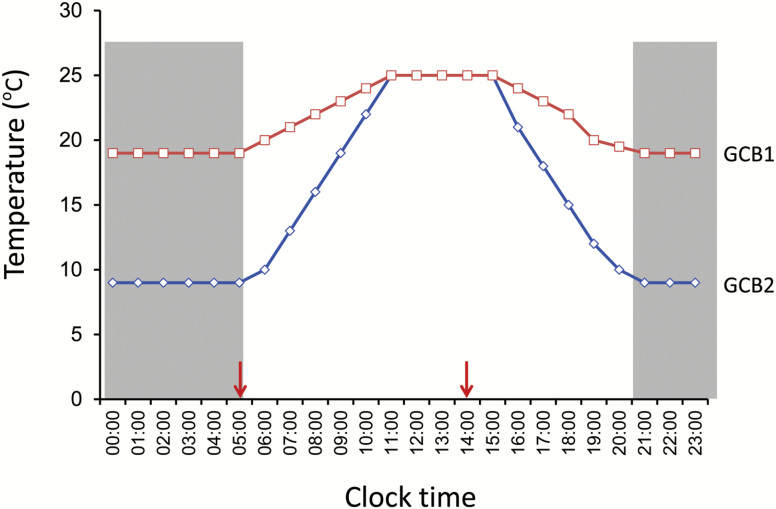
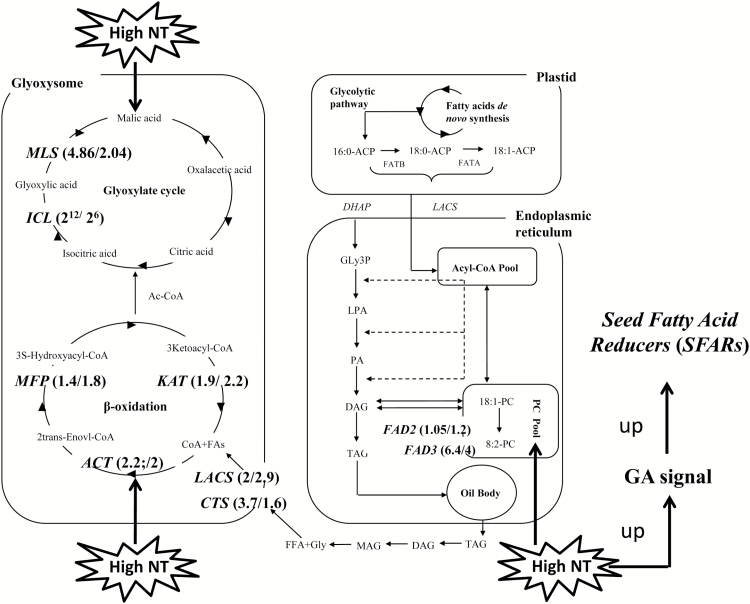
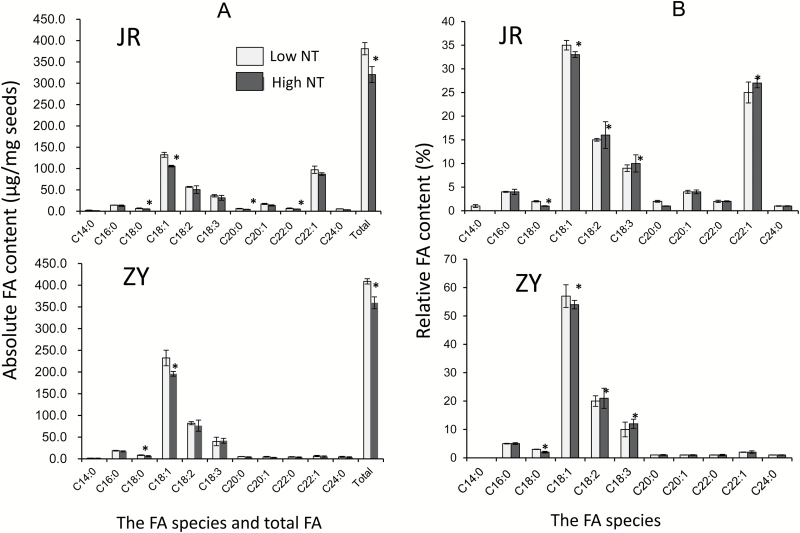
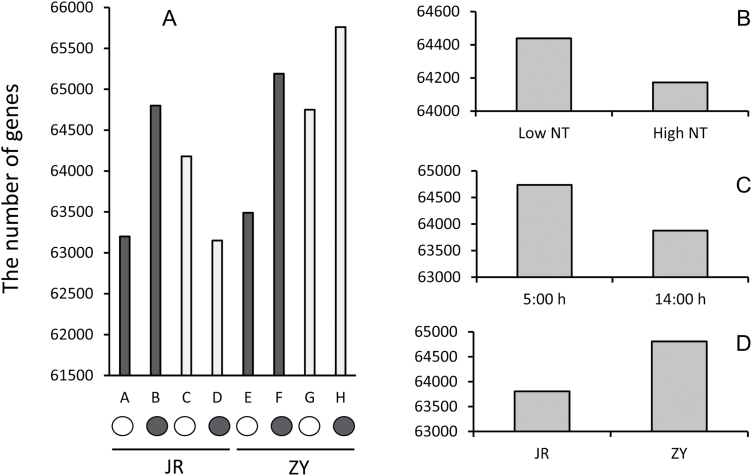
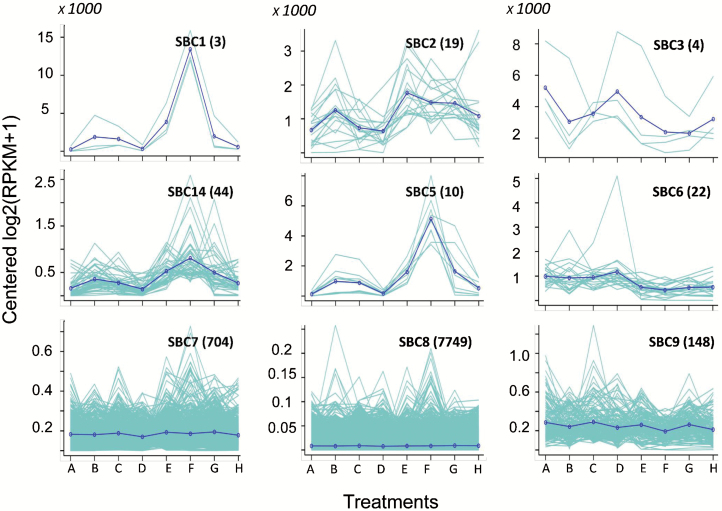
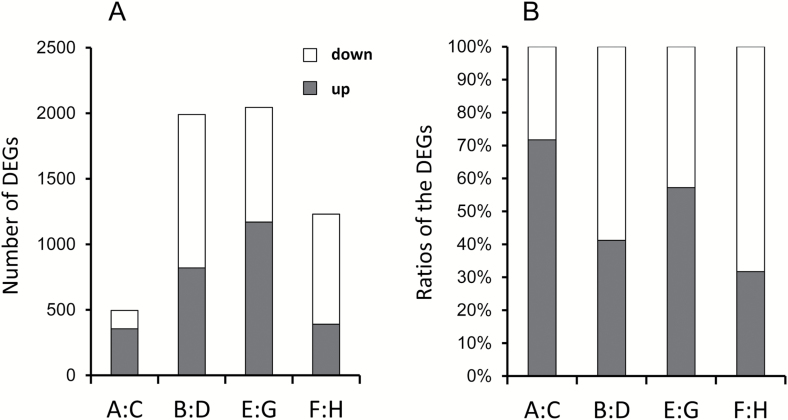
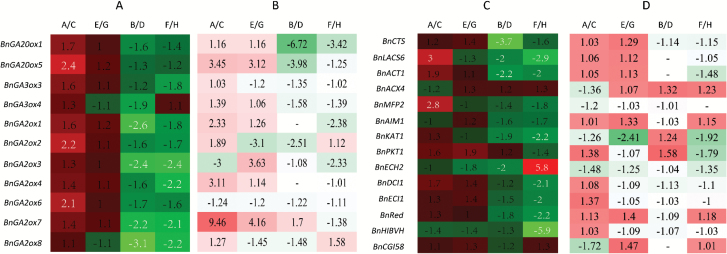
Global warming causes a faster increase of night temperature than of day temperature in tropical and subtropical zones. Little is known about the effect of high night temperature on storage lipids and transcriptome changes in oilseed rape. This study compared the total fatty acids and fatty acid compositions in seeds of two oilseed rape cultivars between high and low night temperatures. Their transcriptome profiles were also analyzed. High night temperature significantly affected the total fatty acids and fatty acid compositions in seeds of both low and high oil content cultivars, namely Jiuer-13 and Zheyou-50, thereby resulting in 18.9% and 13.7% total fatty acid reductions, respectively. In particular, high night temperature decreased the relative proportions of C18:0 and C18:1 but increased the proportions of C18:2 and C18:3 in both cultivars. In-depth analysis of transcriptome profiles revealed that high night temperature up-regulated gibberellin signaling during the night-time. This up-regulation was associated with the active expression of genes involved in fatty acid catabolism, such as those in β-oxidation and glyoxylate metabolism pathways. Although the effect of temperature on plant lipids has been previously examined, the present study is the first to focus on night temperature and its effect on the fatty acid composition in seeds.
全球变暖导致热带和亚热带地区夜间温度的上升速度快于白天温度。对于夜间高温对油料作物中储存脂质和转录组变化的影响,人们知之甚少。本研究比较了两个油菜品种在高、低夜间温度下种子中的总脂肪酸和脂肪酸组成。还分析了它们的转录组谱。夜间高温显著影响了低油和高油含量品种九儿-13 和浙优-50 种子中的总脂肪酸和脂肪酸组成,导致总脂肪酸分别减少了 18.9%和 13.7%。特别是,夜间高温降低了 C18:0 和 C18:1 的相对比例,但增加了两个品种中 C18:2 和 C18:3 的比例。对转录组谱的深入分析表明,夜间高温会在上调赤霉素信号。这种上调与参与脂肪酸分解代谢的基因的活性表达有关,如β-氧化和乙醛酸代谢途径中的基因。尽管之前已经研究了温度对植物脂质的影响,但本研究首次关注夜间温度及其对种子中脂肪酸组成的影响。