Kidney Disease Branch; National Institute of Diabetes and Digestive and Kidney Disease, National Institutes of Health (NIH), Bethesda, MD, USA.
Laboratory of Molecular Genetics; National Heart, Lung and Blood Institute, NIH, Bethesda, MD, USA.
Sci Rep. 2018 Feb 9;8(1):2743. doi: 10.1038/s41598-018-20856-6.
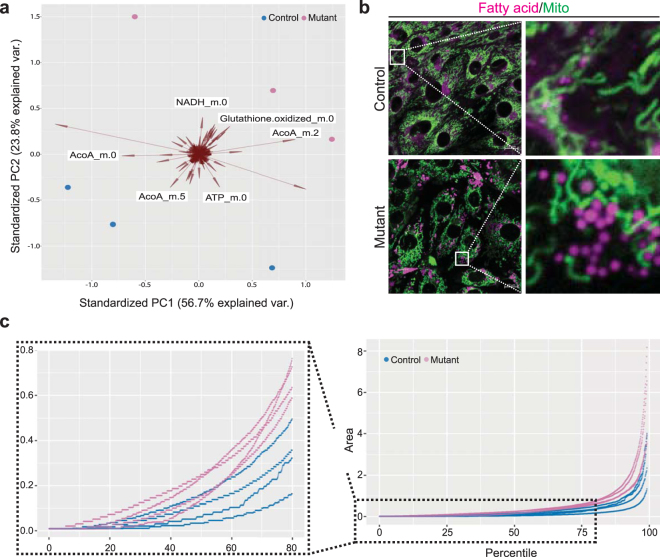
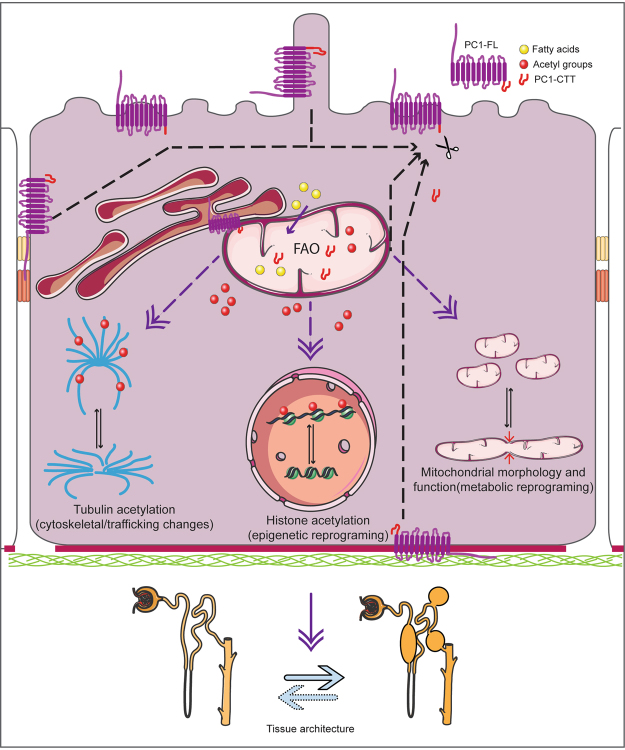
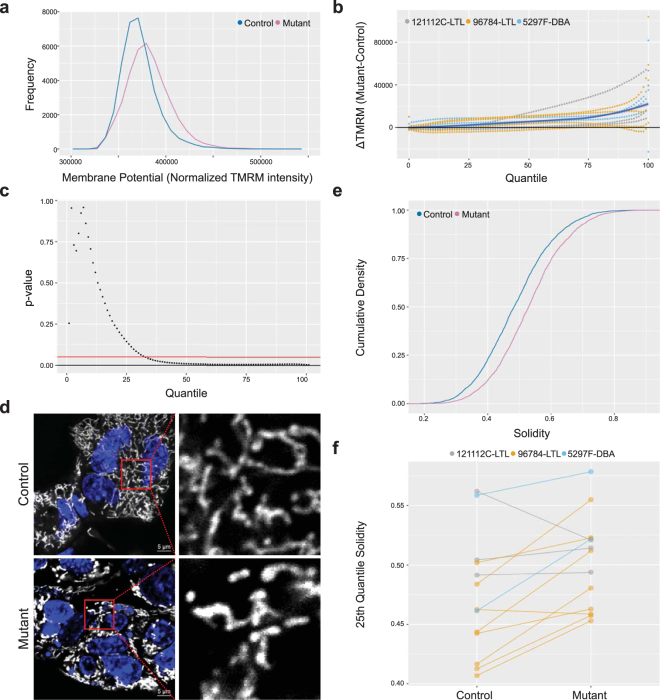
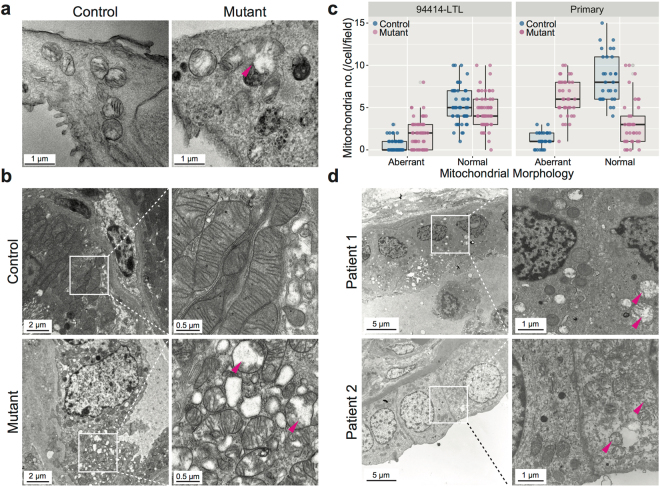
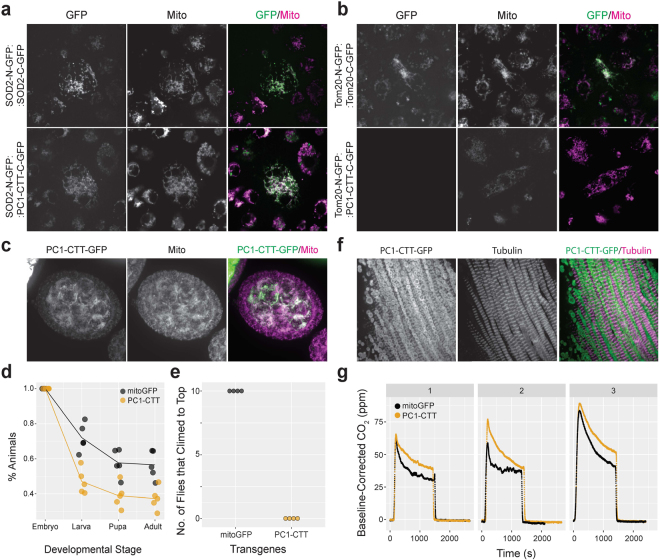
Recent studies have reported intrinsic metabolic reprogramming in Pkd1 knock-out cells, implicating dysregulated cellular metabolism in the pathogenesis of polycystic kidney disease. However, the exact nature of the metabolic changes and their underlying cause remains controversial. We show herein that Pkd1 o renal epithelial cells have impaired fatty acid utilization, abnormal mitochondrial morphology and function, and that mitochondria in kidneys of ADPKD patients have morphological alterations. We further show that a C-terminal cleavage product of polycystin-1 (CTT) translocates to the mitochondria matrix and that expression of CTT in Pkd1 cells rescues some of the mitochondrial phenotypes. Using Drosophila to model in vivo effects, we find that transgenic expression of mouse CTT results in decreased viability and exercise endurance but increased CO production, consistent with altered mitochondrial function. Our results suggest that PC1 may play a direct role in regulating mitochondrial function and cellular metabolism and provide a framework to understand how impaired mitochondrial function could be linked to the regulation of tubular diameter in both physiological and pathological conditions.
最近的研究报告称, Pkd1 敲除细胞存在内在代谢重编程,提示细胞代谢失调在多囊肾病的发病机制中起作用。然而,代谢变化的确切性质及其根本原因仍存在争议。本文显示, Pkd1 敲除的肾上皮细胞脂肪酸利用受损,线粒体形态和功能异常,并且 ADPKD 患者肾脏中的线粒体存在形态改变。我们进一步表明,多囊蛋白-1 的 C 端切割产物(CTT)易位到线粒体基质中,并且 Pkd1 细胞中 CTT 的表达可挽救一些线粒体表型。利用果蝇进行体内效应模型,我们发现,转染表达的小鼠 CTT 导致生存力和运动耐力降低,但 CO 产量增加,这与线粒体功能改变一致。我们的结果表明, PC1 可能在调节线粒体功能和细胞代谢中发挥直接作用,并为理解在生理和病理条件下受损的线粒体功能如何与管状直径的调节相关提供了一个框架。