Department of Infectious Diseases, Asan Medical Center, University of Ulsan College of Medicine, 88, Olympic-ro 43-gil, Songpa-gu, Seoul, 05505, Republic of Korea.
Department of Infectious Diseases, Asan Medical Center, University of Ulsan College of Medicine, 88, Olympic-ro 43-gil, Songpa-gu, Seoul, 05505, Republic of Korea; Division of Infectious Diseases, Department of Internal Medicine, Chung-Ang University Hospital, 102, Heukseok-ro, Dongjak-gu, Seoul, 06973, Republic of Korea.
J Clin Virol. 2018 Apr;101:57-62. doi: 10.1016/j.jcv.2018.01.017. Epub 2018 Jan 31.
Severe fever with thrombocytopenia syndrome (SFTS) is an emerging infectious disease in China, Japan, and Korea, which is characterized by high fever, thrombocytopenia, and high mortality. It is hypothesized that a cytokine storm plays an important role in the pathophysiology of SFTS. However, limited data have been published on the detailed kinetics of the viral load and cytokine profiles throughout the course of this disease.
We investigated the patterns of changes in cytokines and viral load in SFTS patients.
During the admission period of patients, RNA was extracted from plasma and quantified by reverse transcription polymerase chain reaction. In addition, cytokine bead arrays were performed for the 18 cytokines and chemokines selected for testing.
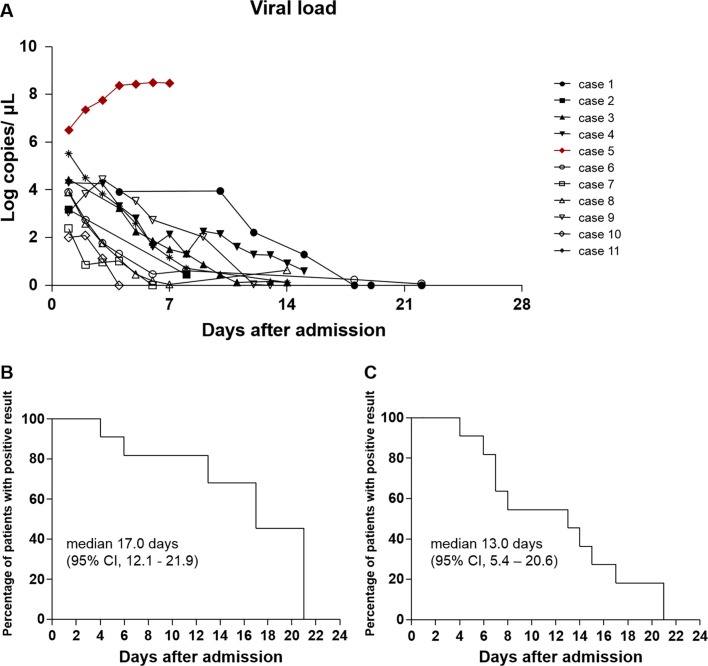
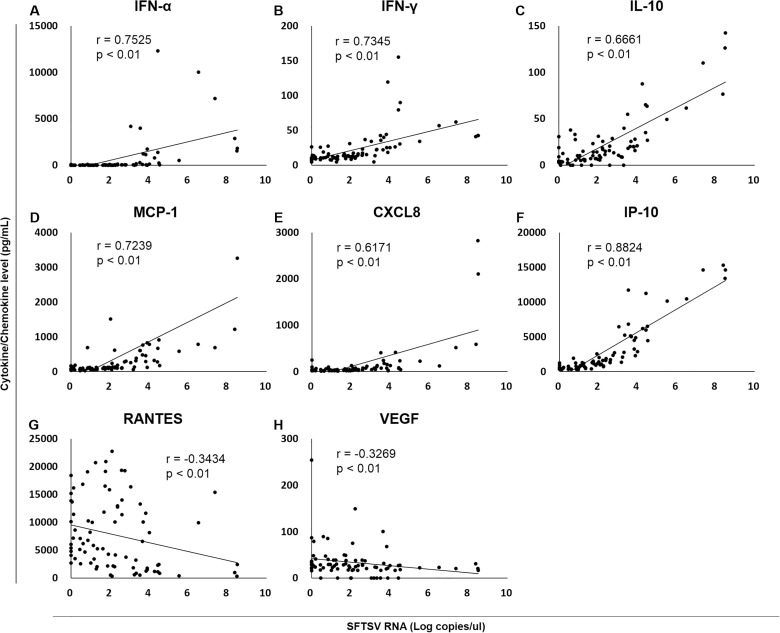
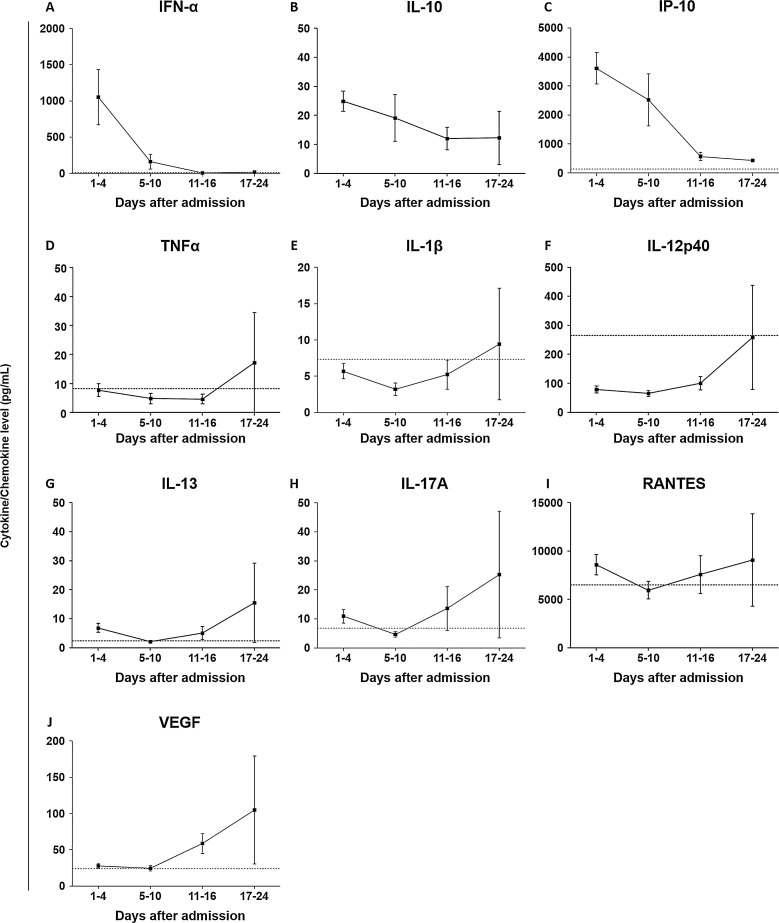
The median time from admission to the negative conversion of SFTS viremia was 17.0 days. When censored patients were found to be negative for viral load at discharge, the median duration of viral shedding was 13.0 days (95% CI, 5.4-20.6). Interferon (IFN)-α, interleukin (IL)-10, and IFN-γ-induced protein (IP)-10 concentrations significantly increased in the early course of disease and then decreased during the hospital stay. However, the concentrations of tumor necrosis factor-α, IL-1β, IL-12p40, IL-13, IL-17A, Regulated on Activation and Normally T-cell Expressed and Secreted (RANTES), and vascular endothelial growth factor (VEGF) increased during the late course of disease. Initial IP-10 levels during hospital days 1-4 were the most significantly correlated with initial viral load (r = 0.88, P < .01).
SFTS viremia persisted until weeks 2-3 and was highly correlated with initial plasma IP-10 levels. In addition, IFN-α, IL-10, and IP-10 were associated with the initial cytokine storm in SFTS.
严重发热伴血小板减少综合征(SFTS)是一种在中国、日本和韩国流行的新发传染病,其特征为高热、血小板减少和高死亡率。据推测,细胞因子风暴在 SFTS 的病理生理学中发挥着重要作用。然而,关于该病患者病毒载量和细胞因子谱的详细动力学变化,仅有有限的数据发表。
我们研究了 SFTS 患者细胞因子和病毒载量变化的模式。
在患者入院期间,从血浆中提取 RNA 并通过逆转录聚合酶链反应进行定量。此外,还进行了细胞因子珠阵列分析,检测了 18 种选定的细胞因子和趋化因子。
从入院到 SFTS 病毒血症转阴的中位时间为 17.0 天。当发现出院时病毒载量阴性的截尾患者时,病毒排出的中位持续时间为 13.0 天(95%CI,5.4-20.6)。干扰素(IFN)-α、白细胞介素(IL)-10 和干扰素-γ诱导蛋白(IP)-10 的浓度在疾病早期显著增加,然后在住院期间下降。然而,肿瘤坏死因子-α、IL-1β、IL-12p40、IL-13、IL-17A、调节激活和正常 T 细胞表达和分泌(RANTES)和血管内皮生长因子(VEGF)的浓度在疾病后期增加。住院第 1-4 天的初始 IP-10 水平与初始病毒载量最显著相关(r=0.88,P<.01)。
SFTS 病毒血症持续至第 2-3 周,与初始血浆 IP-10 水平高度相关。此外,IFN-α、IL-10 和 IP-10 与 SFTS 中的初始细胞因子风暴相关。