Department of Infectious Diseases, The First Affiliated Hospital, Nanjing Medical University, Nanjing, China; China-US Vaccine Research Center, The First Affiliated Hospital, Nanjing Medical University, Nanjing, China.
Department of Infectious Diseases, The First Affiliated Hospital, Nanjing Medical University, Nanjing, China.
PLoS One. 2014 Mar 21;9(3):e91679. doi: 10.1371/journal.pone.0091679. eCollection 2014.
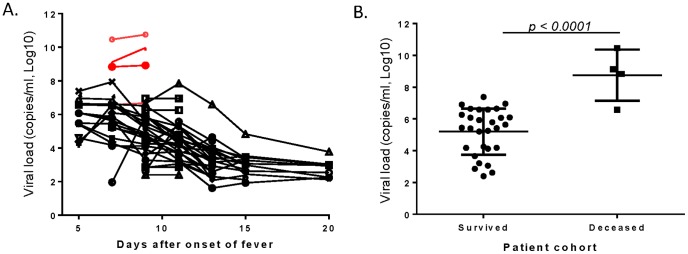
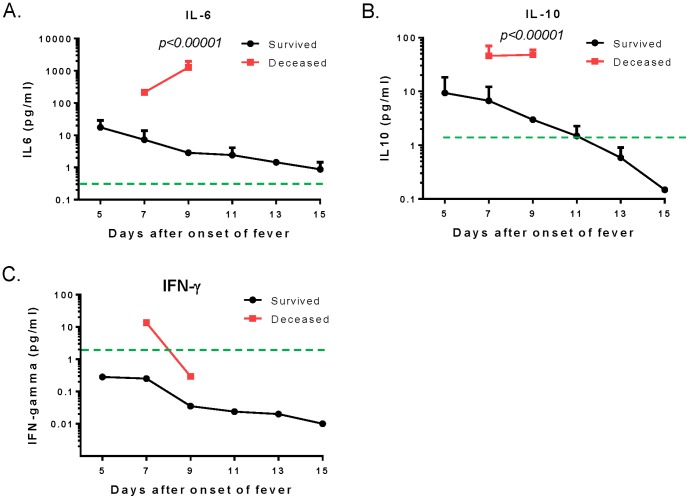
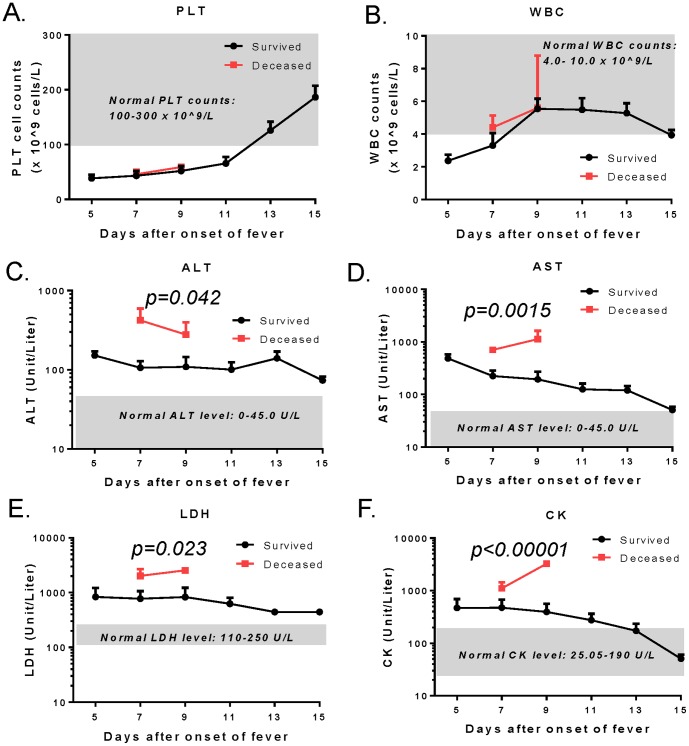
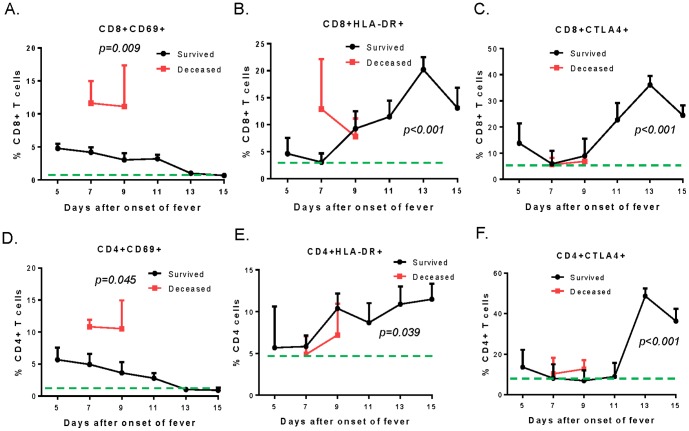
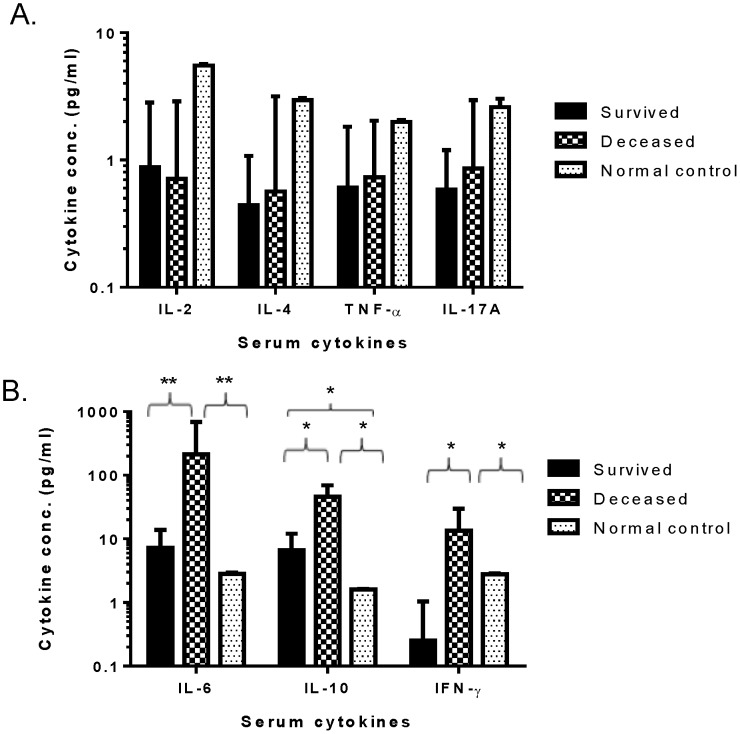
Severe fever with thrombocytopenia syndrome (SFTS) is an emerging infection caused by a novel Bunyavirus. Analysis on the dynamic changes of clinical, laboratory, and immunological abnormalities associated with SFTS in a concurrent study is lacking. Thirty-three SFTS patients were admitted to Jiangsu People's Hospital, Nanjing, China, and diagnosis was made based on the clinical symptoms and positive viral RNA detected by RT-PCR. Four patients deceased and twenty-nine survived. Blood samples were collected every other day between Day 5 and Day 15 from the onset of fever. Samples from healthy volunteers were used as normal controls. Peak viral RNA load, serum enzymes, IL-6, and IL-10 were significantly higher in deceased patients compared to survivors. Viral load, serum enzymes, and cytokines declined in survivors within 2 weeks from onset of fever. CD69+ T cells were elevated early after infection while HLA-DR+ and CTLA4+ T cells were elevated during the recovery phase of those who survived. High level SFTSV viral load was concurrently observed with reduced PLT, elevated serum enzymes, elevated pro-inflammatory and anti-inflammatory cytokines, and activation of CD69+ T cells. The degree and pattern of changes in these parameters may indicate the clinical outcome in SFTSV-infected patients.
严重发热伴血小板减少综合征(SFTS)是一种由新型布尼亚病毒引起的新发感染。在同期研究中,缺乏对与 SFTS 相关的临床、实验室和免疫学异常的动态变化的分析。33 例 SFTS 患者入住中国南京江苏省人民医院,根据临床症状和 RT-PCR 检测到的阳性病毒 RNA 进行诊断。4 例死亡,29 例存活。从发热开始第 5 天至第 15 天每隔一天采集血样。健康志愿者的样本作为正常对照。与存活者相比,死亡者的病毒 RNA 载量、血清酶、IL-6 和 IL-10 峰值明显更高。存活者的病毒载量、血清酶和细胞因子在发热开始后 2 周内下降。CD69+T 细胞在感染后早期升高,而 HLA-DR+和 CTLA4+T 细胞在幸存者的恢复阶段升高。高水平的 SFTSV 病毒载量与血小板减少、血清酶升高、促炎和抗炎细胞因子升高以及 CD69+T 细胞激活同时发生。这些参数的变化程度和模式可能表明 SFTSV 感染患者的临床结局。