National Key Laboratory of Crop Genetic Improvement, College of Plant Science and Technology, Huazhong Agricultural University, Wuhan, Hubei, 430070, China.
Southern Cross Plant Science, Southern Cross University, Lismore, NSW, 2480, Australia.
BMC Plant Biol. 2018 Feb 13;18(1):32. doi: 10.1186/s12870-018-1253-1.
Allelic variation at the FRIGIDA (FRI) locus is a major contributor to natural variation of flowering time and vernalization requirement in Arabidopsis thaliana. Dominant FRI inhibits flowering by activating the expression of the MADS box transcriptional repressor FLOWERING LOCUS C (FLC), which represses flowering prior to vernalization. Four FRI orthologues had been identified in the domesticated amphidiploid Brassica napus. Linkage and association studies had revealed that one of the FRI orthologues, BnaA3.FRI, contributes to flowering time variation and crop type differentiation.
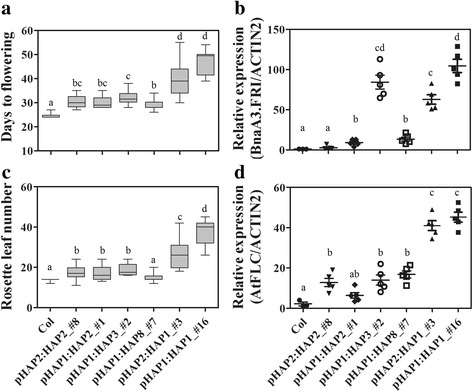
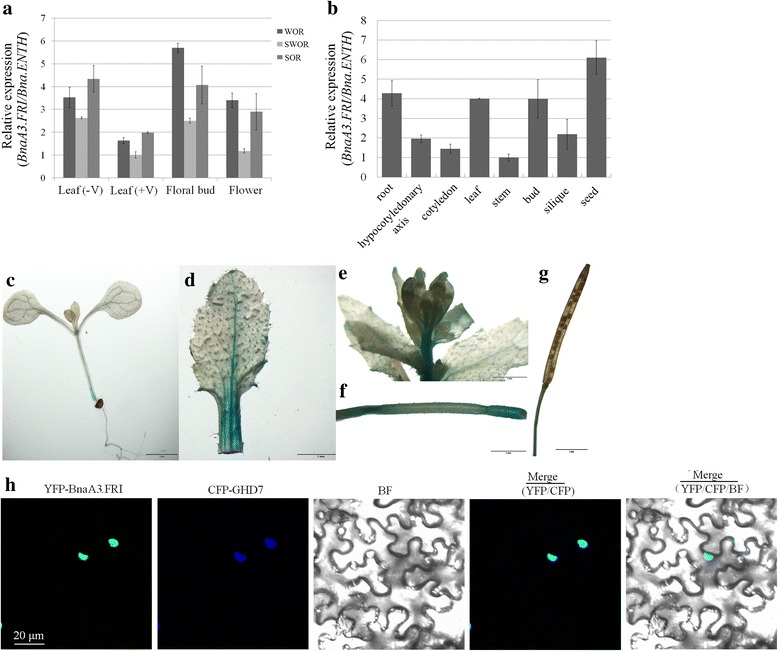
Sequence analyses indicated that three out of the four BnaFRI paralogues, BnaA3.FRI, BnaA10.FRI and BnaC3.FRI, contained a large number of polymorphic sites. Haplotype analysis in a panel of 174 B. napus accessions using PCR markers showed that all the three paralogues had a biased distribution of haplotypes in winter type oilseed rape (P < 0.01). Association analysis indicated that only BnaA3.FRI contributes to flowering time variation in B. napus. In addition, transgenic functional complementation demonstrated that mutations in the coding sequence of BnaA3.FRI lead to weak alleles, and subsequently to flowering time variation.
This study for the first time provides a molecular basis for flowering time control by BnaA3.FRI in B. napus, and will facilitate predictive oilseed rape breeding to select varieties with favorable flowering time and better adaption to latitude and seasonal shifts due to changing climate.
FRIGIDA(FRI)基因座的等位基因变异是拟南芥开花时间和春化需求自然变异的主要原因。显性 FRI 通过激活 MADS 框转录抑制因子 FLOWERING LOCUS C(FLC)的表达来抑制开花,FLC 在春化之前抑制开花。在家养的异源四倍体甘蓝型油菜中已鉴定出 4 个 FRI 同源物。连锁和关联研究表明,其中一个 FRI 同源物 BnaA3.FRI 导致开花时间变异和作物类型分化。
序列分析表明,在 BnaFRI 四个同源物中,有三个同源物(BnaA3.FRI、BnaA10.FRI 和 BnaC3.FRI)含有大量多态性位点。使用 PCR 标记对 174 个甘蓝型油菜品种进行的单倍型分析表明,这三个同源物在冬油菜品种中均存在偏分离的单倍型(P<0.01)。关联分析表明,只有 BnaA3.FRI 对甘蓝型油菜的开花时间变异有贡献。此外,转基因功能互补实验表明,BnaA3.FRI 编码序列中的突变导致弱等位基因,进而导致开花时间变异。
本研究首次为 BnaA3.FRI 在甘蓝型油菜中控制开花时间提供了分子基础,这将有助于预测性油菜育种,以选择具有有利开花时间和更好适应由于气候变化而导致的纬度和季节变化的品种。