Reproductive and Genetic Center of National Research Institute for Family Planning, Beijing, 100081, China.
Graduate School, Peking Union Medical College, Beijing, China.
Stem Cell Res Ther. 2018 Feb 13;9(1):36. doi: 10.1186/s13287-018-0777-5.
Repair deficiency after endometrial injury is an important reason for intra-uterine adhesions, amenorrhea, and infertility in females. Bone marrow-derived mesenchymal stem cell (BMSC) transplantation is effective in repairing the damaged endometrium. However, the possibility of using umbilical cord-derived MSCs (UC-MSCs) to treat endometrial injury is rarely reported.
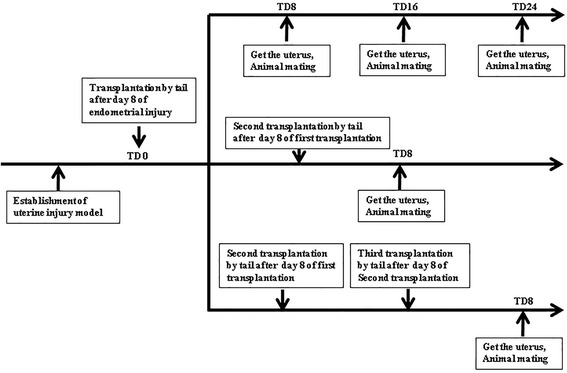
Ethanol (95%) was injected into rat uterus to establish a model of endometrial injury. UC-MSCs were injected through the tail vein, either as a single, twice, or thrice administration. Functional restoration of the uterus was assessed by testing embryo implantation rates. Endometrial morphological alteration was observed by hematoxylin and eosin staining. Endometrial fibrosis, markers of epithelial and stromal cells of endometrium, cell proliferation and angiogenesis, and inflammatory factors were detected using immunohistochemistry, Western blotting, and quantitative reverse-transcription polymerase chain reaction.
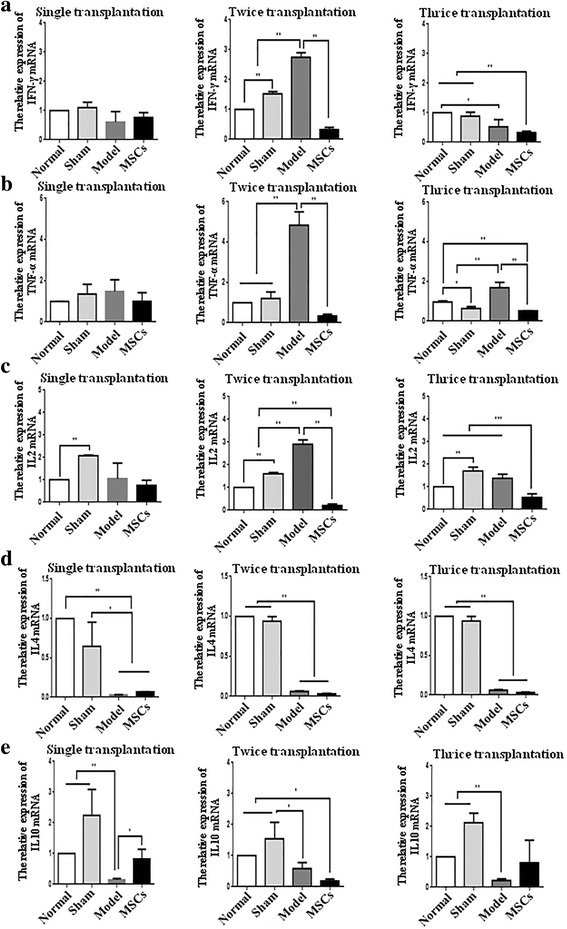
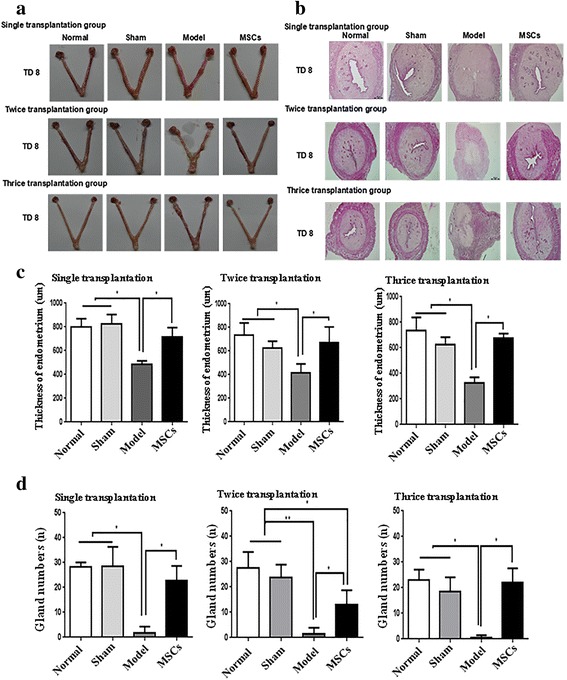
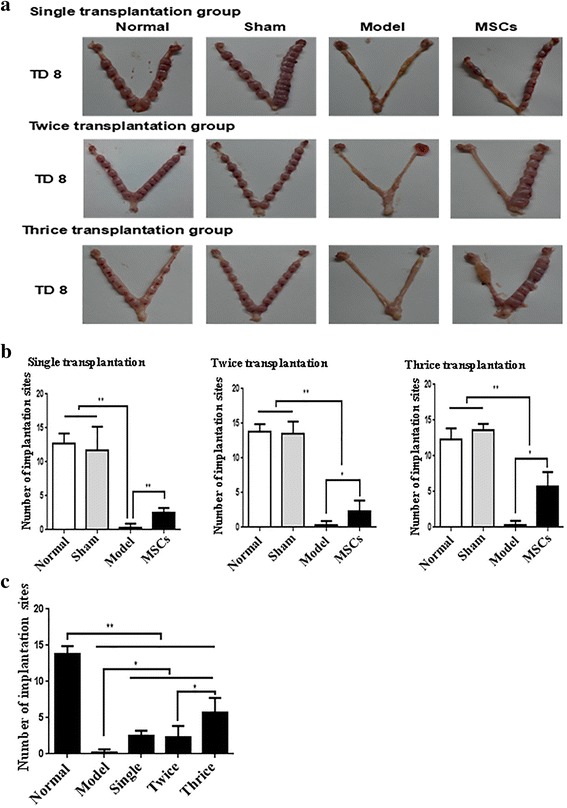
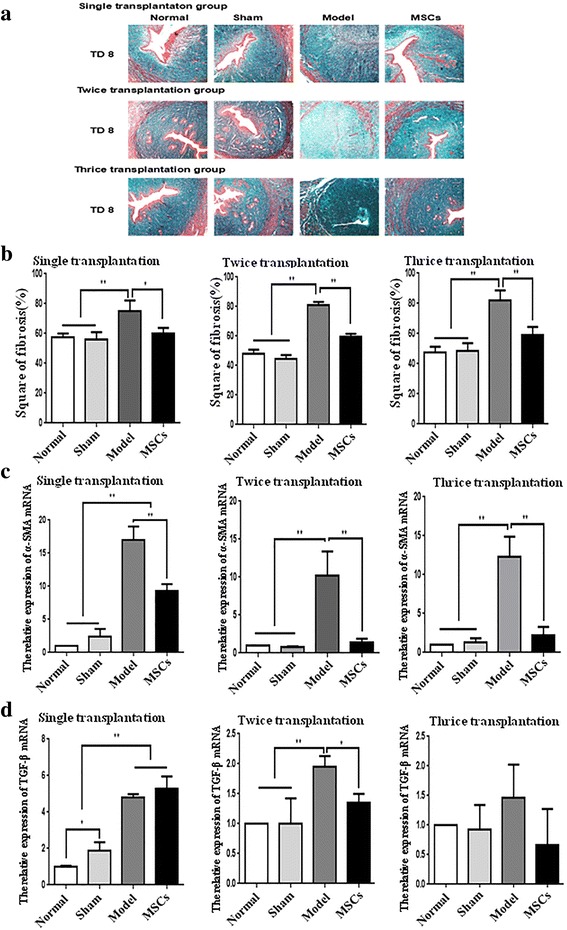
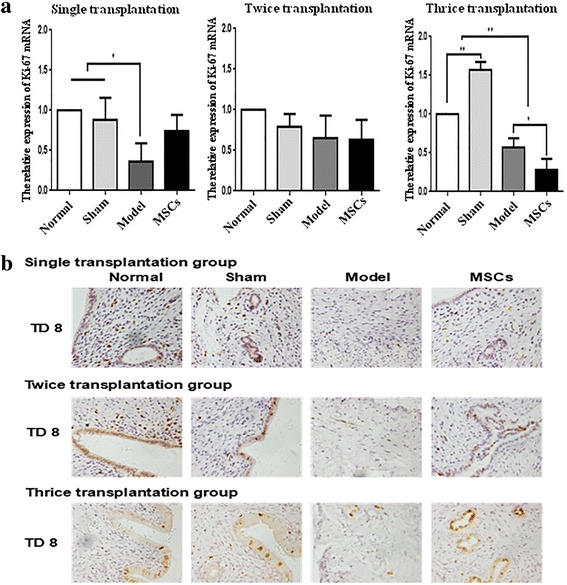
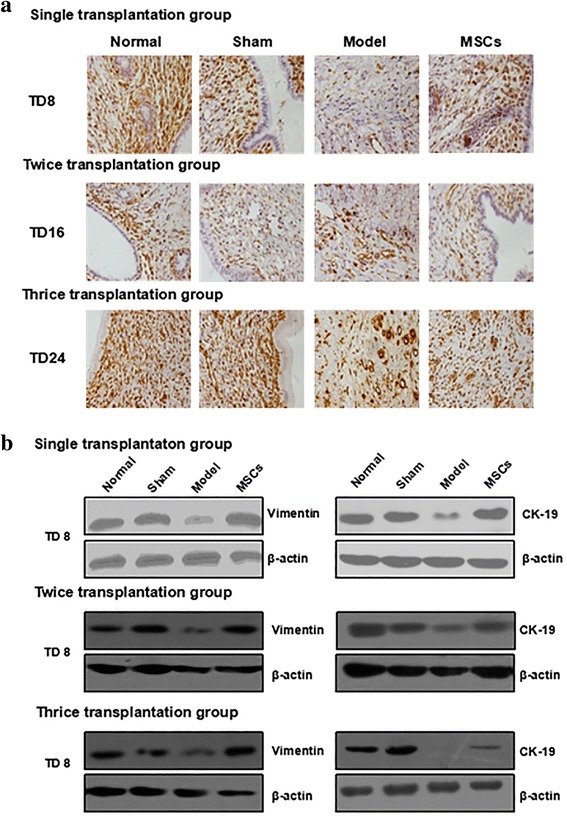
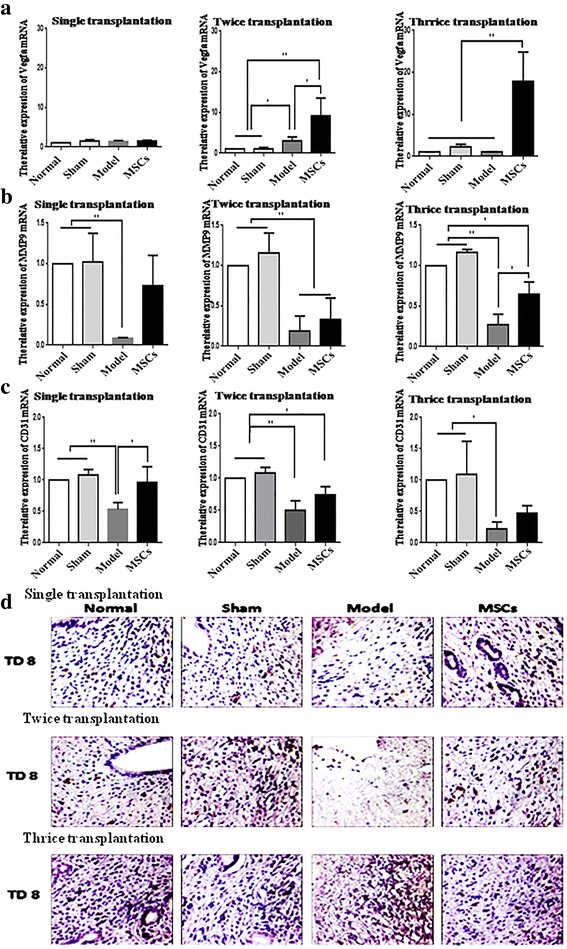
Endometrial morphology and embryo implantation rates were significantly improved on day 8 of transplantation among single-, twice-, or thrice-administered rats. Moreover, UC-MSCs could alleviate fibrosis in general, and reduced the expression of fibrosis markers, α-smooth muscle actin (α-SMA) and transforming growth factor (TGF)-β. The cell proliferation marker Ki-67 had a positive expression in the injured endometrium after UC-MSC transplantation. The endometrial stromal marker vimentin and epithelial marker cytokeratin-19 (CK-19) expressions were visibly increased. The expression of vascular markers CD31, vascular endothelial growth factor (VEGF)A, and matrix metalloprotein (MMP)9 was generally upregulated. Proinflammatory factors interferon (IFN)-γ, tumor necrosis factor (TNF)-α, and interleukin (IL)-2 were significantly downregulated in the rats administered UC-MSCs twice and thrice.
UC-MSC transplantation contributed to the repair of endometrial injury and restoration of fertility, likely through the suppression of excessive fibrosis and inflammation, and enhancement of endometrial cell proliferation and vascular remodeling.
子宫内膜损伤后的修复缺陷是女性发生宫腔粘连、闭经和不孕的重要原因。骨髓间充质干细胞(BMSC)移植在修复受损子宫内膜方面具有显著效果。然而,利用脐带间充质干细胞(UC-MSCs)治疗子宫内膜损伤的可能性鲜有报道。
采用 95%乙醇向大鼠子宫内注射建立子宫内膜损伤模型。通过尾静脉注射 UC-MSCs,单次、两次或三次给药。通过检测胚胎着床率评估子宫的功能恢复情况。通过苏木精和伊红染色观察子宫内膜形态学改变。采用免疫组织化学、Western blot 和实时定量逆转录聚合酶链反应检测子宫内膜纤维化、子宫内膜上皮和基质细胞标志物、细胞增殖和血管生成以及炎症因子。
在单次、两次或三次给药的大鼠中,移植后第 8 天子宫内膜形态和胚胎着床率均显著改善。此外,UC-MSCs 可普遍减轻纤维化,降低纤维化标志物α-平滑肌肌动蛋白(α-SMA)和转化生长因子-β(TGF-β)的表达。UC-MSC 移植后,受损子宫内膜中细胞增殖标志物 Ki-67 呈阳性表达。子宫内膜基质标志物波形蛋白和上皮标志物细胞角蛋白 19(CK-19)的表达明显增加。血管标志物 CD31、血管内皮生长因子(VEGF)A 和基质金属蛋白酶(MMP)9 的表达普遍上调。两次和三次给予 UC-MSCs 的大鼠中,促炎因子干扰素(IFN)-γ、肿瘤坏死因子(TNF)-α和白细胞介素(IL)-2 表达显著下调。
UC-MSC 移植有助于子宫内膜损伤的修复和生育能力的恢复,可能是通过抑制过度纤维化和炎症,增强子宫内膜细胞增殖和血管重塑。