National Research Institute for Family Planning, Beijing, 100081, China.
Graduate School, Peking Union Medical College, Beijing, China.
Sci Rep. 2022 Jan 10;12(1):412. doi: 10.1038/s41598-021-04454-7.
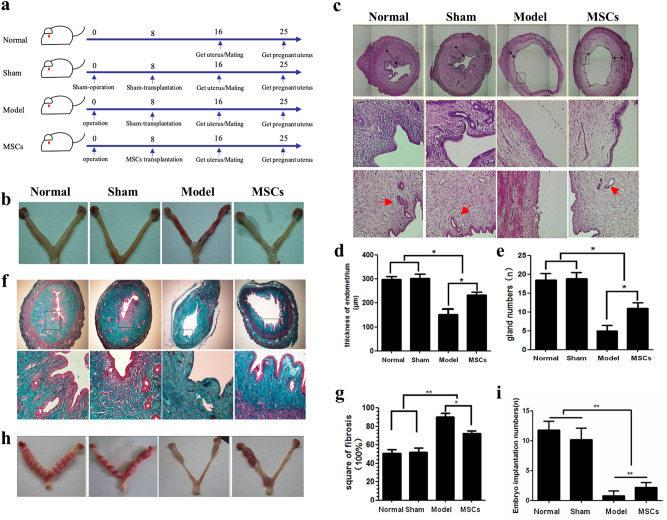
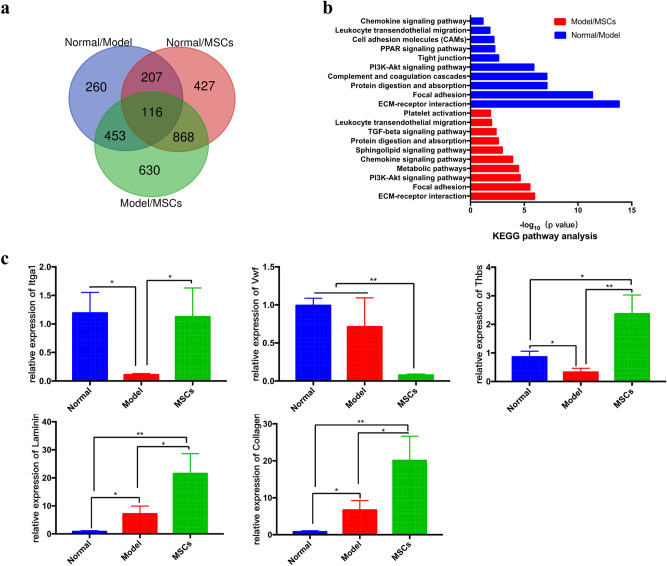
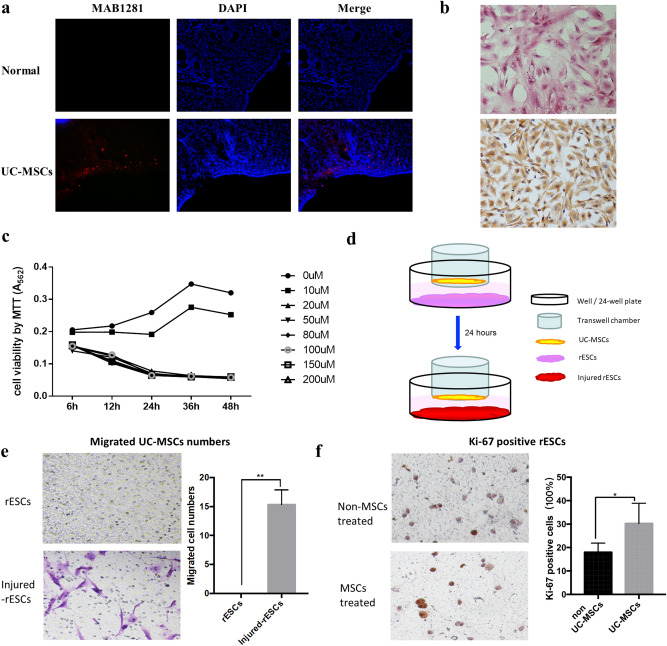
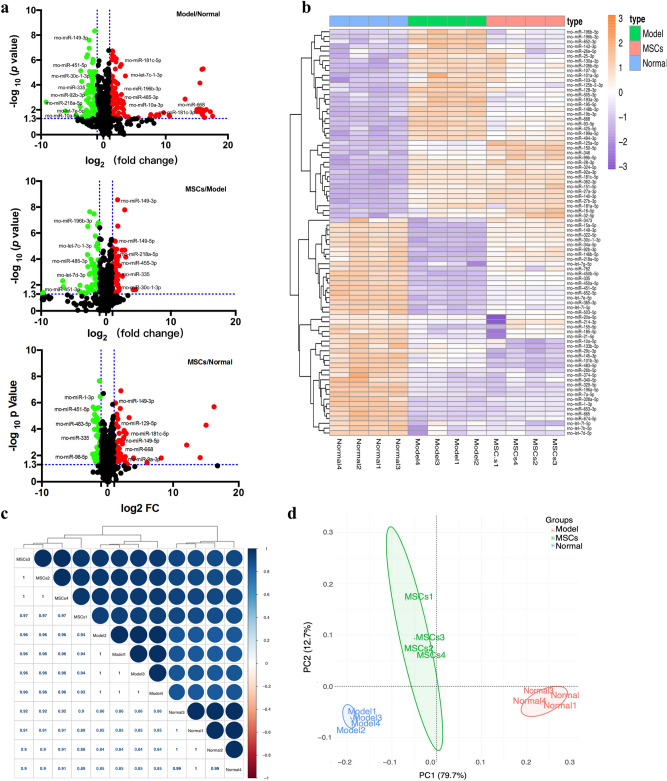
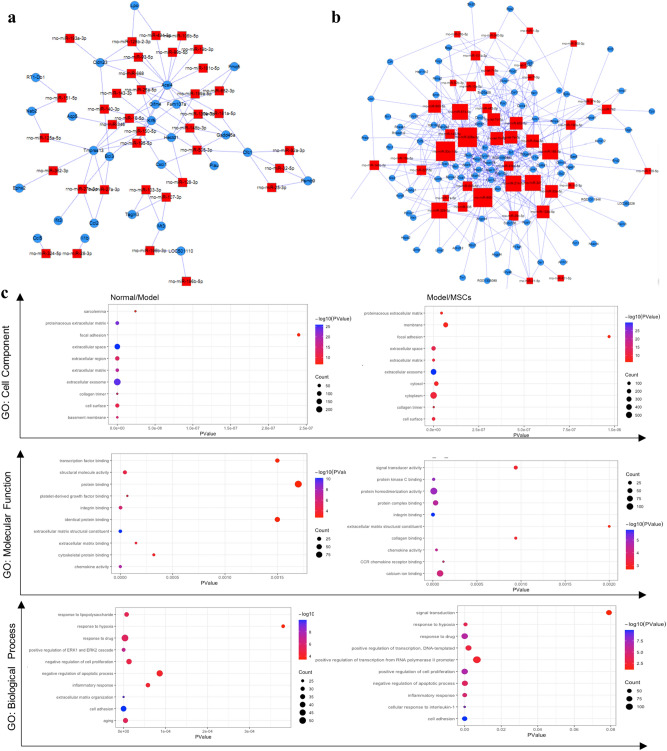
The endometrium plays a critical role in embryo implantation and pregnancy, and a thin uterus is recognized as a key factor in embryo implantation failure. Umbilical cord mesenchymal stem cells (UC-MSCs) have attracted interest for the repair of intrauterine adhesions. The current study investigated the repair of thin endometrium in rats using the UC-MSCs and the mechanisms involved. Rats were injected with 95% ethanol to establish a model of thin endometrium. The rats were randomly divided into normal, sham, model, and UC-MSCs groups. Endometrial morphological alterations were observed by hematoxylin-eosin staining and Masson staining, and functional restoration was assessed by testing embryo implantation. The interaction between UC-MSCs and rat endometrial stromal cells (ESCs) was evaluated using a transwell 3D model and immunocytochemistry. Microarray mRNA and miRNA platforms were used for miRNA-mRNA expression profiling. Gene ontology (GO) and Kyoto encyclopedia of genes and genomes (KEGG) analyses were performed to identify the biological processes, molecular functions, cellular components, and pathways of endometrial injury and UC-MSCs transplantation repair and real-time quantitative reverse transcription PCR (qRT-PCR) was performed to further identify the expression changes of key molecules in the pathways. Endometrium thickness, number of glands, and the embryo implantation numbers were improved, and the degree of fibrosis was significantly alleviated by UC-MSCs treatment in the rat model of thin endometrium. In vitro cell experiments showed that UC-MSCs migrated to injured ESCs and enhanced their proliferation. miRNA microarray chip results showed that expression of 45 miRNAs was downregulated in the injured endometrium and upregulated after UC-MSCs transplantation. Likewise, expression of 39 miRNAs was upregulated in the injured endometrium and downregulated after UC-MSCs transplantation. The miRNA-mRNA interactions showed the changes in the miRNA and mRNA network during the processes of endometrial injury and repair. GO and KEGG analyses showed that the process of endometrial injury was mainly attributed to the decomposition of the extracellular matrix (ECM), protein degradation and absorption, and accompanying inflammation. The process of UC-MSCs transplantation and repair were accompanied by the reconstruction of the ECM, regulation of chemokines and inflammation, and cell proliferation and apoptosis. The key molecules involved in ECM-receptor interaction pathways were further verified by qRT-PCR. Itga1 and Thbs expression decreased in the model group and increased by UC-MSCs transplantation, while Laminin and Collagen expression increased in both the model group and MSCs group, with greater expression observed in the latter. This study showed that UC-MSCs transplantation could promote recovery of thin endometrial morphology and function. Furthermore, it revealed the expression changes of miRNA and mRNA after endometrial injury and UC-MSCs transplantation repair processed, and signaling pathways that may be involved in endometrial injury and repair.
子宫内膜在胚胎着床和妊娠中起着至关重要的作用,而子宫壁薄被认为是胚胎着床失败的关键因素。脐带间充质干细胞(UC-MSCs)因其在修复宫腔粘连方面的潜力而受到关注。本研究旨在探讨 UC-MSCs 对大鼠薄型子宫内膜的修复作用及其机制。通过向大鼠注射 95%乙醇建立薄型子宫内膜模型。将大鼠随机分为正常组、假手术组、模型组和 UC-MSCs 组。通过苏木精-伊红染色和 Masson 染色观察子宫内膜形态学改变,通过检测胚胎着床评估功能恢复。使用 Transwell 3D 模型和免疫细胞化学评估 UC-MSCs 与大鼠子宫内膜基质细胞(ESCs)的相互作用。使用 miRNA 微阵列和 miRNA 芯片平台进行 miRNA-mRNA 表达谱分析。进行基因本体论(GO)和京都基因与基因组百科全书(KEGG)分析,以鉴定子宫内膜损伤和 UC-MSCs 移植修复过程中的生物学过程、分子功能、细胞成分和途径,并通过实时定量逆转录 PCR(qRT-PCR)进一步鉴定途径中关键分子的表达变化。UC-MSCs 治疗可改善薄型子宫内膜大鼠的子宫内膜厚度、腺体数量和胚胎着床数量,并显著减轻纤维化程度。体外细胞实验表明,UC-MSCs 向受损的 ESCs 迁移并促进其增殖。miRNA 微阵列芯片结果显示,受损子宫内膜中 45 个 miRNA 的表达下调,UC-MSCs 移植后上调。同样,受损子宫内膜中 39 个 miRNA 的表达上调,UC-MSCs 移植后下调。miRNA-mRNA 相互作用显示了子宫内膜损伤和修复过程中 miRNA 和 mRNA 网络的变化。GO 和 KEGG 分析表明,子宫内膜损伤过程主要归因于细胞外基质(ECM)的分解、蛋白质降解和吸收以及伴随的炎症。UC-MSCs 移植和修复过程伴随着 ECM 的重建、趋化因子和炎症的调节以及细胞的增殖和凋亡。通过 qRT-PCR 进一步验证了 ECM-受体相互作用途径中的关键分子。模型组中 Itga1 和 Thbs 的表达减少,UC-MSCs 移植后增加,而模型组和 MSCs 组中层粘连蛋白和胶原蛋白的表达增加,后者表达更高。本研究表明,UC-MSCs 移植可促进薄型子宫内膜形态和功能的恢复。此外,本研究揭示了子宫内膜损伤和 UC-MSCs 移植修复后 miRNA 和 mRNA 的表达变化,以及可能参与子宫内膜损伤和修复的信号通路。