Faculty of Physics, Univ. Santiago de Compostela, 15782, Santiago de Compostela, Spain.
Health Research Institute of Santiago de Compostela (IDIS), Complexo Hospitalario Universitario de Santiago de Compostela (CHUS). SERGAS, Santiago de Compostela, 15706 A Coruña, Spain.
Sci Rep. 2018 Feb 12;8(1):2795. doi: 10.1038/s41598-018-21126-1.
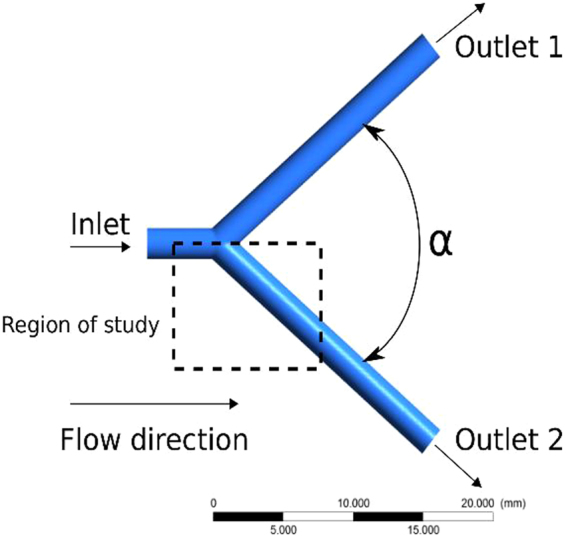
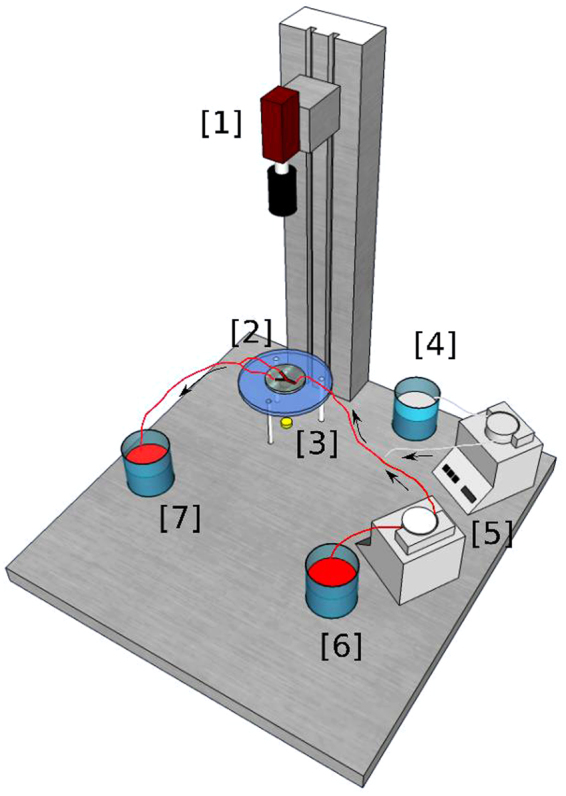
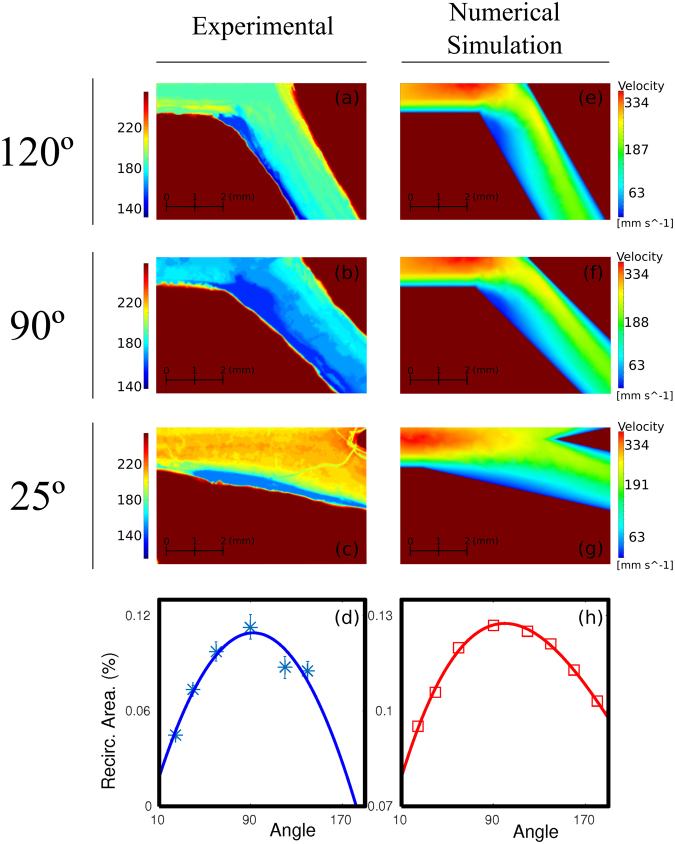
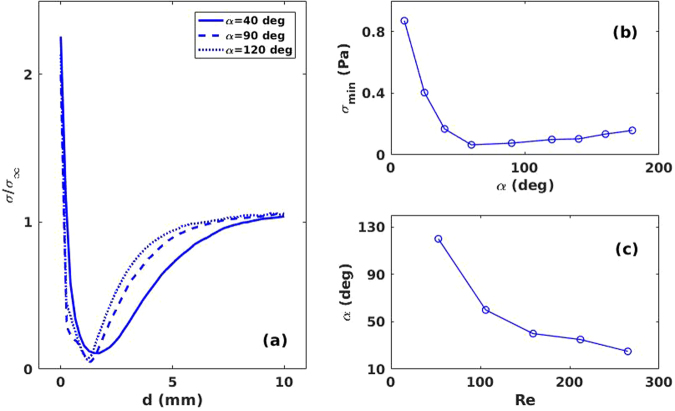
Understanding hemodynamics in blood circulation is crucial in order to unveil the mechanisms underlying the formation of stenosis and atherosclerosis. In fact, there are experimental evidences pointing out to the existence of some given vessel configurations that are more likely to develop the above mentioned pathologies. Along this manuscript, we performed an exhaustive investigation in a simplified model aiming to characterize by means of physical quantities those regions and configurations in vessel bifurcations that are more likely to develop such pathologies. The two-fold analysis is based, on the one hand, on numerical simulations (via CFD) and, on the other hand, on experiments realized in an ad-hoc designed polydimethylsiloxane (PDMS) channel with the appropriate parameters and appropriate fluid flows. The results obtained demonstrate that low velocity regions and low shear stress zones are located in the outer walls of bifurcations. In fact, we found that there is a critical range of bifurcation angles that is more likely to vascular disease than the others in correspondence with some experimental evidence. The effect of the inflow velocity on this critical range is also analyzed.
了解血液循环中的血液动力学对于揭示狭窄和动脉粥样硬化形成的机制至关重要。事实上,有实验证据表明,某些特定的血管结构更有可能发展上述病理。在本文中,我们在简化模型中进行了详尽的研究,旨在通过物理量来描述血管分叉中更有可能发生这些病理的区域和结构。这种双重分析一方面基于数值模拟(通过 CFD),另一方面基于在具有适当参数和适当流体流动的专用设计的聚二甲基硅氧烷 (PDMS) 通道中进行的实验。所得到的结果表明,低速区域和低剪切应力区位于分叉的外壁处。事实上,我们发现,在与一些实验证据相对应的情况下,存在一个比其他角度更有可能发生血管疾病的临界分叉角度范围。还分析了入口速度对这个临界范围的影响。