Center of Experimental Rheumatology, Department of Rheumatology, University Hospital Zurich, Schlieren, Switzerland.
Department of Medicine, Duke University Medical Center, Durham, NC, United States.
Front Immunol. 2018 Jan 29;9:28. doi: 10.3389/fimmu.2018.00028. eCollection 2018.
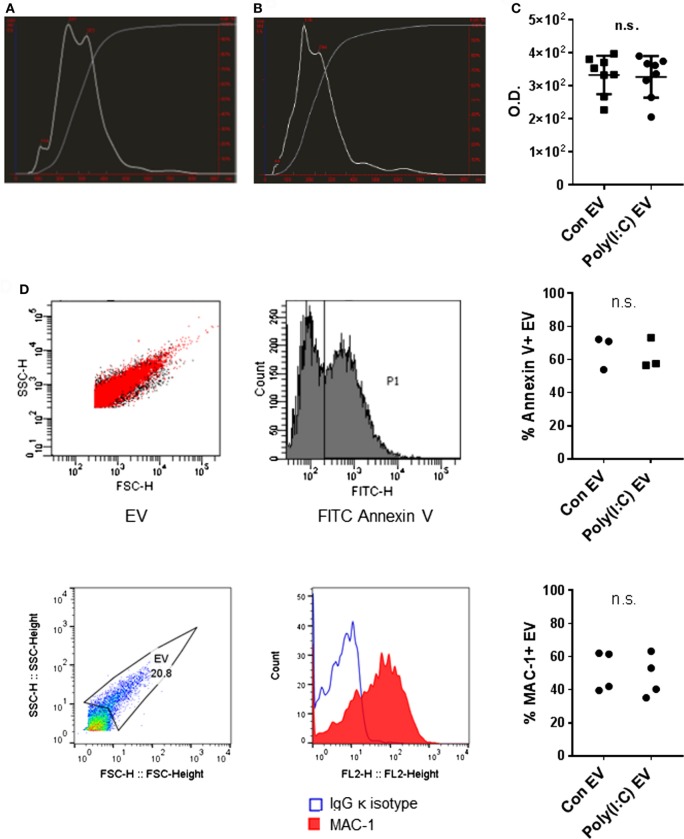
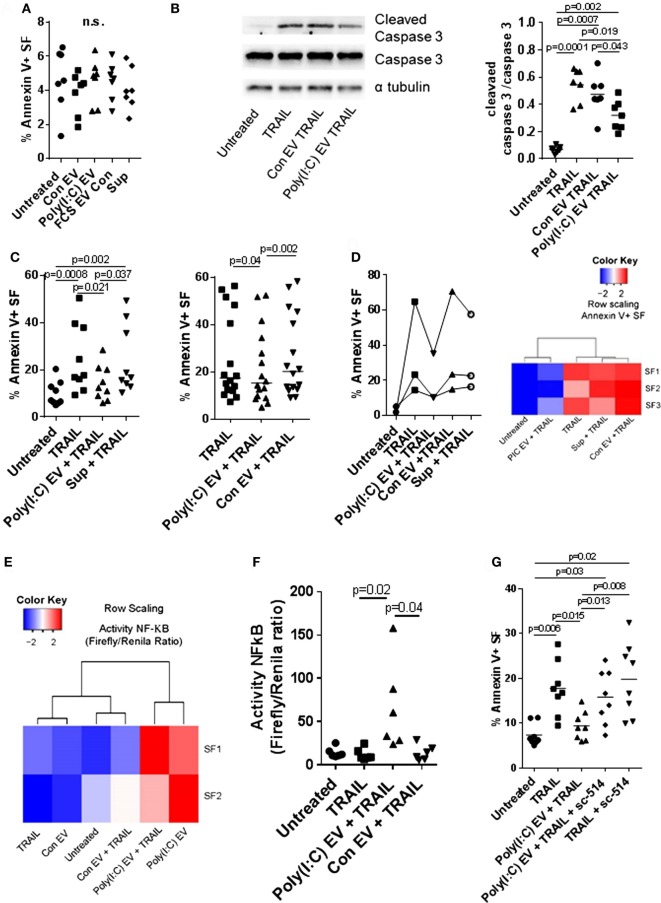
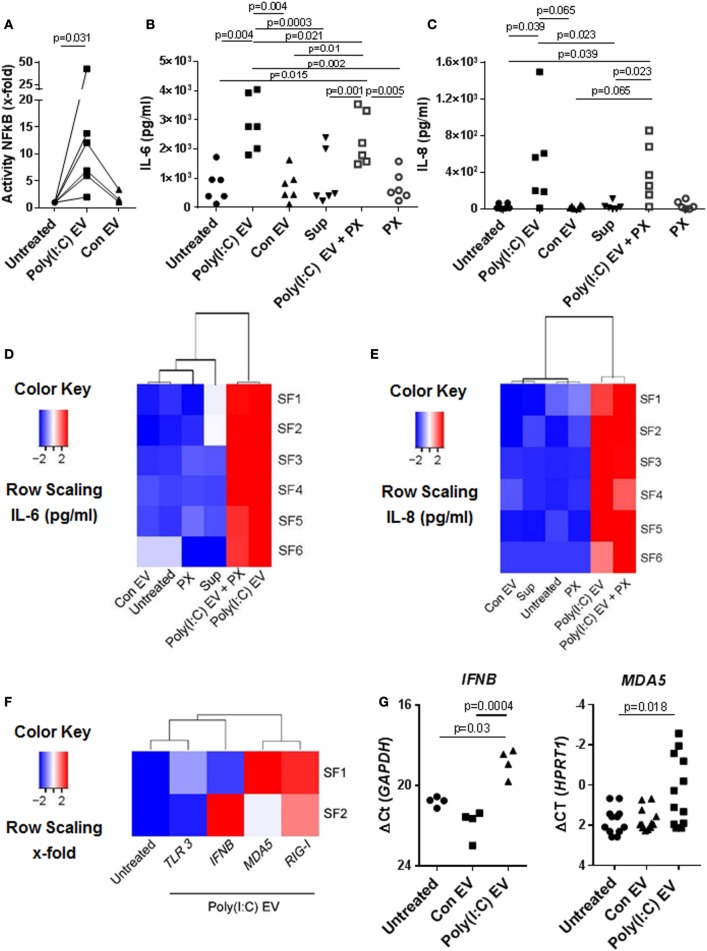
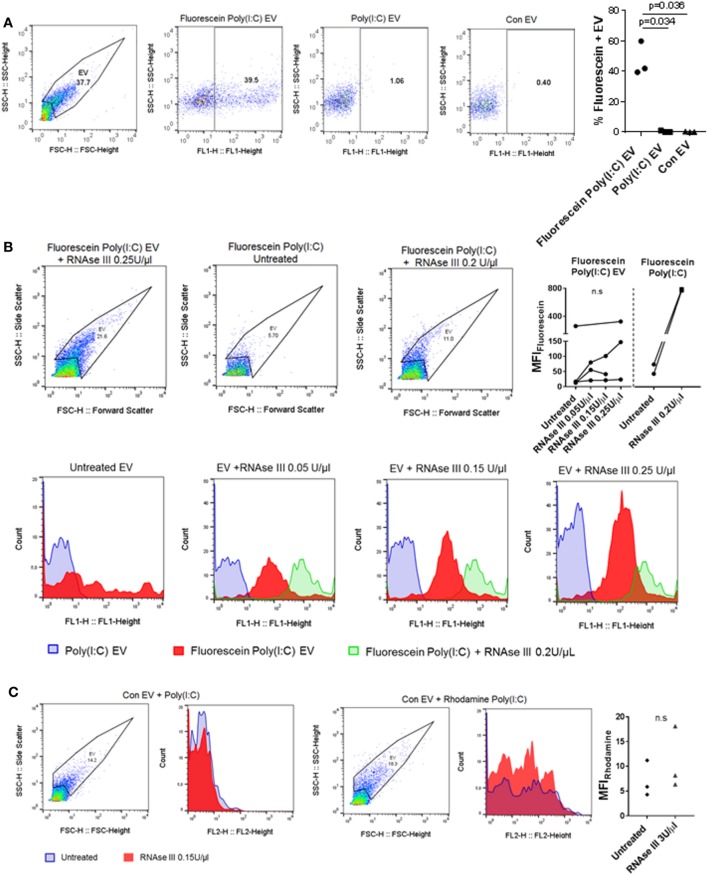
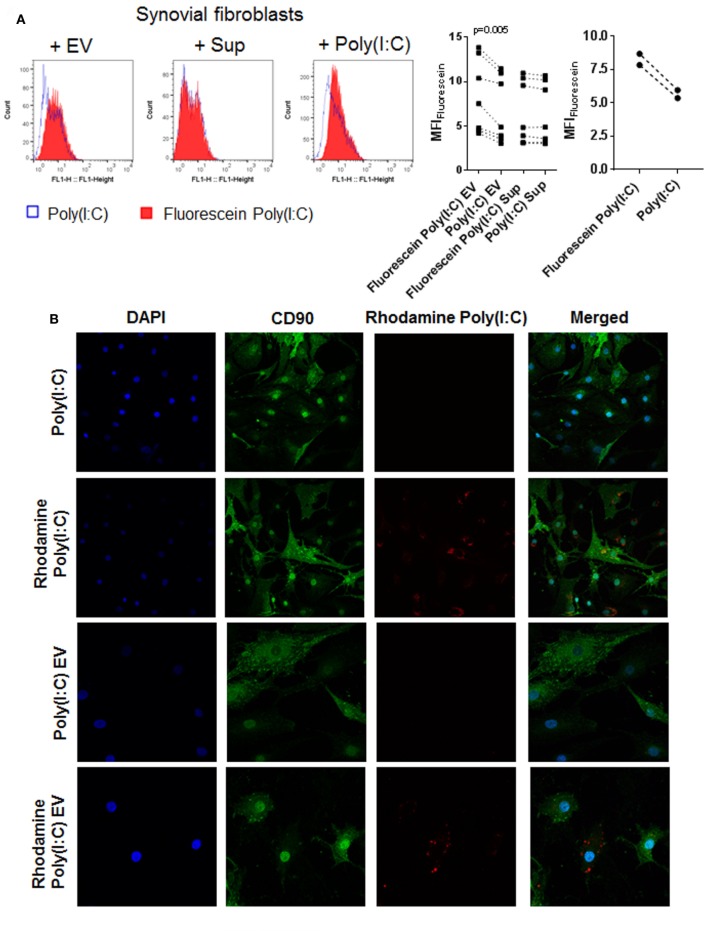
Extracellular vesicles (EV) can modulate the responses of cells to toll-like receptor (TLR) ligation; conversely, TLR ligands such as double-stranded RNA (dsRNA) can enhance the release of EV and influence of the composition and functions of EV cargos. Inflamed synovial joints in rheumatoid arthritis (RA) are rich in EV and extracellular RNA; besides, RNA released from necrotic synovial fluid cells can activate the TLR3 signaling in synovial fibroblasts (SFs) from patients with RA. Since EV occur prominently in synovial joints in RA and may contribute to the pathogenesis, we questioned whether EV can interact with dsRNA, a TLR3 ligand, and modify its actions in arthritis. We have used as model the effects on RA SFs, of EV released from monocyte U937 cells and peripheral blood mononuclear cells upon stimulation with Poly(I:C), a synthetic analog of dsRNA. We show that EV released from unstimulated cells and Poly(I:C)-stimulated U937 cells [Poly(I:C) EV] differ in size but bind similar amounts of Annexin V and express comparable levels of MAC-1, the receptor for dsRNA, on the vesicular membranes. Specifically, Poly(I:C) EV contain or associate with Poly(I:C) and at least partially protect Poly(I:C) from RNAse III degradation. Poly(I:C) EV shuttle Poly(I:C) to SFs and reproduce the proinflammatory and antiviral gene responses of SFs to direct stimulation with Poly(I:C). Poly(I:C) EV, however, halt the death receptor-induced apoptosis in SFs, thereby inverting the proapoptotic nature of Poly(I:C). These prosurvival effects sharply contrast with the high toxicity of cationic liposome-delivered Poly(I:C) and may reflect the route of Poly(I:C) delivery EV or the fine-tuning of Poly(I:C) actions by molecular cargo in EV. The demonstration that EV may safeguard extracellular dsRNA and allow dsRNA to exert antiapoptotic effects on SFs highlights the potential of EV to amplify the pathogenicity of dsRNA in arthritis beyond inflammation (by concurrently enhancing the expansion of the invasive synovial stroma).
细胞外囊泡 (EV) 可以调节细胞对 Toll 样受体 (TLR) 结合的反应;相反,TLR 配体,如双链 RNA (dsRNA),可以增强 EV 的释放,并影响 EV cargos 的组成和功能。类风湿关节炎 (RA) 的发炎滑膜关节富含 EV 和细胞外 RNA;此外,来自坏死滑膜液细胞的 RNA 可以激活 RA 患者滑膜成纤维细胞 (SFs) 中的 TLR3 信号。由于 EV 在 RA 的滑膜关节中突出存在并且可能有助于发病机制,我们质疑 EV 是否可以与 TLR3 配体 dsRNA 相互作用并修饰其在关节炎中的作用。我们使用单核细胞 U937 细胞和外周血单核细胞释放的 EV 作为模型,在 Poly(I:C)(dsRNA 的合成类似物)刺激下对 RA SFs 的影响。我们表明,未刺激细胞释放的 EV 和 Poly(I:C)刺激的 U937 细胞 [Poly(I:C) EV] 在大小上有所不同,但结合的 Annexin V 量相似,并且在囊泡膜上表达相似水平的 MAC-1,即 dsRNA 的受体。具体而言,Poly(I:C) EV 包含或与 Poly(I:C) 结合,并至少部分保护 Poly(I:C)免受 RNAse III 降解。Poly(I:C) EV 将 Poly(I:C) 转导至 SFs,并再现 SFs 对 Poly(I:C) 的直接刺激的促炎和抗病毒基因反应。然而,Poly(I:C) EV 阻止了 SFs 中死亡受体诱导的凋亡,从而反转了 Poly(I:C) 的促凋亡性质。这些促生存作用与阳离子脂质体递送的 Poly(I:C) 的高毒性形成鲜明对比,可能反映了 Poly(I:C) 传递的途径 EV 或 EV 中分子货物对 Poly(I:C) 作用的微调。EV 可以保护细胞外 dsRNA 并允许 dsRNA 对 SFs 发挥抗凋亡作用的证明突出了 EV 在关节炎中放大 dsRNA 致病性的潜力,超出了炎症(通过同时增强侵袭性滑膜基质的扩张)。